Have you ever stored fresh edamame in the refrigerator only to find that its sweet, nutty flavor faded and the pods became bland within just a couple of days? 🫛
Edamame (green soybeans) has an extremely high respiration rate post-harvest. Within 12 to 24 hours of harvesting, over 50% of its sucrose content—the source of its sweet flavor—is rapidly degraded by internal enzymes. Because moisture and sugars drop dramatically in raw pods, immediate pretreatment after purchase is essential.
In this guide, based on official guidelines from the USDA and the UC Davis Postharvest Technology Center, we share a 3-step scientific storage method to lock in edamame’s sweetness and crisp texture. 🛡️
Food Safety & Scientific Evidence
This content is based on USDA & MFDS & UC Davis Postharvest Center.
 FreshSelf
Zero waste! Your smart storage assistant
FreshSelf
Zero waste! Your smart storage assistant









1. Scientifically Proven Storage Guide
Keep raw edamame refrigerated briefly if cooking immediately — Short-Term Raw Cold Storage (1–2 Days) 🫛
Unblanched raw edamame loses sugars very quickly and should be cooked as soon as possible. 💡 Storage Tip: Wrap unwashed pods in paper towels, place them in a plastic bag or airtight container, refrigerate at 1–4°C (34–39°F), and cook within 1 to 2 days.
Blanch in salted boiling water for 1–2 minutes then shock in ice water — Inactivate Sugar-Degrading Enzymes ♨️
This is the most critical scientific step to preserve edamame's natural sweetness. 💡 Storage Tip: Boil pods in salted water (1 tbsp salt per 1L water) for 1–2 minutes, then immediately submerge in an ice bath. This deactivates enzymes, locking in sucrose and bright green chlorophyll.
Dry surfaces completely and seal for frozen storage — Blanched Freezing (180–360 Days) 🧊
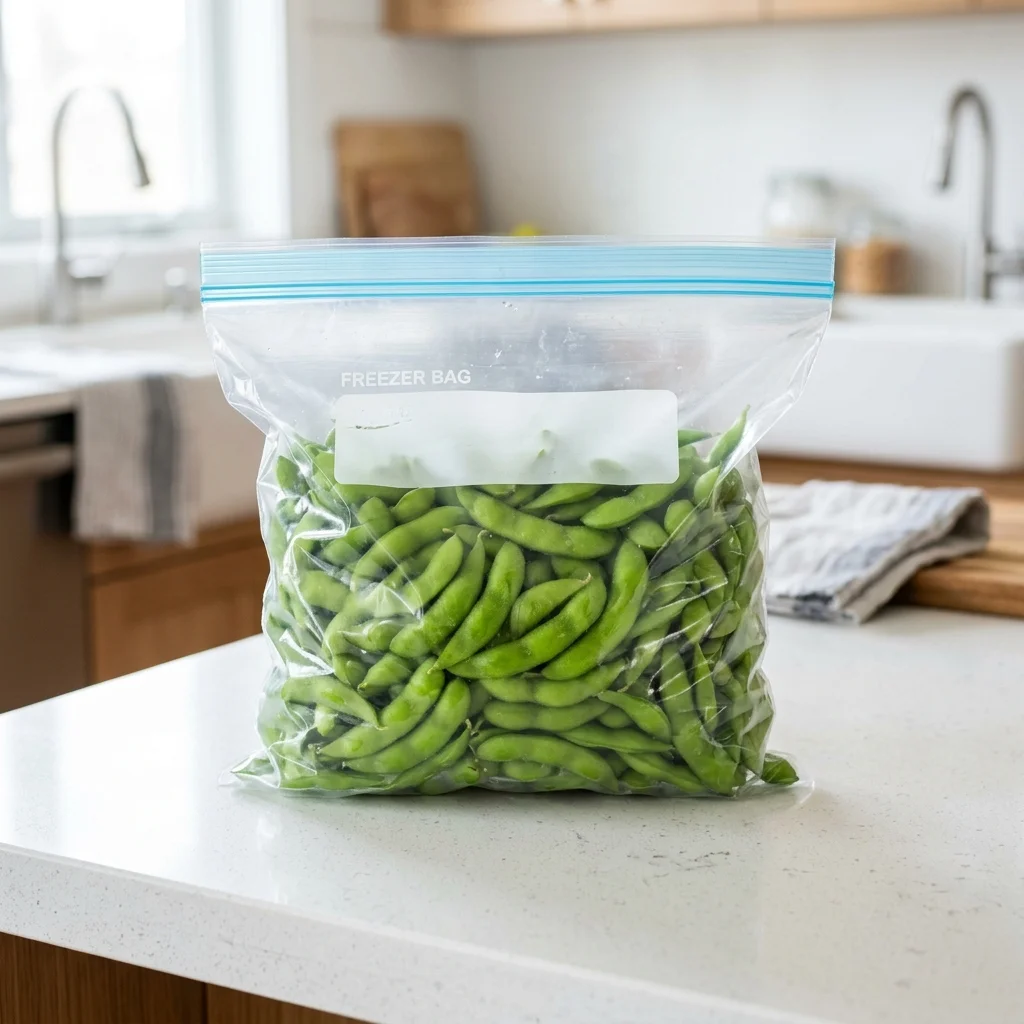
Freezing blanched edamame allows you to enjoy fresh pods for 6 to 12 months. 💡 Storage Tip: Dry blanched pods completely with paper towels, place them in a freezer-safe zip-top bag, squeeze out excess air, and store at -18°C (0°F) or below.
2. Essential Storage Rules and Cautions
Respiration and sugar-degrading enzymes are highly active in raw edamame. Even under refrigeration, raw pods lose most of their sucrose and vitamins within 1 to 2 days, resulting in a complete loss of their sweet, savory taste.
Failing to shock blanched pods in ice water causes residual heat to soften the texture and dull the green color. Furthermore, freezing pods with excess surface moisture causes ice crystals that rupture cell walls, ruining texture.
📌 Frequently Asked Questions (FAQ)
Why should edamame be blanched in salted water immediately after purchase? ▼
Within 12 to 24 hours post-harvest, sugar-degrading enzymes consume more than 50% of the sucrose in edamame. Blanching in boiling salted water for 1 to 2 minutes inactivates these enzymes, instantly stopping sweetness loss and fixing the vivid green color and nutrients.
What is the best way to thaw and eat frozen blanched edamame? ▼
Because it is already blanched before freezing, simply warm the frozen pods in salted boiling water for 2 to 3 minutes or thaw them naturally in the refrigerator. Avoid overboiling so the pods retain their signature crisp, tender bite.