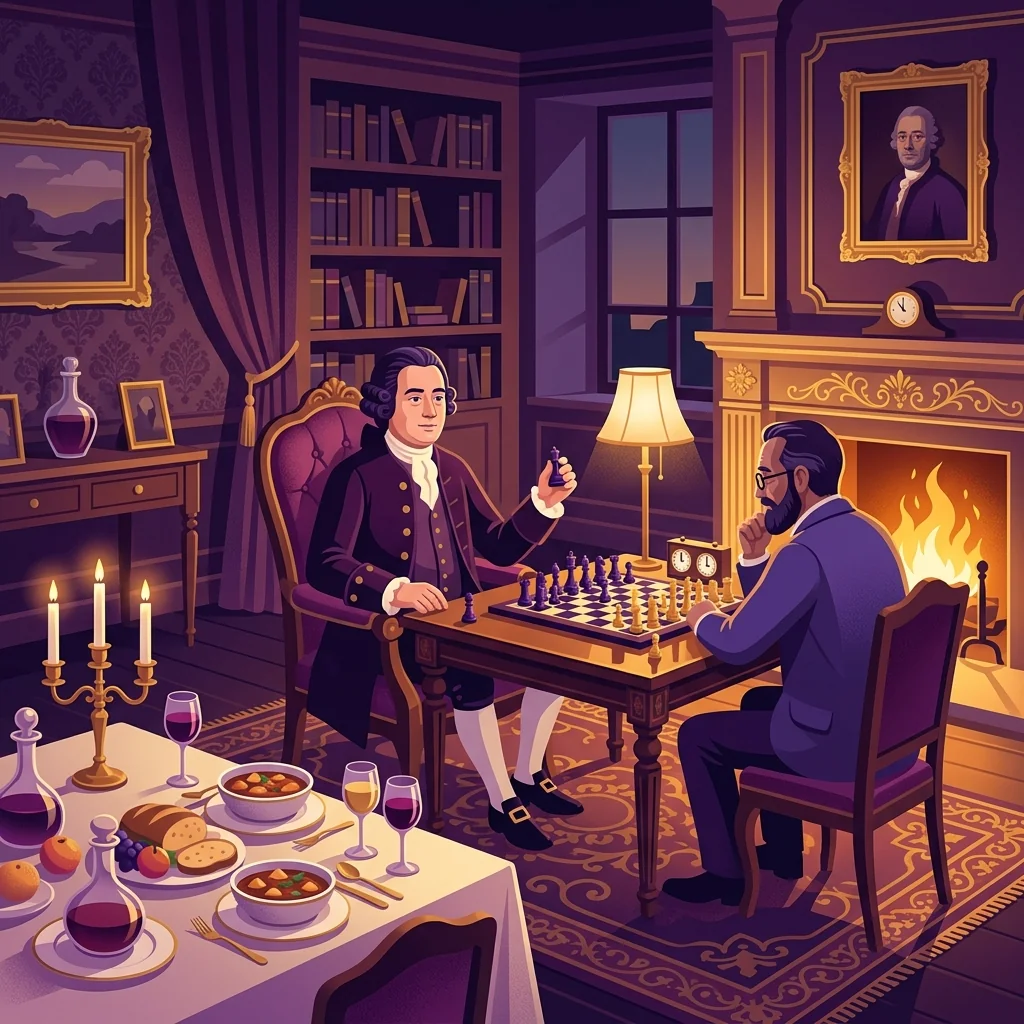
“I dine, I play a game of backgammon, I converse, and am merry with my friends; and when after three or four hours’ amusement, I wou’d return to these speculations, they appear so cold, and strain’d, and ridiculous…” 🎱
David Hume (1711–1776) was the titan of Scottish Enlightenment empiricism whose radical skepticism famously awoke Immanuel Kant from his ‘dogmatic slumber’ and paved the way for modern cognitive science. While penning his 1739 masterwork A Treatise of Human Nature, Hume frequently pushed his analytical brain to the brink of intellectual exhaustion and existential melancholy. How did he maintain his celebrated warmth, humor, and emotional stability throughout his life?
Hume practiced an uncompromising evening shutdown ritual. Every afternoon, after hours of rigorous philosophical labor, he closed his study door and ventured into the parlors and taverns of Edinburgh. He dined with friends, played games of backgammon, chess, or billiards, and engaged in lighthearted conversation. In Book 1 of his Treatise, Hume explicitly identified this daily social immersion as the essential cure for cognitive burnout and philosophical delirium. Engaging with others discharged prefrontal tension and restored emotional balance.
In today’s post, we unpack the cognitive neuroscience behind David Hume’s ‘evening social reset’ routine and present a modern 3-step protocol to downregulate stress and recharge executive functions.
Historical & Academic Evidence
This content is based on Historical Verification from David Hume's *A Treatise of Human Nature* (1739), Autobiography *My Own Life* & Cognitive Neuroscience Research.
 BuildSelf
Inspired by historical greats? Make it your daily habit!
BuildSelf
Inspired by historical greats? Make it your daily habit!

















1. Oxytocin and Serotonin Secretion: Relieving Prefrontal Cognitive Overload
Sustaining intense problem-solving late into the evening after draining executive resources in the Prefrontal Cortex traps the central nervous system in chronic sympathetic arousal. Engaging in playful, lighthearted social interaction during dinner stimulates the release of serotonin and oxytocin, instantly soothing amygdala threat-detection loops. Furthermore, engaging in rule-bound casual games like chess or backgammon gently activates the Default Mode Network (DMN), allowing subconscious consolidation of complex daytime memories and restoring prefrontal clarity for the next day.
2. 3-Step Practical Routine for Modern Professionals
Step 1: Evening Work Shutdown & Digital Disconnection
At a designated evening threshold (e.g., 7:00 PM), completely close work applications, turn off professional messaging channels, and transition your brain into rest mode.
Step 2: Social Dining & Engaging in Casual Board Games or Play
Share a meal with family or friends. Enjoy light conversation or play casual games like chess, backgammon, or card games, focusing on the shared enjoyment of play rather than competitive winning.
Step 3: Empathetic Connection & Full Autonomic Nervous System Relaxation
Listen warmly to others' stories, shared smiles, and laughter. This empathetic attunement stimulates oxytocin and serotonin pathways, dissolving accumulated daily stress.
3. Caution: Excluding Professional Business or Heated Ideological Debates During Social Reset
The neuroscientific intent of Hume’s evening socializing is emotional relaxation and stress recovery. Engaging in high-stakes professional negotiations or intense ideological arguments during evening gatherings re-taxes the prefrontal cortex, exacerbating cognitive burnout. Filling social gatherings with light humor, casual banter, and playful interactions is essential to construct a parasympathetic relaxation environment.
📌 Frequently Asked Questions (FAQ)
What if I live alone or have no one to meet offline in the evening? ▼
Voice calls with close friends or participating in casual online multiplayer games serve as great substitutes. The core requirement is receiving warm, low-stakes social feedback while relaxed. However, passively scrolling through social media feeds should be avoided, as it increases prefrontal fatigue.
Is it fine to substitute chess with other board games, cards, or casual play if I don't play chess? ▼
Yes, absolutely! Hume chose backgammon and chess simply because they were popular social games in 18th-century Edinburgh. Any rule-bound game—board games, card games, or dominoes—that allows relaxed focus and shared laughter will deliver identical cognitive relaxation. Prioritize lighthearted play over intense competition.