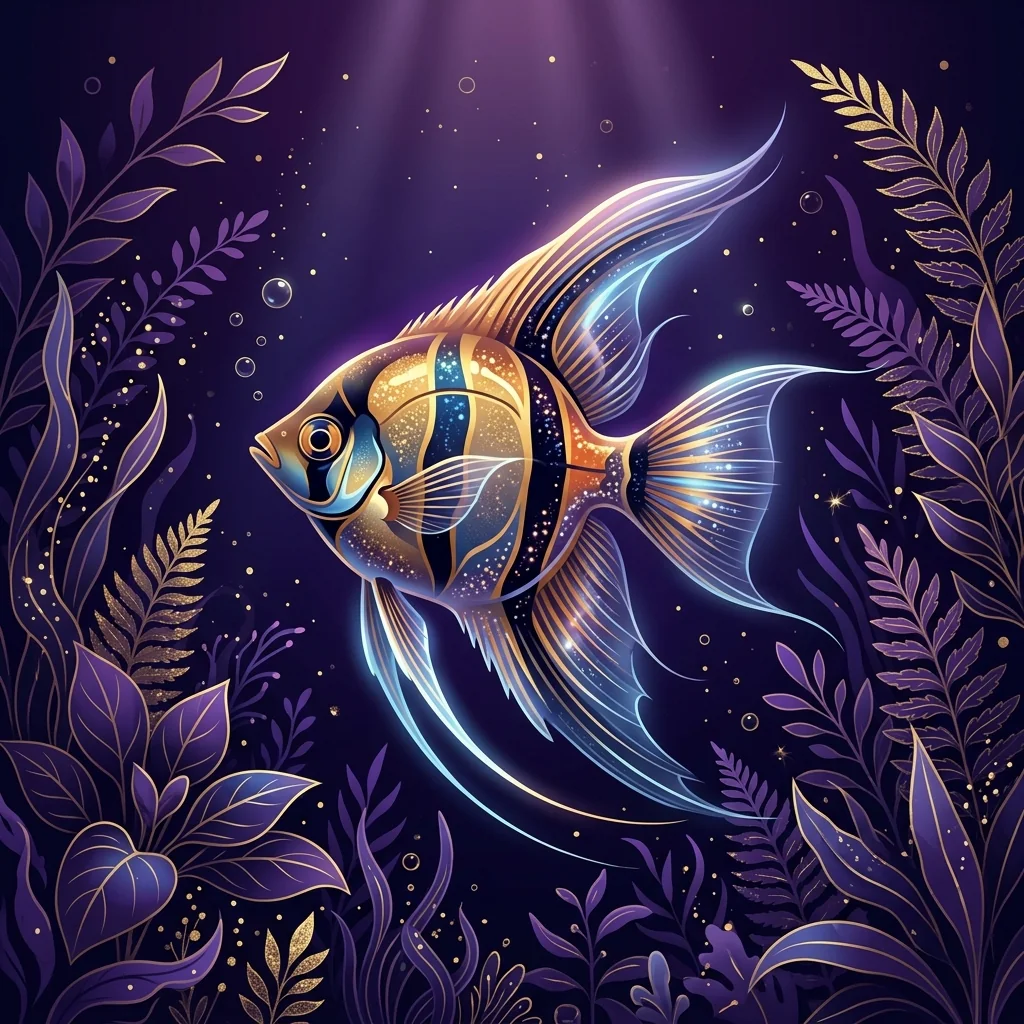
Renowned for their tall, elegant fins and regal swimming motion, the Angelfish (Pterophyllum scalare) is a quintessential medium-sized cichlid in the freshwater aquarium hobby. Due to their tall, vertically extended fins, providing a deep aquarium (water depth of 45cm or more) is essential. Poor water quality or rising ammonia levels easily lead to Fin Rot or ‘Hole-in-the-Head’ disease (Hexamita). Furthermore, as adult cichlids, they harbor a natural predatory instinct to eat small fish (such as neon tetras) that fit into their mouths. In this guide, presents a 3-step daily care routine to read your Angelfish’s body language and maintain pristine water quality.
Veterinary & Behavioral Evidence
This content is based on Ornamental Fish International (OFI) & Cichlid Veterinary Care Protocols.
 FreshSelf
Keep pet food and supplements perfectly fresh!
FreshSelf
Keep pet food and supplements perfectly fresh!





1. Angelfish Body Language: Jaw-Locking Fights and Clamped Fins
Angelfish Body Language: Jaw-Locking Fights and Clamped Fins
Angelfish express social hierarchy and health status through fin posture and mouth interactions. Interlocking jaws and pushing against each other 'Jaw-Locking / Lip-Locking' is a strength-testing behavior to establish rank or evaluate potential breeding partners. Conversely, holding long dorsal and ventral fins tightly against the body while staying immobile in corners 'Clamped Fins' is a critical stress signal caused by water degradation, pH shock, or parasitic infection.
2. Angelfish (Pterophyllum scalare)‘s Body Language & Behavioral Signals
Interlocking Mouths and Pushing Head-on (Jaw-Locking / Lip-Locking)
A social strength test used to establish dominance, resolve territorial disputes, or confirm pair bonding during breeding.
Provide aquarium decorations or tall plants to break line of sight, preventing severe injuries or fin nipping.
Holding Fins Tightly Against the Body in Corners (Clamped Fins)
A sign of severe environmental stress caused by ammonia/nitrite spikes, pH shock, or internal Hexamita infection.
Test water parameters immediately for ammonia and pH, performing a 20–30% partial water change with dechlorinated water.
3. Customized 3-Step Home Care Routine for Angelfish (Pterophyllum scalare)
Morning: Water Temp (25°C–28°C) & pH (6.5–7.5) Check with High-Protein Feeding
Verify slightly acidic to neutral water parameters and feed floating or slow-sinking high-protein pellets formulated for cichlids.
Afternoon: Deep Water Column Check (45cm+) & Gentle Current Adjustment
Maintain deep water levels so long ventral fins do not drag on the substrate, adjusting filter output to prevent harsh water currents.
Evening: Substrate Cleanup & Weekly Partial Water Change for Hole-in-the-Head Prevention
Siphon out uneaten food and organic waste to control ammonia, performing a 10–20% weekly water change to prevent Hexamita.
📌 Frequently Asked Questions (FAQ)
Why does my Angelfish have small pits/holes on its head with white discharge? ▼
This indicates 'Hole-in-the-Head' disease (Hexamita). It is primarily caused by degraded water quality, high organic waste build-up, and vitamin/mineral deficiencies. Perform immediate water changes, improve filtration hygiene, and administer anti-parasitic medications if necessary.
Can I keep Angelfish with Neon Tetras or Guppies? ▼
It is not recommended. While young Angelfish swim peacefully with small fish, adult Angelfish develop natural predatory instincts. Overnight, they will hunt and eat small fish like Neon Tetras, Guppies, or fry that fit into their mouths. Pair Angelfish with larger, peaceful community fish instead.