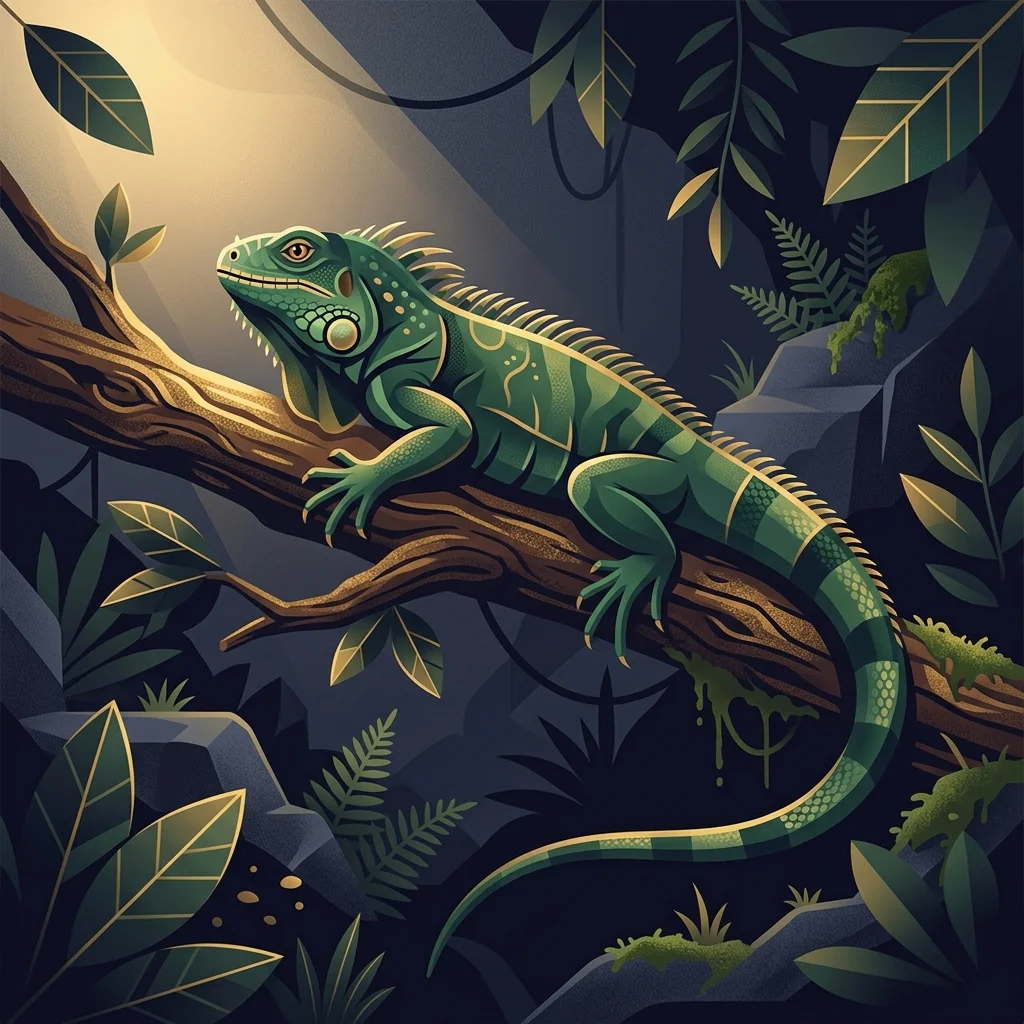
Native to the tropical rainforests of Central and South America, the Green Iguana (Iguana iguana) is an iconic large diurnal lizard cherished by reptile enthusiasts worldwide. Growing up to 1.5 to 2 meters in length, these majestic reptiles possess strong territorial instincts and are exceptionally vulnerable to Metabolic Bone Disease (MBD) caused by inadequate Ultraviolet-B (UVB) radiation and calcium deficiencies. Furthermore, as strict herbivores, consuming animal protein induces fatal visceral gout and renal failure. In this guide, presents a 3-step daily care routine to decode your Green Iguana’s body language and safeguard its health.
Veterinary & Behavioral Evidence
This content is based on Association of Reptilian and Amphibian Veterinarians (ARAV) & International Reptile Conservation Foundation (IRCF) Care Standards.
 FreshSelf
Keep pet food and supplements perfectly fresh!
FreshSelf
Keep pet food and supplements perfectly fresh!



1. Green Iguana Body Language: Dewlap Extension, Head Bobbing, and Tail Whipping
Green Iguana Body Language: Dewlap Extension, Head Bobbing, and Tail Whipping
Green Iguanas communicate dominance and defensive warnings using their throat fan (dewlap) and body movements. Fully expanding the colorful skin under their chin 'Dewlap Extension' while rhythmically nodding their head 'Head Bobbing' is a signature territorial display signaling presence and status. Conversely, flattening their body laterally and coiling their tail 'Tail Whipping / Side Stance' is an explicit warning of an imminent powerful tail strike prior to biting.
2. Green Iguana (Iguana iguana)‘s Body Language & Behavioral Signals
Flaring the Dewlap Wide while Slowly Bobbing Head Up and Down (Dewlap Extension & Head Bobbing)
A signature territorial communication assertion asserting dominance, presence, and environmental confidence.
Maintain a calm, low posture without making sudden movements that could be perceived as a challenge.
Flattening Body Laterally and Whipping Tail Flexibly (Tail Whipping / Stiff Stance)
An extreme defensive warning indicating acute stress, feeling cornered, or impending physical aggression.
Avoid reaching in directly; remove visual stressors and use a towel for safe, non-threatening distance.
3. Customized 3-Step Home Care Routine for Green Iguana (Iguana iguana)
Morning: UVB Lamp Output Check, Basking Temperature Control & 100% Herbivorous Calcium Salad
Inspect the basking zone (35°C–38°C) and UVB bulbs to prevent MBD, feeding calcium-rich greens (collard, turnip, mustard greens with 2:1 Ca:P ratio).
Afternoon: High Humidity Maintenance (70–80%) & Vertical Arboreal Climbing Enrichment
Mist the enclosure to maintain high humidity for proper shedding and renal hydration, providing sturdy vertical branches for climbing exercise.
Evening: Waste Removal (Infection Prevention), Night Temperature Control (24–26°C) & Blackout Sleep
Clean urates and feces to prevent bacterial dermatitis, maintaining a warm night temperature using ceramic heat emitters in total darkness.
📌 Frequently Asked Questions (FAQ)
Why are high-output UVB lighting and calcium supplements vital for a Green Iguana's survival? ▼
Green Iguanas synthesize Vitamin D3 through skin exposure to UVB light, which enables dietary calcium absorption. Without adequate UVB or calcium, they develop Metabolic Bone Disease (MBD)—causing bone softening, rubber jaw, fractures, muscle tremors, and fatal paralysis. Daily high-output UVB lighting and dust-on calcium powder are strictly mandatory.
Can I feed insects like crickets or mealworms to my Green Iguana? ▼
Absolutely not! Green Iguanas are obligate, 100% strict herbivores. Ingesting animal protein, insect protein, or commercial pet foods causes excessive uric acid buildup, leading to severe visceral gout, kidney failure, and premature death. Their diet must consist exclusively of leafy dark greens and safe vegetables.