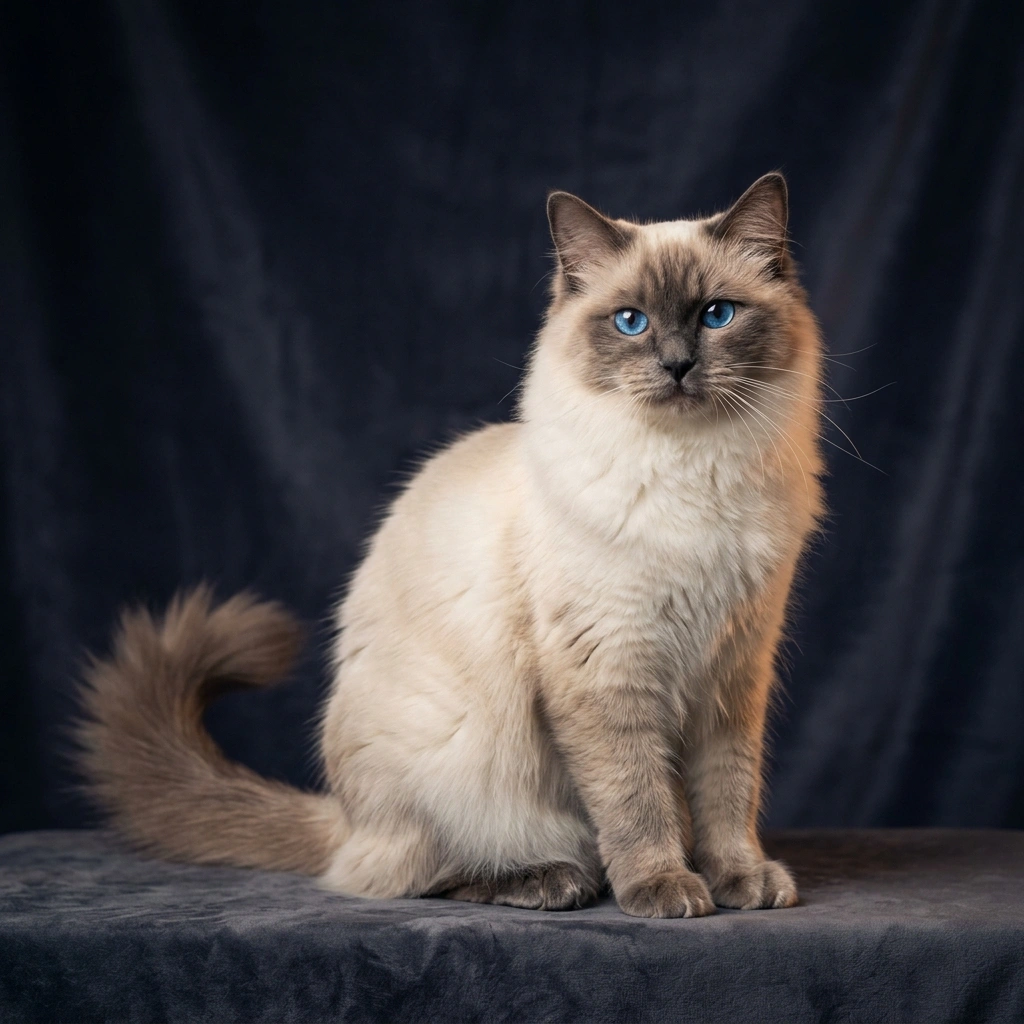
Ragdolls are large, fluffy cats famous for going completely limp like a rag doll when held, as if they have no bones. With their captivating jewel-like blue eyes, luxurious coats, and incredibly gentle, affectionate personalities, they are often called ‘angel cats.’ 🐈
However, as a large feline breed with slow skeletal growth reaching weights of 7 to 10 kg, their lower body joints carry a heavy gravitational load. Furthermore, their signature limp posture when held can exert twisting stress on their spine or joints if supported incorrectly. Learning proper holding techniques is the foundation of their lifetime skeletal health.
In this guide, decodes Ragdoll body language and introduces a safe 3-step daily care routine to protect their joints while building deep mutual trust through safe embraces.
Veterinary & Behavioral Evidence
This content is based on Cat Fanciers' Association (CFA) Ragdoll Breed Standards & AAFP Cat Friendly Practice Guidelines.
 FreshSelf
Keep pet food and supplements perfectly fresh!
FreshSelf
Keep pet food and supplements perfectly fresh!









1. Ragdoll’s Calming Signals: Slow Blinks and Relaxed Paw Flexing
Ragdoll's Calming Signals: Slow Blinks and Relaxed Paw Flexing
Ragdoll cats express their high trust toward owners not just by going limp, but also through delicate eye and paw gestures. Key calming signals include 'Slow Blinks' and 'Paw Flexing'. Looking at you and blinking very slowly is a peaceful message of complete security and affection without hostile intent. When feeling extremely happy, they flex and stretch their toes like a fan. Gently scratching under their chin or behind their ears at this moment maximizes their feeling of bliss.
2. Ragdoll (Felis catus)‘s Body Language & Behavioral Signals
Slow Blink
A signal of deep affection showing complete trust in you and feeling safe in their environment.
Respond by blinking back slowly at the same tempo to deepen your bond and mutual trust.
Paw Flexing
Indicates supreme psychological comfort, recalling the comforting memory of nursing as a kitten.
Do not stop touching them; continue gently stroking under their chin or neck, which they will enjoy immensely.
3. Customized 3-Step Home Care Routine for Ragdoll (Felis catus)
Morning: Light Physical Stretching for Skeletal Activation
As a large breed, physical fatigue easily accumulates in their lower joints. Before starting daily activity, gently hold their hind legs and perform light extension stretches to protect their joint range of motion.
Afternoon: Pin Brushing to Prevent Tangles and Aerate Coat
Ragdoll undercoats are exceptionally soft and dense, making them prone to matting. Comb along the fur pattern with a round-tipped pin brush to aerate the coat, preventing skin inflammation and hairballs.
Evening: Spine-Safe Holding Technique with Hip Support
Lifting only their upper body causes spine twisting and joint strain from their heavy weight. Always support their chest with one hand and firmly support their hips with the other hand to create a secure position.
📌 Frequently Asked Questions (FAQ)
Does the Ragdoll going limp when held mean they have weak bones or joints? ▼
No. This is a unique genetic behavioral trait of Ragdolls, where they intentionally relax all their postural muscles when feeling deep security and extreme trust toward the person holding them. It is not a physical defect.
What happens if I don't support a Ragdoll's hips when holding them? ▼
Because Ragdolls are large cats, lifting them only by their armpits without supporting their rear causes their entire weight (often over 7kg) to concentrate on their spine joints and ribs, dramatically increasing the risk of disc herniation or joint subluxation.