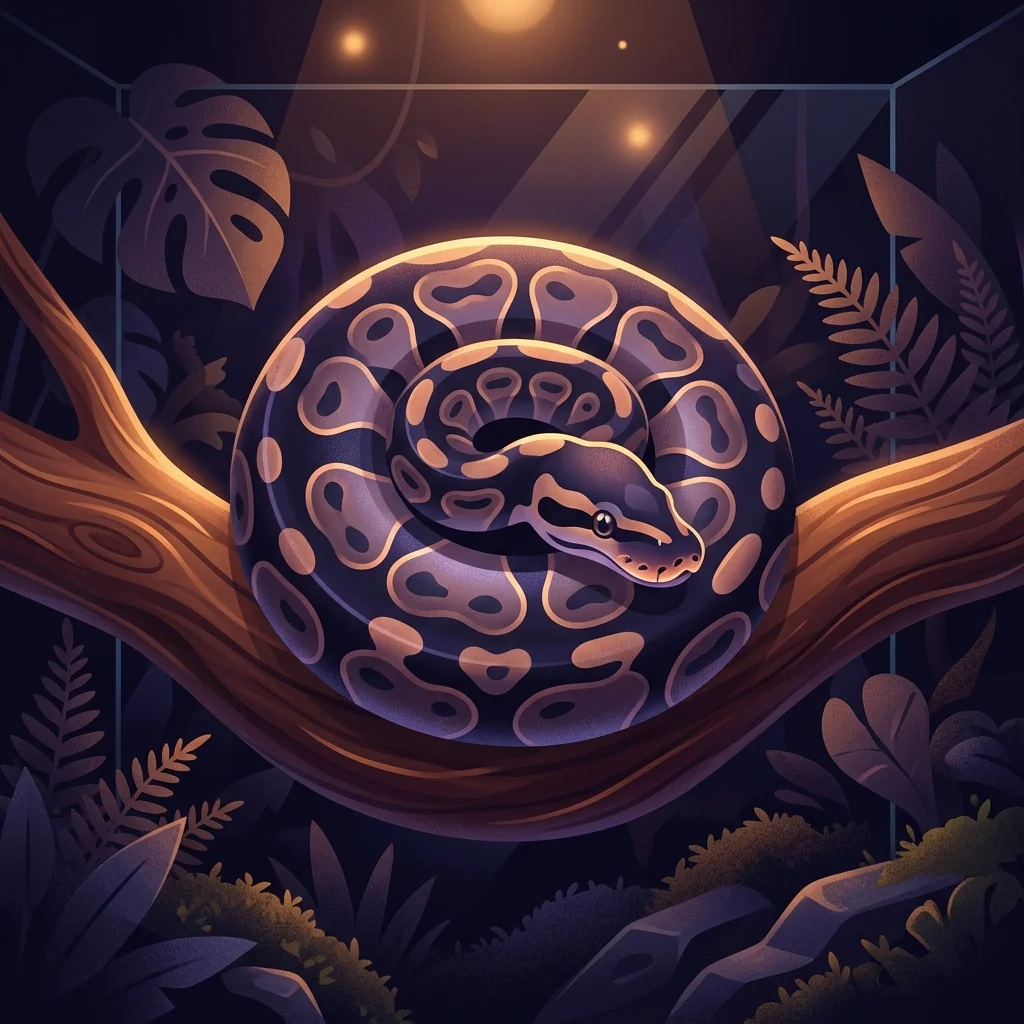
Renowned for curling into a tight ball with its head tucked safely inside, the Ball Python (Python regius) is one of the most popular pet snakes worldwide thanks to its gentle nature and diverse color morphs. As ectothermic reptiles, Ball Pythons require a clear thermal gradient between a cool zone (24°C–26°C) and a hot/basking zone (31°C–33°C). Ambient humidity should be maintained at 55%–60% normally, increasing to 70%–80% during shedding cycles to prevent dysecdysis (incomplete shed). Cold temperatures frequently trigger acute Respiratory Infections (RI) and hunger strikes. In this guide, presents a 3-step daily care routine to read your snake’s signals and maintain its health.
Veterinary & Behavioral Evidence
This content is based on Association of Reptilian and Amphibian Veterinarians (ARAV) & USARK Herpetological Care Standards.
 FreshSelf
Keep pet food and supplements perfectly fresh!
FreshSelf
Keep pet food and supplements perfectly fresh!






1. Ball Python Body Language: Defensive Balling and Wheezing
Ball Python Body Language: Defensive Balling and Wheezing
Ball Pythons communicate anxiety and illness through body posture and breathing sounds. Coiling tightly into a compact ball with the head tucked in 'Defensive Balling (Balling Up)' is a classic fear response displayed when feeling threatened. Conversely, bubbling saliva around the mouth or breathing with open-mouthed wheezing 'Wheezing & Bubbling' is a critical warning sign of acute respiratory infection caused by poor environmental parameters.
2. Ball Python / Royal Python (Python regius)‘s Body Language & Behavioral Signals
Coiling Tightly Into a Ball with Head Tucked In (Balling Up)
An instinctual self-defense mechanism displayed when experiencing extreme fear or stress from handling or novel threats.
Immediately cease handling and return the snake to a dark, secure hideout to rest undisturbed.
Bubbling Saliva at Mouth Corner & Wheezing (Wheezing & Bubbling)
A clinical sign of bacterial or fungal Respiratory Infection (RI) caused by low temperatures or overly damp, stagnant substrates.
Immediately raise hot zone temperatures to 31°C–33°C, replace substrate with a dry alternative, and seek specialized reptile veterinary care.
3. Customized 3-Step Home Care Routine for Ball Python / Royal Python (Python regius)
Morning: Thermal Gradient (Cool 24°C–26°C / Hot 31°C–33°C) & Base Humidity Check (55%–60%)
Verify temperature separation across enclosure ends to allow proper thermoregulation, checking ambient humidity with a digital hygrometer.
Afternoon: Fresh Water Bowl Renewal & Hide Substrate Hygiene
Change water in a bowl large enough for full soaking daily, cleaning soiled substrate to prevent bacterial Scale Rot.
Evening: Shedding Blue Phase Inspection & Humidity Increase (70%–80%)
When eyes turn opaque blue, raise enclosure humidity to 70%–80% to ensure a full one-piece shed, observing nocturnal feeding readiness.
📌 Frequently Asked Questions (FAQ)
My Ball Python hasn't eaten in several months—what should I do about a hunger strike? ▼
Ball Pythons are infamous for seasonal hunger strikes, often refusing prey during winter, breeding seasons, shedding cycles, or minor temperature drops. If the snake isn't losing significant weight (over 10–15%), maintain the hot zone at 31°C–33°C and offer properly warmed frozen-thawed rodents late at night in a quiet environment.
My snake's shed came off in patchy pieces instead of one whole piece. How do I fix stuck shed? ▼
Patchy shedding (dysecdysis) occurs when enclosure humidity is too low. Never forcefully peel off dry shed as it tears scales. Instead, place the snake in a ventilated tub with damp warm towels or moss for 20–30 minutes at 28°C–30°C to soften the skin, then gently rub off the loosened shed.