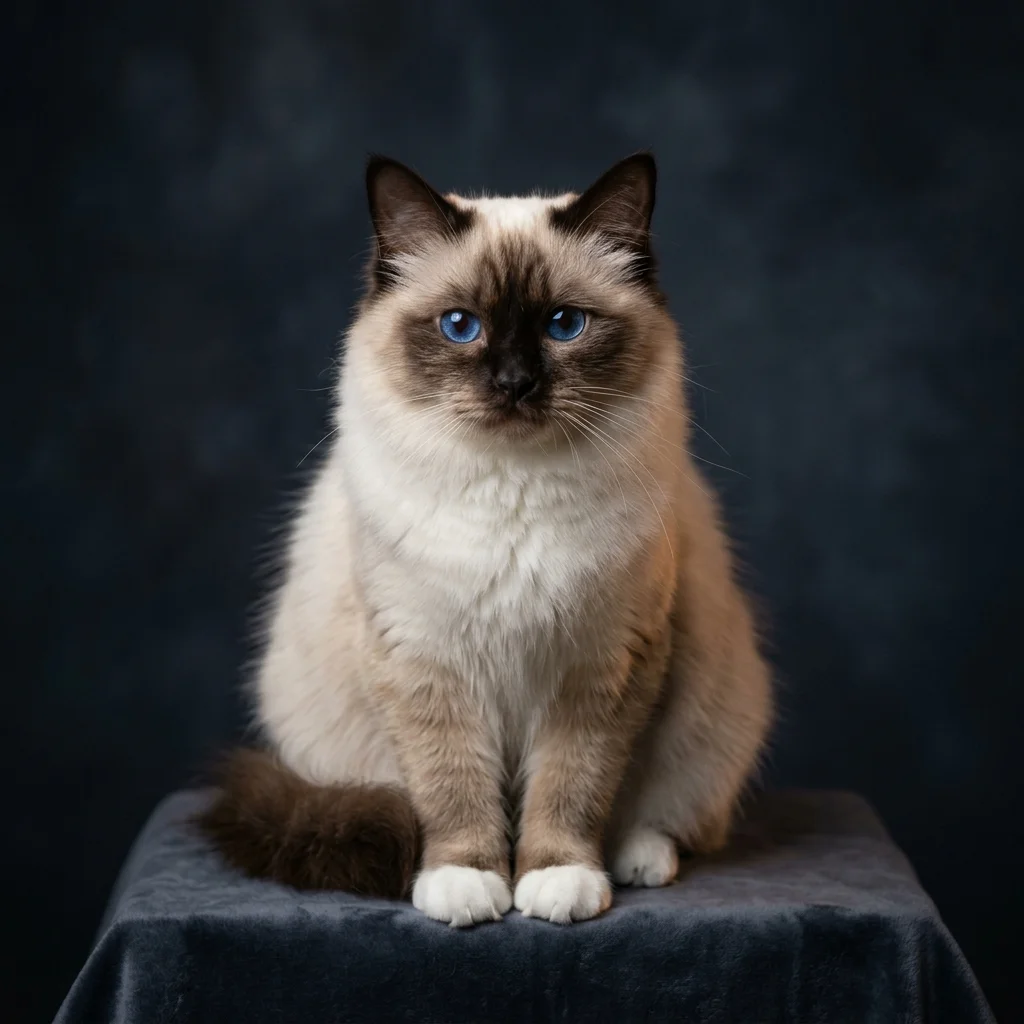
The Birman cat is an elegant semi-longhair breed celebrated for its striking sapphire blue eyes and pure white paws known as ‘gloves’. Gentle and quiet, Birmans thrive on close emotional bonds with their owners. Their single, silky coat lacks a dense undercoat, making it less prone to matting than other longhaired breeds. However, regular grooming, gentle play, and health screenings for Hypertrophic Cardiomyopathy (HCM) and renal wellness are essential. In this guide, outlines Birman communication signals and a 3-step daily routine.
Veterinary & Behavioral Evidence
This content is based on Cat Fanciers' Association (CFA) / The International Cat Association (TICA) & Cornell Feline Health Center.
 FreshSelf
Keep pet food and supplements perfectly fresh!
FreshSelf
Keep pet food and supplements perfectly fresh!








1. Birman Instincts: Soft Purr Nuzzling and Tail Flicking Stress Cues
Birman Instincts: Soft Purr Nuzzling and Tail Flicking Stress Cues
Birmans express affection by rubbing their cheeks in 'Soft Purring & Nuzzling'. When overstimulated or stressed, they signal discomfort by 'Tail Flicking' against the floor.
2. Birman Cat / Sacred Cat of Burma’s Body Language & Behavioral Signals
Soft Purring & Nuzzling
Rubbing cheeks against the owner while purring, indicating deep affection and security.
Respond with gentle strokes under the chin and affectionate vocal praise.
Tail Flicking & Flat Ears
Thumping the tail or flattening ears backward, signaling overstimulation or discomfort.
Cease petting immediately and allow the cat quiet personal space.
3. Customized 3-Step Home Care Routine for Birman Cat / Sacred Cat of Burma
Morning: Hydration Check & Wet Food Feeding
Refill clean water bowls and provide moisture-rich wet food to support renal health.
Afternoon: Silky Coat Combing & Paw Inspection
Gently comb the semi-long coat with a pin brush and inspect the cleanliness of white gloves.
Evening: Interactive Wand Play & Gentle Bonding
Engage in light feather wand play to stimulate mood before a peaceful night's rest.
📌 Frequently Asked Questions (FAQ)
Is the Birman cat's coat prone to severe matting? ▼
No. Birmans lack a heavy undercoat, so their silky fur mats far less than Persians. Combing 2–3 times a week is sufficient to keep their coat healthy.
What health conditions require regular screening? ▼
Birmans can be prone to Hypertrophic Cardiomyopathy (HCM). Regular cardiac ultrasounds and encouraging adequate water intake for kidney health are recommended.