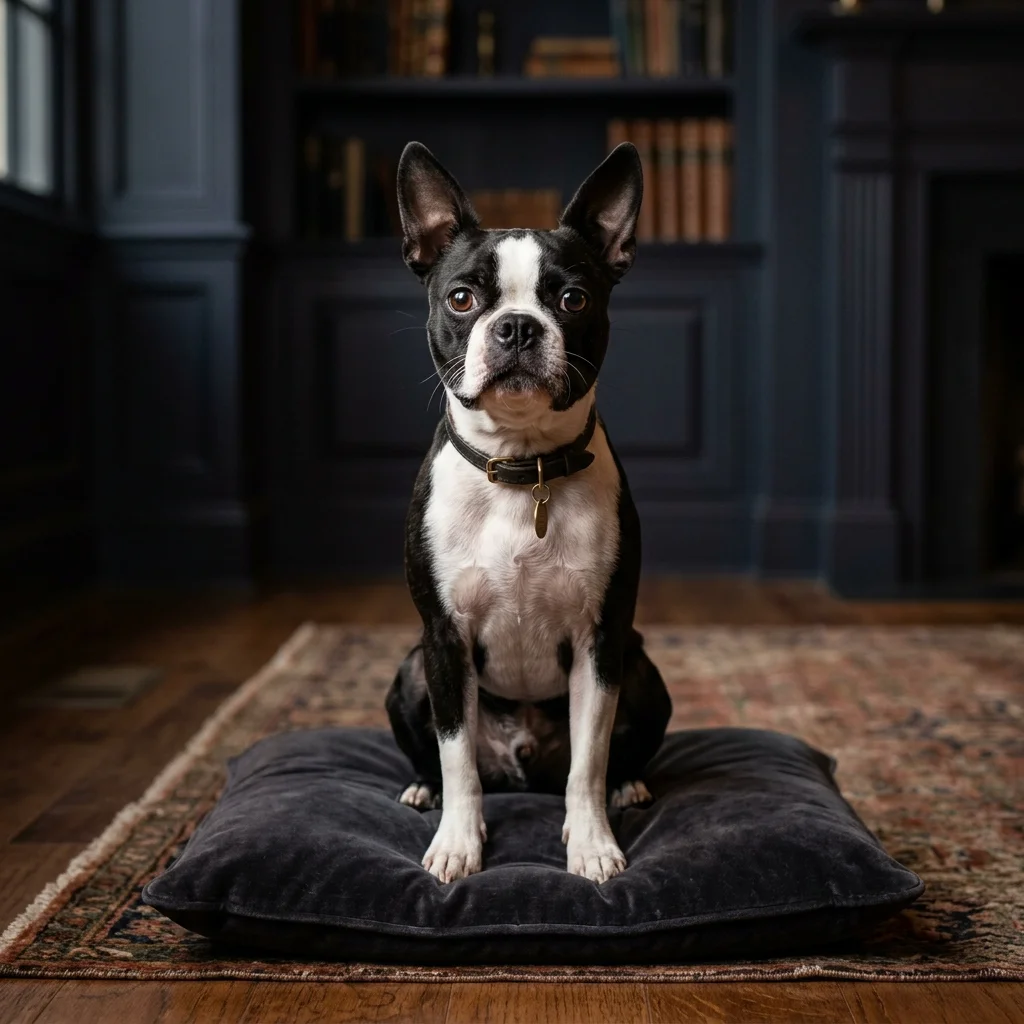
Known as the ‘American Gentleman’ for their tuxedo-like coat and sweet demeanor, the Boston Terrier is a cherished companion. However, as a brachycephalic (flat-faced) breed, their shortened airways make them susceptible to Brachycephalic Airway Obstructive Syndrome (BAOS) and heat exhaustion. Additionally, their large, prominent eyes are prone to corneal ulcers and dry eyes. In this guide, decodes the respiratory and ocular distress signals of the Boston Terrier and outlines a 3-step daily care routine to safeguard their health.
Veterinary & Behavioral Evidence
This content is based on American Kennel Club (AKC) Breed Standard and American Veterinary Medical Association (AVMA) Clinical Guidelines.
 FreshSelf
Keep pet food and supplements perfectly fresh!
FreshSelf
Keep pet food and supplements perfectly fresh!









1. Boston Terrier Physical Signals: Heavy Stertorous Gasping and Eye Rubbing
Boston Terrier Physical Signals: Heavy Stertorous Gasping and Eye Rubbing
If a Boston Terrier displays 'loud, labored breathing with heavy panting', it is a critical warning of airway distress or overheating. Conversely, 'frequent eye rubbing or squinting' indicates potential corneal abrasion or ocular discomfort due to their prominent eye structure.
2. Boston Terrier’s Body Language & Behavioral Signals
Heavy Stertorous Gasping (Laborious Panting)
Narrow nostrils and an elongated soft palate obstruct airflow, making it difficult to regulate body temperature and breathe properly.
Move the dog to a cool, air-conditioned room immediately, provide fresh water, and seek veterinary attention if heavy panting persists.
Eye Rubbing & Squinting (Ocular Discomfort)
Prominent eyes exposed to dust or minor impacts can suffer corneal ulcers or irritation, causing pain and light sensitivity.
Apply an Elizabethan collar to prevent rubbing, flush the eye with sterile saline, and visit a veterinarian for a fluorescein stain test.
3. Customized 3-Step Home Care Routine for Boston Terrier
Morning: Eye Inspection & Facial Wrinkle Cleaning
Inspect the eyes for redness or discharge, and clean facial folds with a mild wipe, ensuring skin folds remain completely dry.
Afternoon: Climate Control & Short Low-Impact Walk
Maintain room temperatures at 20–23°C (68–73°F) and schedule short 15-to-20-minute walks during cooler hours to prevent heat stress.
Evening: Lubricating Eye Drops & Indoor Nosework Play
Administer veterinary eye lubricating drops to prevent dryness, and engage in gentle indoor nosework games rather than strenuous exercise.
📌 Frequently Asked Questions (FAQ)
Why are Boston Terriers so vulnerable to high temperatures? ▼
Due to their shortened nasal passages and flattened muzzles, Boston Terriers cannot cool themselves efficiently through panting. In hot weather, maintain room temperatures between 20–23°C (68–73°F) with air conditioning to prevent heatstroke.
How can I protect my Boston Terrier's eyes from injuries? ▼
Their protruding eyes lack deep socket protection. Avoid letting them walk through dense bushes or tall grass, administer hydrating eye drops daily, and keep facial folds clean to reduce bacterial growth.