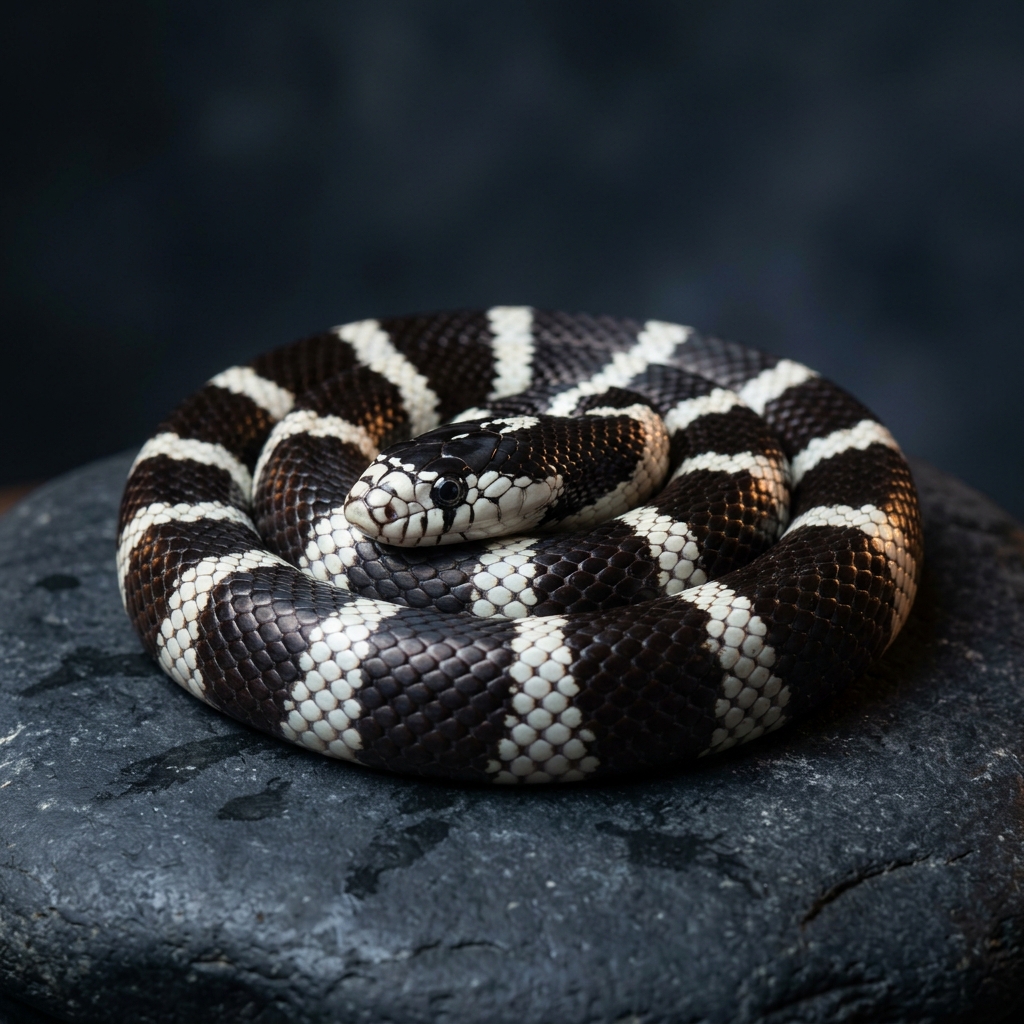
The California Kingsnake (Lampropeltis californiae) is one of the world’s top three beginner pet snakes. Native to North America, this species is celebrated for its striking banded patterns and glossy scales. In nature, kingsnakes possess a strong ophidiophagous instinct—meaning they hunt and eat other snakes—and must strictly be housed individually (one snake per enclosure) to prevent cannibalism. This guide provides a 3-step daily care routine for temperature, humidity, and safe handling.
Veterinary & Behavioral Evidence
This content is based on Association of Reptilian and Amphibian Veterinarians (ARAV) Clinical Guidelines & USARK Herpetoculture Standards.
 FreshSelf
Keep pet food and supplements perfectly fresh!
FreshSelf
Keep pet food and supplements perfectly fresh!



1. California Kingsnake Communication: Tail Rattling and S-curve Defensive Posture
California Kingsnake Communication: Tail Rattling and S-curve Defensive Posture
When threatened, California Kingsnakes rapidly vibrate their tail against the ground ('Tail Rattling'), mimicking a rattlesnake. When focused on potential prey, they raise their forebody into an 'S-curve Stance' while flicking their tongue.
2. California Kingsnake (Lampropeltis californiae)‘s Body Language & Behavioral Signals
Rapid Tail Vibration Against Ground (Tail Rattling)
A defensive warning behavior simulating a rattlesnake sound to scare off perceived threats.
Avoid startling them; allow time for the snake to retreat into a hide and close the enclosure door calmly.
S-curve Forebody Stance & Rapid Tongue Flicking (S-curve Stance)
Indicates active hunting mode or heightened environmental curiosity as they sample scents.
Wash hands thoroughly with soap before handling to remove any rodent scent that could trigger an accidental strike.
3. Customized 3-Step Home Care Routine for California Kingsnake (Lampropeltis californiae)
Morning: Thermal Gradient Check & Fresh Water Replacement
Verify warm zone (28-31°C) and cool zone (22-25°C) with 40-50% humidity. Disinfect and refill a sturdy water bowl.
Afternoon: Strict Solitary Housing Audit & Enclosure Latch Inspection
Ensure individual housing to prevent cannibalism. Inspect sliding lid locks, as kingsnakes are strong escape artists.
Evening: Shedding Moisture Care & Spot Cleaning Waste
If opaque blue eyes indicate shedding, increase humidity to 60-70%. Immediately spot-clean urates and feces.
📌 Frequently Asked Questions (FAQ)
Can two California Kingsnakes be cohabitated in the same enclosure? ▼
No, absolutely not. California Kingsnakes have a natural instinct for ophidiophagy (snake-eating). Housing two together carries an extremely high risk of cannibalism.
Why does my kingsnake try to strike or constrict my hand during feeding time? ▼
They have a powerful feeding response. If your hands smell of rodents, the snake may mistake your fingers for food. Always use feeding tongs and wash hands before handling.