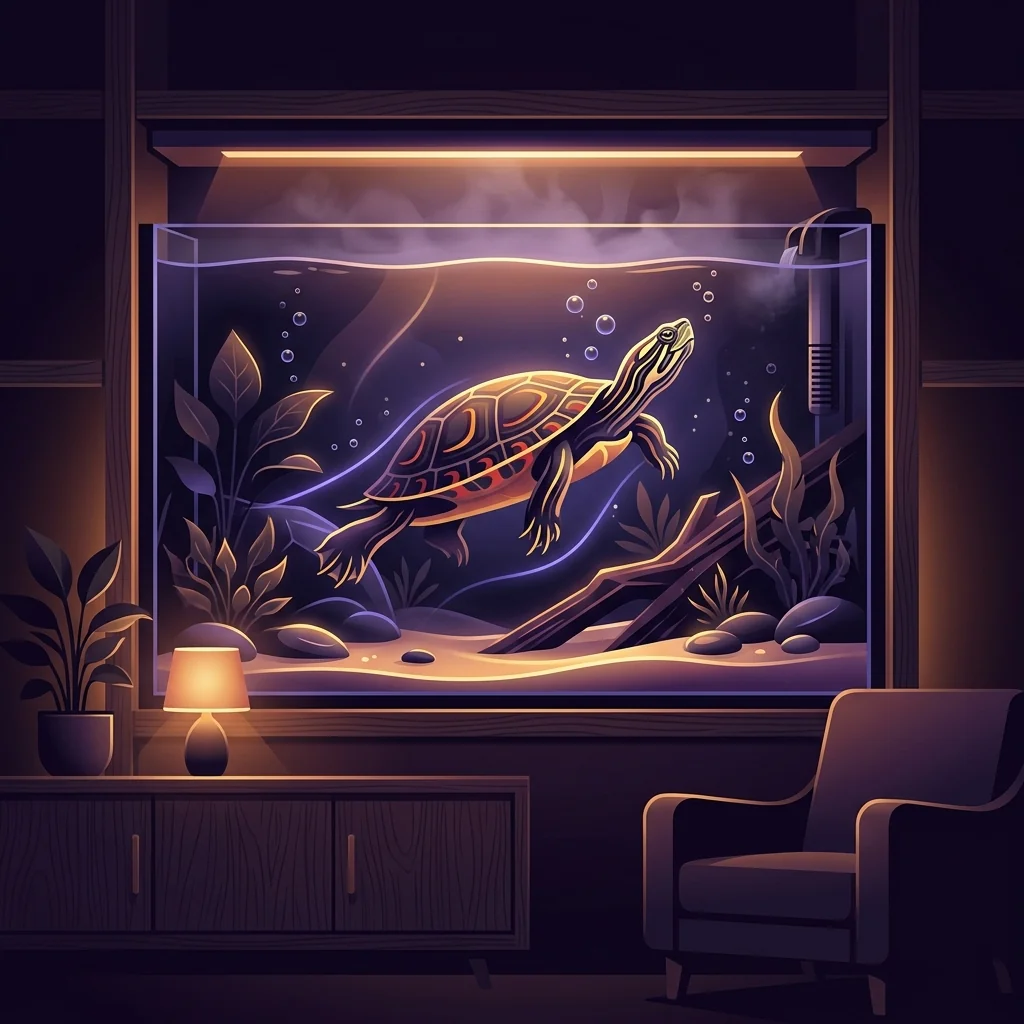
Renowned for their striking red and yellow markings and smooth carapace, Painted Turtles (Chrysemys picta) are among the most beloved aquatic turtles worldwide. However, if their water quality deteriorates or they lack a proper basking dock to completely dry their shell, they easily develop ‘Shell Rot’ (bacterial/fungal ulcerative shell disease). Furthermore, inadequate UVB exposure and calcium intake cause ‘Metabolic Bone Disease’ (MBD), leading to soft, deformed shells. Unregulated room temperature drops below 20°C (68°F) can also suppress their immune system, causing fatal respiratory infections. In this guide, presents a 3-step daily care routine to understand your Painted Turtle’s signals and protect its health.
Veterinary & Behavioral Evidence
This content is based on Association of Reptilian and Amphibian Veterinarians (ARAV) & Turtle Survival Alliance (TSA).
 FreshSelf
Keep pet food and supplements perfectly fresh!
FreshSelf
Keep pet food and supplements perfectly fresh!





1. Painted Turtle Body Language: Solar Stretching and Glass Surfing
Painted Turtle Body Language: Solar Stretching and Glass Surfing
Painted Turtles communicate their comfort and environmental stress through basking postures and swimming behavior. Extending rear legs into the air under a heat/UVB lamp 'Solar Stretching (Basking Leg Extension)' is a healthy relaxation signal that raises body temperature and dries shell seams to prevent fungal growth. Conversely, continuously swimming against the glass wall 'Glass Surfing' is an explicit warning sign indicating poor water quality, improper temperatures, inadequate tank space, or egg-laying stress in gravid females.
2. Painted Turtle (Chrysemys picta)‘s Body Language & Behavioral Signals
Extending Rear Legs in the Air While Basking (Solar Stretching)
A healthy, normal behavior used to maximize heat absorption and dry out moisture in skin folds and scutes, preventing fungal infections.
Avoid sudden movements or loud noises near the tank so they can thermoregulate and absorb UVB undisturbed.
Continuously Swimming and Scrabbling Against Glass (Glass Surfing)
A sign of environmental stress caused by ammonia spikes, incorrect water/basking temperatures, strong filter currents, or lack of nesting space.
Immediately test water parameters (ammonia/nitrates), check temperatures (water: 23°C–26°C / 74°F–78°F), and perform a water change or remove food debris.
3. Customized 3-Step Home Care Routine for Painted Turtle (Chrysemys picta)
Morning: Water (23°C–26°C) & Basking Temp (30°C–33°C) Check & Feeding
Verify submersible heater and UVB/heat lamp operation, feeding age-appropriate turtle pellets supplemented with leafy greens or protein.
Afternoon: Filter Flow Check & Complete Shell Drying Monitoring
Check water filter output to ensure pristine water quality, maintaining a quiet environment so the turtle can bask and completely dry its carapace.
Evening: Waste/Uneaten Food Removal & 12-Hour Light Cycle Control
Scoop out leftover food and waste to prevent ammonia spikes, turning off UVB and heat lamps to maintain a natural day/night rhythm.
📌 Frequently Asked Questions (FAQ)
Why is my turtle's shell getting soft or developing white pitted spots? ▼
A soft shell indicates 'Metabolic Bone Disease' (MBD) caused by lack of UVB lighting or dietary calcium. White pits, soft spots, or foul odor indicate 'Shell Rot' (bacterial/fungal infection). To prevent these, provide 10–12 hours of daily UVB light, a dry basking platform at 30°C–33°C (85°F–92°F), and a powerful canister filter for clean water.
Should indoor captive Painted Turtles be allowed to hibernate during winter? ▼
No, forced hibernation in indoor tanks is extremely dangerous! Without precise temperature and humidity controls, cool indoor temperatures (10°C–18°C) cause semi-torpor rather than true hibernation, shutting down the immune system and leading to fatal pneumonia or starvation. Use a water heater to keep water temperatures warm at 23°C–26°C (74°F–78°F) year-round.