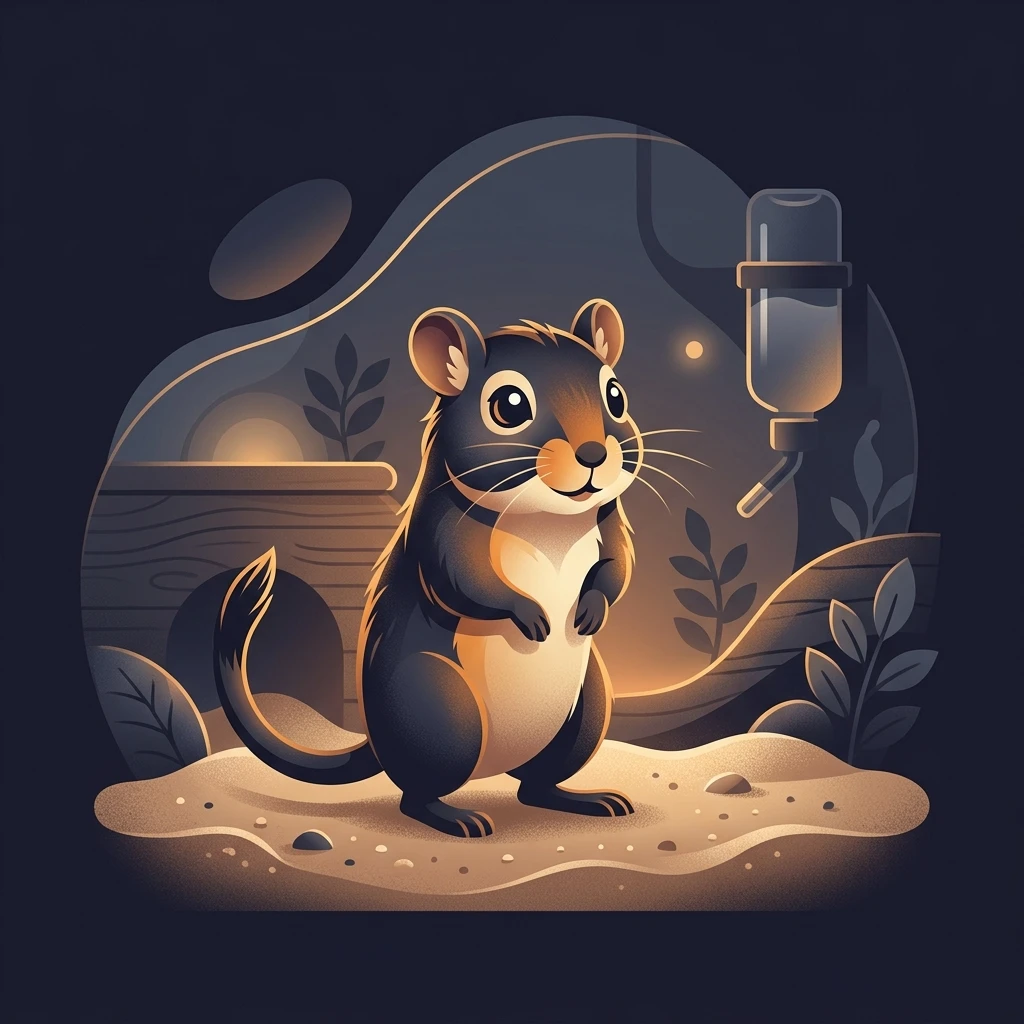
Native to the arid deserts and steppes of Mongolia and Northern China, the Mongolian Gerbil (Meriones unguiculatus) is a cherished pet rodent famed for its furred tail, energetic curiosity, and clean habits. Adapted to desert environments, gerbils produce minimal waste and odor, making them ideal companions. However, they possess a defensive escape mechanism where the skin sheath easily strips off if grasped—a severe trauma known as ‘Tail Degloving.’ Furthermore, as obligate social animals, housing a gerbil in isolation causes depression and stress seizures. They require deep burrowing bedding (15–20 cm) and desert sand baths instead of water. In this guide, presents a 3-step daily care routine to decode your Mongolian Gerbil’s body language and protect its health.
Veterinary & Behavioral Evidence
This content is based on National Gerbil Society (NGS) & American Fancy Rat and Mouse Association (AFRMA) Care Standards.
 FreshSelf
Keep pet food and supplements perfectly fresh!
FreshSelf
Keep pet food and supplements perfectly fresh!







1. Mongolian Gerbil Body Language: Foot Thumping and Allogrooming
Mongolian Gerbil Body Language: Foot Thumping and Allogrooming
Mongolian Gerbils communicate alertness and social attachment through foot vibrations and mutual grooming. Rapidly drumming their hind feet against the floor 'Foot Thumping' is a signature alert signal warning tank mates and owners of perceived danger or excitement. Conversely, huddling together and gently nibbling each other's fur 'Allogrooming' is a primary affection display that reinforces social hierarchy, reduces stress, and conveys emotional safety.
2. Mongolian Gerbil (Meriones unguiculatus)‘s Body Language & Behavioral Signals
Rhythmically Drumming Hind Feet Hard Against the Floor (Foot Thumping)
Indicates perceived threat, high arousal, or a warning signal alerting clan members of potential danger.
Remove sudden noise or vibration sources immediately, covering part of the tank to provide calm reassurance.
Huddling Together and Gently Nibbling a Companion's Fur (Allogrooming)
A key social affection display that reinforces bond stability, cleans hard-to-reach areas, and lowers anxiety.
Allow them uninterrupted social bonding, confirming that group harmony is well established.
3. Customized 3-Step Home Care Routine for Mongolian Gerbil (Meriones unguiculatus)
Morning: Low-Fat Seed/Pellet Mix Feeding & Water Sipper Bottle Hygiene Check
Feed a balanced, low-fat desert rodent seed mix with minimal sunflower seeds, checking that metal ball water bottles operate smoothly.
Afternoon: Deep Substrate Burrowing Check (15–20 cm) & Safe Wooden Chewing Toys
Provide deep unscented paper or Aspen bedding to encourage tunnel building, supplying safe wooden chews for continuously growing incisors.
Evening: Desert Sand Bath Maintenance & Social Pair Activity Observation
Offer dedicated chinchilla/gerbil sand for oil removal and coat grooming, sifting out debris to maintain pristine bath hygiene.
📌 Frequently Asked Questions (FAQ)
Why does a gerbil's tail skin peel off if held (Tail Degloving)? ▼
In the wild, gerbils escape predators by shedding the outer skin sheath of their tail. If a human grabs or pulls a gerbil by its tail, this defensive mechanism triggers, causing a painful 'Degloving Injury' where skin strips off, exposing bare muscle and bone. This usually requires surgical tail amputation. Always scoop up a gerbil gently using both hands beneath its body.
Why are water baths dangerous for gerbils, and can I keep a single gerbil alone? ▼
Water baths are strictly forbidden because gerbil fur retains water, causing rapid hypothermia and fatal pneumonia. Always provide dedicated desert sand baths for hygiene. Furthermore, gerbils are obligate social animals; single gerbils suffer severe psychological depression, stress-induced seizures, and weakened immunity. They must be kept in same-sex bonded pairs or small groups.