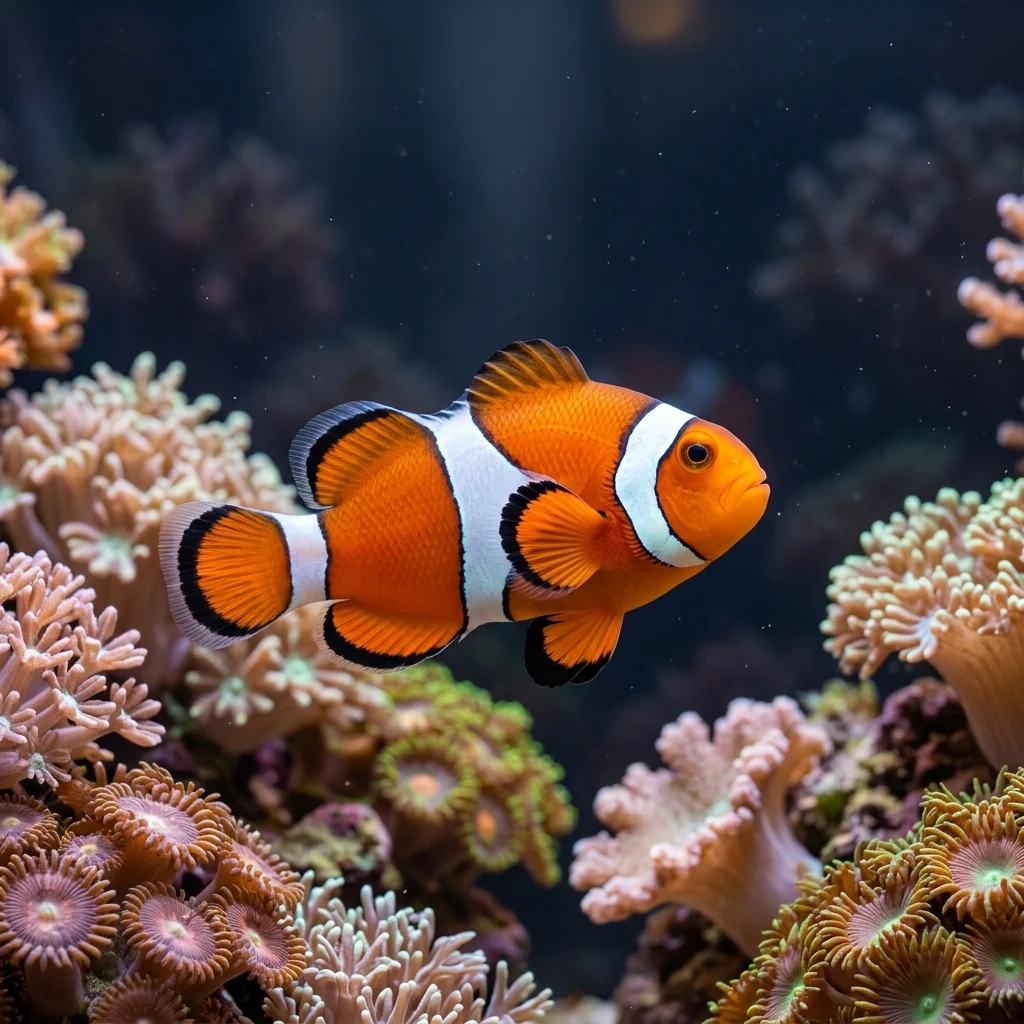
Made world-famous as the main character in ‘Finding Nemo’, the Clownfish is a standout marine species recognized by its vibrant orange body and three distinct white bands. Clownfish share a classic mutualistic relationship with sea anemones, swimming safely among stinging tentacles thanks to a specialized mucus coating while providing the anemone with food remnants and aeration. Functionally, they are sequential hermaphrodites; if the dominant female dies, the largest male transitions into a female to maintain the social structure. In this guide, breaks down clownfish behavioral signals and shares a 3-step care routine to regulate salinity (specific gravity 1.020–1.025) and nitrogen parameters.
Veterinary & Behavioral Evidence
This content is based on NOAA Oceanic & Atmospheric Administration Marine Life Protocols and Exotic Marine Veterinary Protocols.
 FreshSelf
Keep pet food and supplements perfectly fresh!
FreshSelf
Keep pet food and supplements perfectly fresh!





1. Clownfish Instincts: Anemone Wiggling and Hierarchy Signals
Clownfish Instincts: Anemone Wiggling and Hierarchy Signals
Clownfish secrete a unique mucus layer on their skin that prevents sea anemone nematocysts (stinging cells) from firing. The 'Anemone Wiggling' behavior involves rubbing against tentacles to establish a protected sanctuary. Within groups, lower-ranking fish display quick 'Twitching' or fin vibrations as submissive signals toward the dominant female, preserving peaceful rank structure.
2. Clownfish (Amphiprion ocellaris / False Percula Clownfish)‘s Body Language & Behavioral Signals
Anemone Wiggling
Rubbing and nestling into anemone tentacles to transfer protective mucus and secure a safe shelter against predators.
Provide proper lighting and moderate water current for the anemone, avoiding forcing the fish into the tentacles artificially.
Fin Vibration & Submissive Twitching
A typical submission display where smaller males vibrate their body to signal obedience to the dominant female.
This is normal social behavior that requires no intervention unless persistent physical bullying damages fins.
3. Customized 3-Step Home Care Routine for Clownfish (Amphiprion ocellaris / False Percula Clownfish)
Morning: Salinity (Specific Gravity) & Temperature Check (24–26°C)
Measure specific gravity (target 1.020–1.025) with a refractometer. Top off evaporated water using purified freshwater (RO/DI) to avoid salt creep elevation.
Afternoon: Feeding & Protein Skimmer Maintenance
Feed high-protein marine pellets or flakes sparingly (amount consumed within 2–3 minutes) and clean the protein skimmer collection cup to prevent organic buildup.
Evening: Water Parameter Screening & Night Flow Adjustment
Test nitrogen parameters (Ammonia 0 ppm, Nitrite 0 ppm) with a water test kit, and switch wavemakers to night mode for peaceful resting.
📌 Frequently Asked Questions (FAQ)
Can Clownfish be kept safely without a sea anemone? ▼
Yes. Captive-bred clownfish adapt exceptionally well without anemones, often adopting aquarium rocks or artificial decor as substitute hosts. Skipping anemones is often easier for beginners due to strict anemone lighting requirements.
Can I mix tap water with marine salt and introduce Clownfish immediately? ▼
No. Tap water contains chlorine and minerals harmful to marine life. You must use purified water, mix marine salt completely, and cycle the tank for 2 to 4 weeks until ammonia and nitrite drop to 0 ppm before introducing fish.