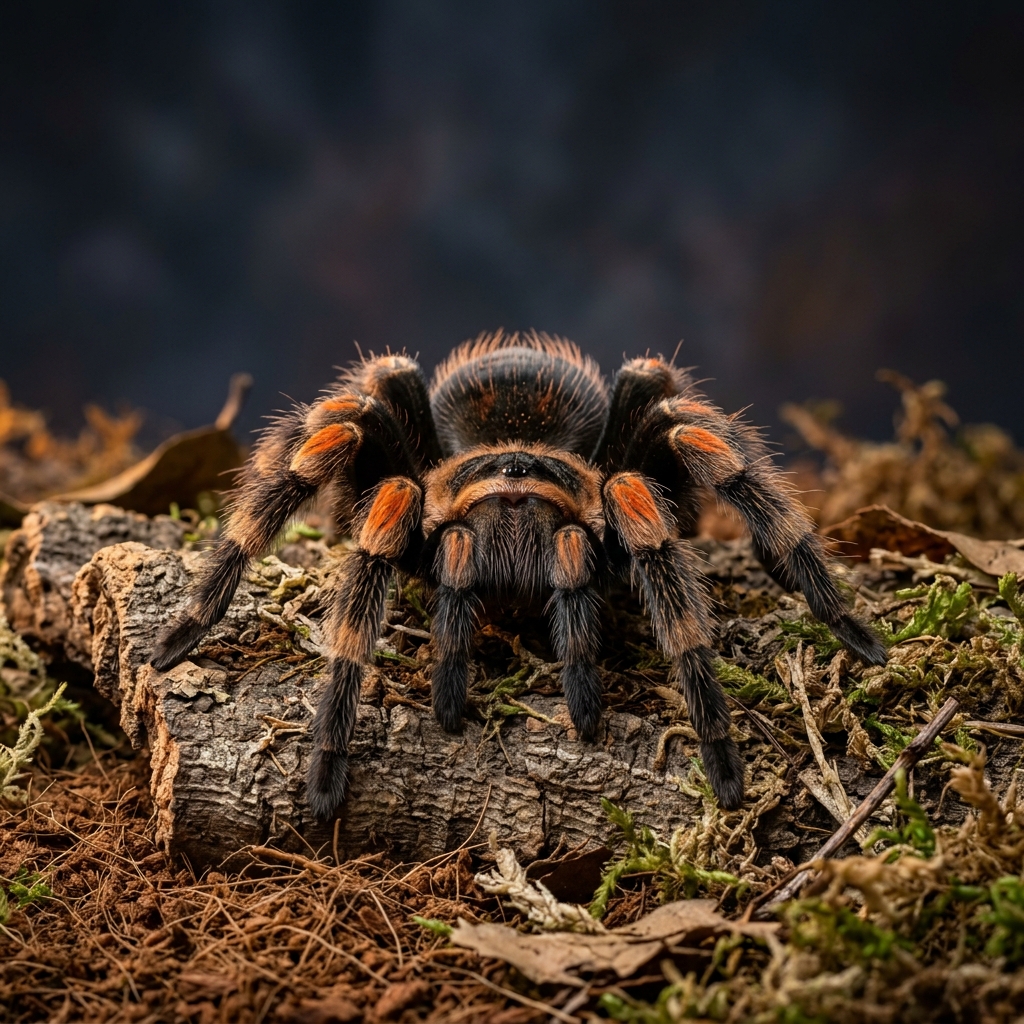
The Mexican Redknee Tarantula (Brachypelma hamorii) is a striking New World terrestrial tarantula known for its jet-black body and vibrant orange-red bands across its knee joints (patellae). Renowned in the arachnid-keeping community for its mild venom and docile nature, it is widely considered the ultimate beginner species. However, when threatened, it kicks barbed urticating hairs from its abdomen that can cause severe irritation to human skin, eyes, and respiratory tracts. Furthermore, improper moisture levels during a molt can lead to fatal dysecdysis. In this guide, we explain Mexican Redknee defense signals, optimal enclosure climate management, and a 3-step care routine for molting and daily safety.
Veterinary & Behavioral Evidence
This content is based on British Arachnological Society (BAS) Captive Care Guidelines and CITES Exotic Invertebrate Conservation Standards.
 FreshSelf
Keep pet food and supplements perfectly fresh!
FreshSelf
Keep pet food and supplements perfectly fresh!









1. Mexican Redknee Instincts: Urticating Hairs and Threat Display
Mexican Redknee Instincts: Urticating Hairs and Threat Display
Rather than biting, the Mexican Redknee primarily defends itself by using its hind legs to kick fine, barbed urticating hairs off its abdomen, causing intense itching and irritation. If backed into a corner, it rears up into a dramatic threat display with raised front legs.
2. Mexican Redknee Tarantula (Brachypelma hamorii)‘s Body Language & Behavioral Signals
Kicking Urticating Hairs
A defensive reaction triggered by sudden vibrations or handling, shedding barbed abdominal hairs into the air.
Keep your face and bare skin away, close the enclosure lid, and allow the tarantula time to calm down.
Threat Display (Raised Front Legs)
Rearing up on hind legs and exposing its chelicerae (fangs), signaling a final warning before striking.
Cease all handling or cleaning immediately and step back using tongs or tools to avoid contact.
3. Customized 3-Step Home Care Routine for Mexican Redknee Tarantula (Brachypelma hamorii)
Morning: Temperature & Humidity Verification
Maintain enclosure temperatures between 24–28°C (75–82°F) and humidity at 60–70%. Refill a shallow water dish with clean water for hydration.
Afternoon: Substrate & Ventilation Inspection
Keep the coco fiber substrate mostly dry while overflowing the water dish slightly to create a moisture gradient. Ensure proper cross-ventilation to prevent mold.
Evening: Uneaten Prey Removal & Premolt Observation
Remove live crickets or prey remains to prevent injury, and inspect the abdomen for darkening skin (a key sign of impending molt).
📌 Frequently Asked Questions (FAQ)
Is the venom of a Mexican Redknee Tarantula dangerous to humans? ▼
No. The venom is medically insignificant for most humans, comparable in severity to a mild bee sting. However, the urticating hairs kicked from its abdomen can cause painful skin rashes and eye/respiratory distress, so gloves and safe distance are recommended.
My tarantula is lying upside down on its back. Is it dead? ▼
No! Tarantulas naturally roll onto their backs to molt (shed their exoskeleton). This is a vital process—never disturb or flip the tarantula over. Slightly raise enclosure humidity and leave it completely undisturbed until molting finishes.