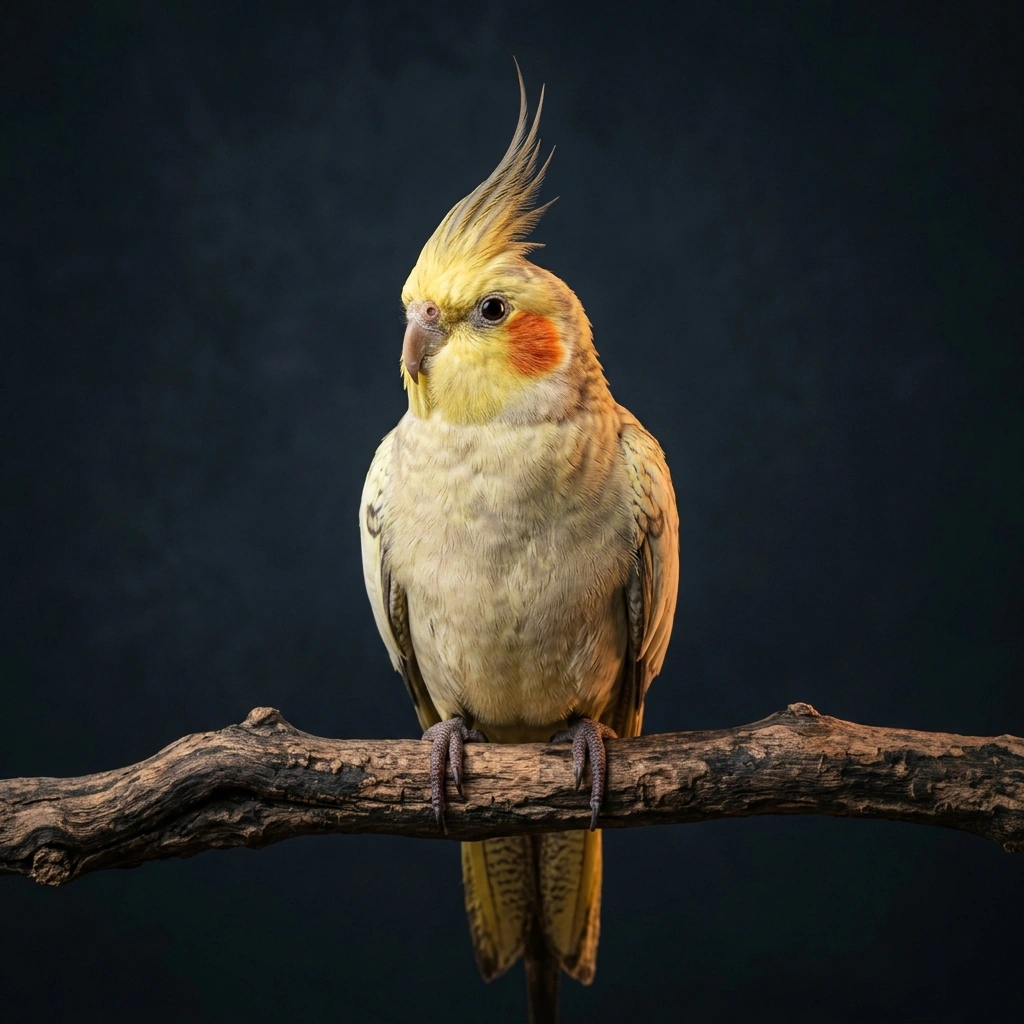
Characterized by bright orange cheeks and an elegant head crest, the Cockatiel is one of the most cherished companion birds globally. Cockatiels form deep emotional bonds with human caregivers and love whistling tunes, yet they retain wild prey instincts that make them highly susceptible to ‘Night Frights’—sudden nocturnal panic attacks triggered by dim shadows or distant noises. Guided by Association of Avian Veterinarians (AAV) protocols, this guide breaks down their emotional body language and establishes a daily routine for optimal health.
Veterinary & Behavioral Evidence
This content is based on Association of Avian Veterinarians (AAV) & Avian Behavior Advisory Standards.
 FreshSelf
Keep pet food and supplements perfectly fresh!
FreshSelf
Keep pet food and supplements perfectly fresh!








1. Cockatiel Communication Language: Deciphering Crest Movements and Head Bowing
Cockatiel Communication Language: Deciphering Crest Movements and Head Bowing
A Cockatiel's head crest acts as a sensitive emotional antenna revealing its inner state. A crest held flat against the skull versus one fully erect indicates completely different mindsets, while lowering the head is a profound gesture of trust.
2. Cockatiel (Nymphicus hollandicus)‘s Body Language & Behavioral Signals
Fully Erect Crest & Vertical Posture (Fully Erect Crest)
Indicates intense curiosity or alert vigilance toward an unfamiliar noise, object, or sudden movement in the room.
Avoid reaching in suddenly. Speak in low, comforting tones while allowing the bird to safely observe and assess the situation.
Head Lowered & Neck Extended Forward (Head Lowering for Scratches)
A sign of deep trust and affection, explicitly requesting head and cheek (crest base) preening from the caregiver.
Gently stroke the base of the crest and orange cheek feathers against the grain using your fingertip.
3. Customized 3-Step Home Care Routine for Cockatiel (Nymphicus hollandicus)
Morning: Natural Ventilation, Feather Inspection & Fresh Pellet Feeding
Uncover the cage, refresh high-quality pellet feed and clean water, and observe flight agility for any wing injury or eye discharge.
Afternoon: Supervised Free Flight & Foraging Toy Interaction
Secure all windows and doors for 1 - 2 hours of supervised free flight in a bird-proof room while offering foraging toys to stimulate mental acuity.
Evening: Feather Powder Dander Wiping & Night Fright Cover Routine
Wipe down cage powder dander, switch on a dim night-light nearby to prevent darkness panic, and drape a breathable dark cover.
📌 Frequently Asked Questions (FAQ)
What immediate steps should I take during a midnight Night Fright episode? ▼
Immediately switch on room lights, speak calmly to soothe the bird, and carefully check wings and beak for bleeding feathers. Keeping a permanent dim night-light next to the cage effectively prevents future episodes.
Is the heavy white powder dander from my Cockatiel normal? ▼
Yes, Cockatiels naturally produce keratin powder down to waterproof and condition their feathers. Operating an HEPA air purifier and offering gentle water spray misting 2 - 3 times weekly will manage dander efficiently.