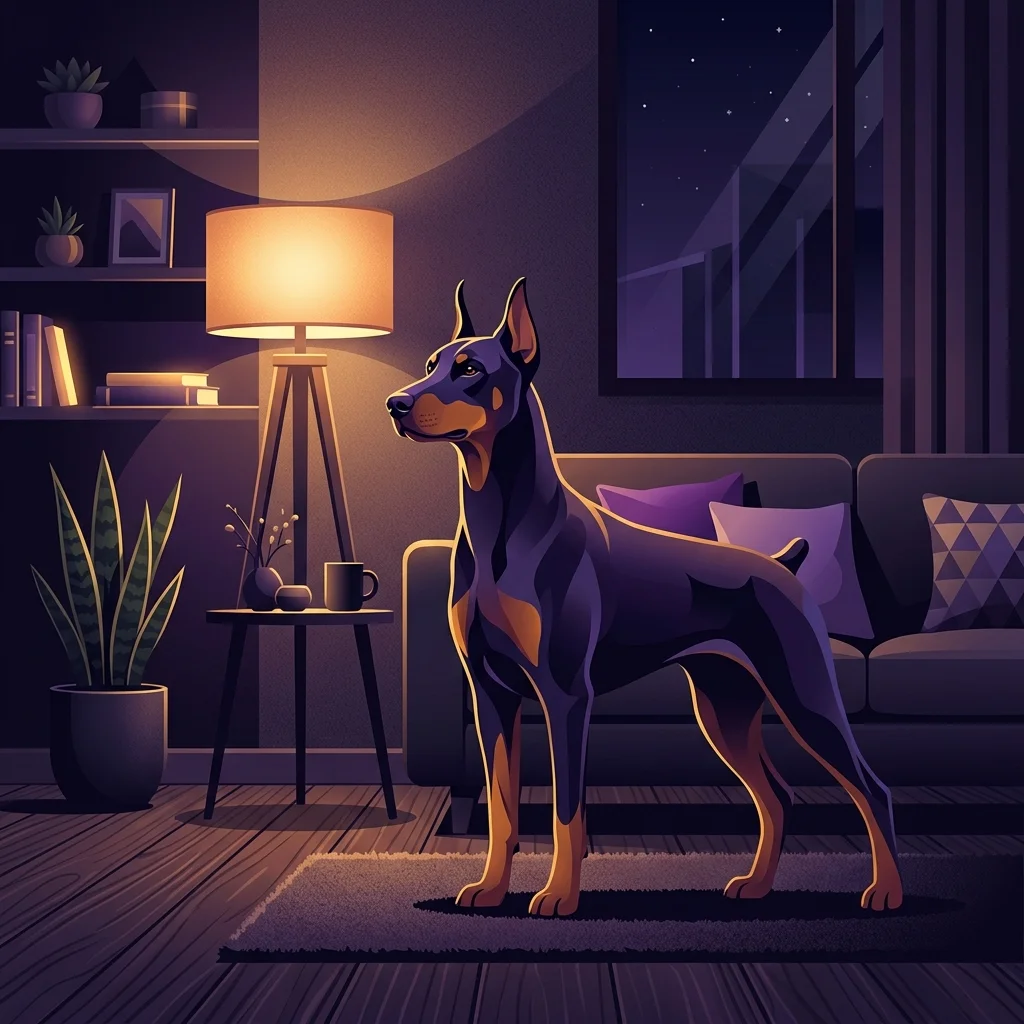
Renowned for their intelligence, elegant physique, and unwavering loyalty, the Doberman Pinscher is a cherished companion and working dog worldwide. While deeply devoted to their families, Dobermans are genetically predisposed to Dilated Cardiomyopathy (DCM) and, due to their deep-chested structure, are highly vulnerable to fatal Gastric Dilatation-Volvulus (GDV/Bloat). Furthermore, their single short coat makes them sensitive to cold, and without sufficient physical and mental stimulation, they can develop stress behaviors. In this guide, presents a 3-step daily care routine to decode your Doberman’s body signals and safeguard their health.
Veterinary & Behavioral Evidence
This content is based on American Kennel Club (AKC) & Doberman Pinscher Club of America (DPCA) Care Standards.
 FreshSelf
Keep pet food and supplements perfectly fresh!
FreshSelf
Keep pet food and supplements perfectly fresh!


1. Doberman Pinscher Body Language: The Dobie Lean and the Hard Stare
Doberman Pinscher Body Language: The Dobie Lean and the Hard Stare
Dobermans communicate affection and territorial alertness through distinct physical postures and eye contact. Pressing their full weight against your legs or body 'The Dobie Lean' is their signature display of deep trust, affection, and desire for closeness. Conversely, standing completely rigid with a raised neck and an unblinking gaze 'The Hard Stare / Stiff Stance' is an explicit alert signal indicating high arousal, threat assessment, and potential defense.
2. Doberman Pinscher’s Body Language & Behavioral Signals
Pressing Full Body Weight Against Owner's Legs (Dobie Lean)
A signature Doberman affection display showing profound trust, attachment, and physical reassurance toward their owner.
Respond calmly with gentle petting to reinforce bond and reaffirm your confident leadership.
Standing Rigid with Raised Neck and Unblinking Gaze (Hard Stare / Stiff Stance)
A high-alert posture triggered by potential threats or territorial intrusion, signaling readiness to react.
Shorten the leash, block their line of sight to the trigger, and redirect attention using 'Sit' or 'Look at Me' commands.
3. Customized 3-Step Home Care Routine for Doberman Pinscher
Morning: High-Protein Meal & Strict Post-Meal Rest to Prevent GDV Bloat
Feed using a slow-feeder bowl to reduce air swallowing, and strictly enforce a 1-hour calm rest period after eating with no vigorous running.
Afternoon: High-Intensity Physical Exercise (60+ Min) & Mental Enrichment
Satisfy their high drive with activities like running, flirt pole, or agility, combined with obedience training and nosework games.
Evening: Coat & Skin Inspection & Cold Weather Protection
Inspect their single short coat for dryness or irritation, maintain warm indoor ambient temperatures, and use protective apparel during cold walks.
📌 Frequently Asked Questions (FAQ)
Why is Dilated Cardiomyopathy (DCM) particularly dangerous for Dobermans? ▼
Dilated Cardiomyopathy (DCM) is a fatal inherited heart disease affecting over 50% of Doberman Pinschers. The heart muscle thins and enlarges, losing its ability to pump blood effectively. Because early stages are often asymptomatic until sudden weakness or cardiac collapse occurs, annual screening with echocardiograms and 24-hour Holter monitoring starting at 1–2 years old is essential for early detection.
Why can exercise right after eating cause life-threatening GDV (Bloat)? ▼
Dobermans have deep, narrow chests, giving the stomach room to rotate. Eating rapidly or exercising immediately after a meal can cause the stomach to fill with gas and twist on itself (GDV/Bloat). This cuts off blood supply to vital organs within hours, causing rapid shock. To prevent this, divide daily food portions, use slow feeders, and keep them completely calm for at least one hour post-meal.