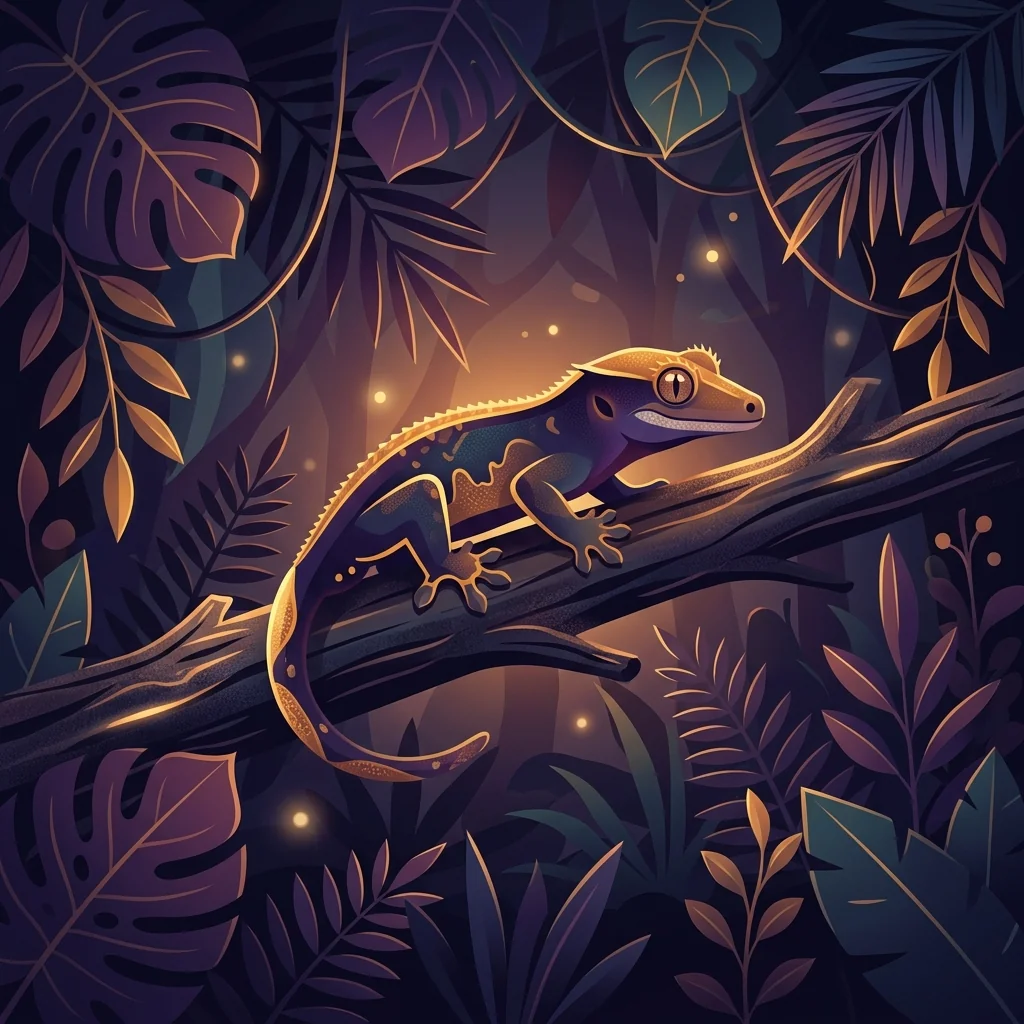
Famous for the eyelash-like crests above their eyes, the Crested Gecko (Correlophus ciliatus) is one of the most beloved pet reptiles worldwide due to its gentle nature and convenient powdered diet (Superfood / Meal Replacement Powder). As an arboreal reptile, providing a tall enclosure, proper humidity cycles (60%–80%), and cool temperatures (20°C–26°C) is essential. Preventing Metabolic Bone Disease (MBD) caused by calcium deficiency is crucial, and since a dropped tail does not regenerate, avoiding stress is a priority. In this guide, presents a 3-step daily care routine to read your Crested Gecko’s body signals and maintain its health.
Veterinary & Behavioral Evidence
This content is based on International Reptile Conservation Protocols & USARK Veterinary Care Standards.
 FreshSelf
Keep pet food and supplements perfectly fresh!
FreshSelf
Keep pet food and supplements perfectly fresh!






1. Crested Gecko Body Language: S-Tail Wagging and Eye Wiping
Crested Gecko Body Language: S-Tail Wagging and Eye Wiping
Crested Geckos communicate their emotional state through tail movements and tongue gestures. Raising the tail into an S-shape and slowly waving it is a 'Guarding & Threat Signal (Tail S-Wagging)' indicating defensive alert or extreme stress before tail autotomy. Conversely, sweeping their tongue over their eyecaps or snout is a natural 'Hygiene & Exploration Signal (Eye Wiping)' to moisten lidless eyes and gather odor particles.
2. Crested Gecko / Eyelash Gecko (Crested Gecko)‘s Body Language & Behavioral Signals
Raising Tail in an S-Shape and Slowly Waving (Tail S-Wagging)
An extreme alert and stress warning displayed when feeling threatened by predators or handling, often preceding tail drop.
Immediately stop handling and return them to a dark, quiet enclosure to rest and calm down.
Licking Eyeballs or Mouth Area with Tongue (Eye Wiping / Tongue Flicking)
A natural behavior that hydrates the lidless eye surface and delivers scent particles to the Jacobson's organ.
This is completely normal behavior, so do not disturb them, and verify that enclosure humidity (60%–80%) is appropriate.
3. Customized 3-Step Home Care Routine for Crested Gecko / Eyelash Gecko (Crested Gecko)
Morning: Enclosure Wall Misting & Cool Temp/Humidity Check
Mist the enclosure walls so they can lap up water droplets, and maintain a cool daytime temperature (22°C–25°C).
Afternoon: Direct Sunlight Block & Dark Hide Sleep Monitoring
Protect the gecko from direct sunlight as they are highly vulnerable to temperatures above 28°C, ensuring a cool and dark resting place.
Evening: Powdered Superfood Feeding & Nighttime Misting (70%–80%)
Offer calcium-fortified superfood every 2–3 days and mist the enclosure thoroughly to support nocturnal activity and shedding.
📌 Frequently Asked Questions (FAQ)
Does a Crested Gecko's tail grow back if it drops? ▼
No, unlike many other lizards, a Crested Gecko's tail does not regenerate once dropped, and the detached site heals into a smooth button-shaped stump. Therefore, be careful never to grab their tail firmly or cause severe stress.
Do I need to feed live insects, or is superfood enough? ▼
A complete commercial Crested Gecko Diet (MRP / Superfood) alone provides full nutrition. However, you must periodically check calcium fortification to prevent Metabolic Bone Disease (MBD) caused by calcium deficiency.