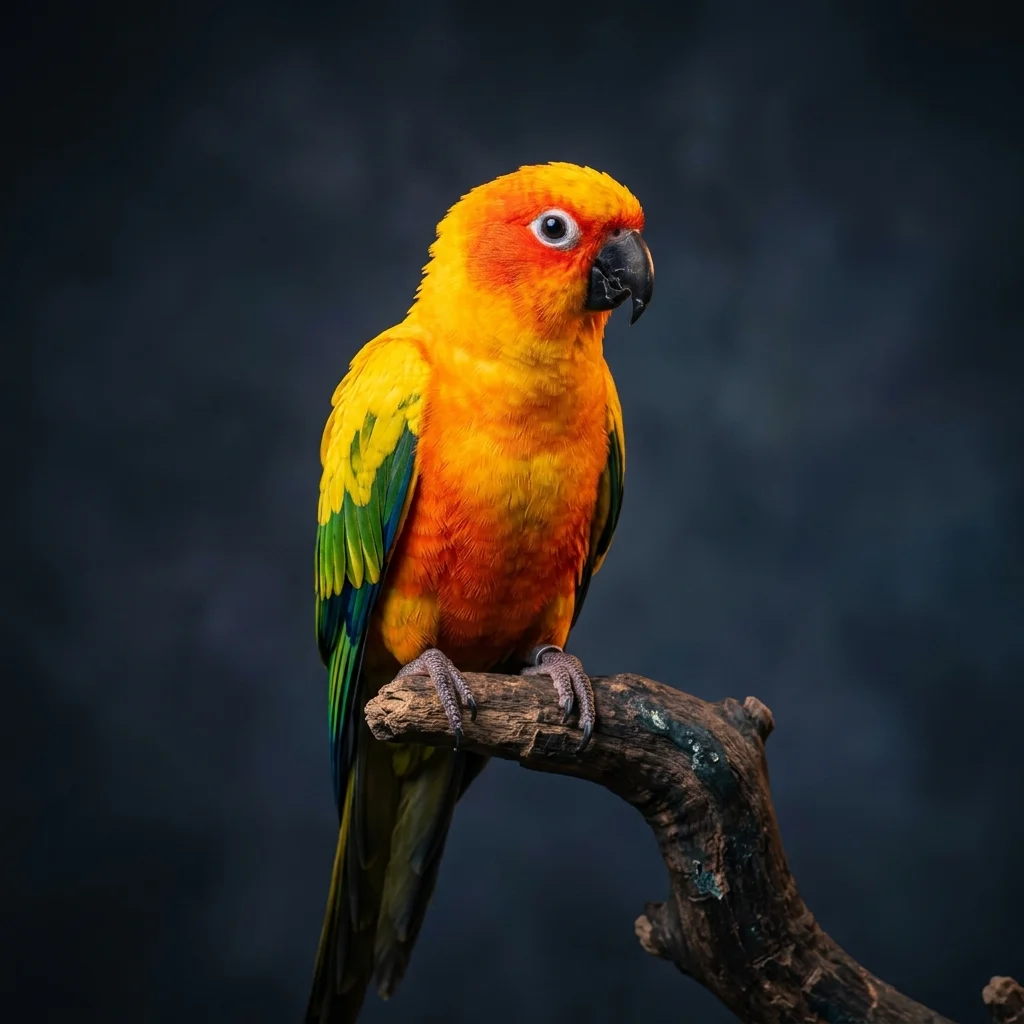
Boasting brilliant yellow and orange plumage alongside an affectionate personality, the Sun Conure is a beloved medium-sized parrot worldwide. However, as highly intelligent flock animals, they have intense social needs, loud contact calls, and a tendency toward Vitamin A deficiency when fed seed-only diets. Furthermore, failing to provide 10 to 12 hours of quiet, dark sleep can cause stress-induced feather plucking and behavioral issues. In this guide, details a 3-step daily routine to protect your Sun Conure’s health.
Veterinary & Behavioral Evidence
This content is based on World Parrot Trust (WPT) Husbandry Standards & Association of Avian Veterinarians (AAV) Clinical Guidelines.
 FreshSelf
Keep pet food and supplements perfectly fresh!
FreshSelf
Keep pet food and supplements perfectly fresh!


1. Sun Conure Physical Signals: Loud Screaming (Contact Call) and Feather Plucking
Sun Conure Physical Signals: Loud Screaming (Contact Call) and Feather Plucking
If a Sun Conure utters 'ear-piercing, continuous high-pitched screams', it is exhibiting its natural flock contact call, seeking attention or expressing boredom. Conversely, 'overzealous chewing or plucking of chest and wing feathers' serves as a warning of severe stress, sleep deprivation, or nutritional deficiency.
2. Sun Conure (Aratinga solstitialis)‘s Body Language & Behavioral Signals
Loud High-Pitched Screaming (Contact Call)
A natural instinct to communicate with its flock, activated when seeking owner attention, stimulation, or relief from boredom.
Do not respond immediately to screaming, as this reinforces the behavior. Reward quiet behavior and redirect energy using foraging toys.
Feather Plucking & Chewing
A stress-induced or physically triggered state caused by lack of sleep, environmental boredom, Vitamin A deficiency, or dry skin.
Ensure 10–12 hours of dark, quiet sleep using a blackout cage cover, offer Vitamin A-rich vegetables, and provide gentle mist baths.
3. Customized 3-Step Home Care Routine for Sun Conure (Aratinga solstitialis)
Morning: Pellet Base & Vitamin A Fresh Produce & Mist Bathing
Provide high-quality formulation pellets as the primary diet alongside Vitamin A-rich vegetables like carrots, sweet potatoes, and squash. Offer a light lukewarm mist bath.
Afternoon: Non-Toxic Wood Destruction Toys & Foraging Activities
Satisfy their strong chewing drive by offering safe, untreated wooden shredding toys and hiding pellets inside foraging puzzles to stimulate their mind.
Evening: Social Interaction & 10–12 Hours Dark Uninterrupted Sleep
Spend dedicated one-on-one bonding time, then place a blackout cover over the cage around 8–9 PM in a quiet room to ensure 10 to 12 hours of sleep.
📌 Frequently Asked Questions (FAQ)
Can I completely eliminate a Sun Conure's loud screaming? ▼
No. Vocalizing is a natural parrot communication method. However, you can significantly reduce screaming by ignoring noise, reinforcing quiet behavior with positive rewards, and keeping their mind busy with foraging toys.
Why is an all-seed diet dangerous for Sun Conures? ▼
Seed-only diets are high in fat and deficient in Vitamin A and calcium, leading to obesity, respiratory epithelial disease, and feather plucking. Formulated pellets should make up at least 70% of their daily diet.