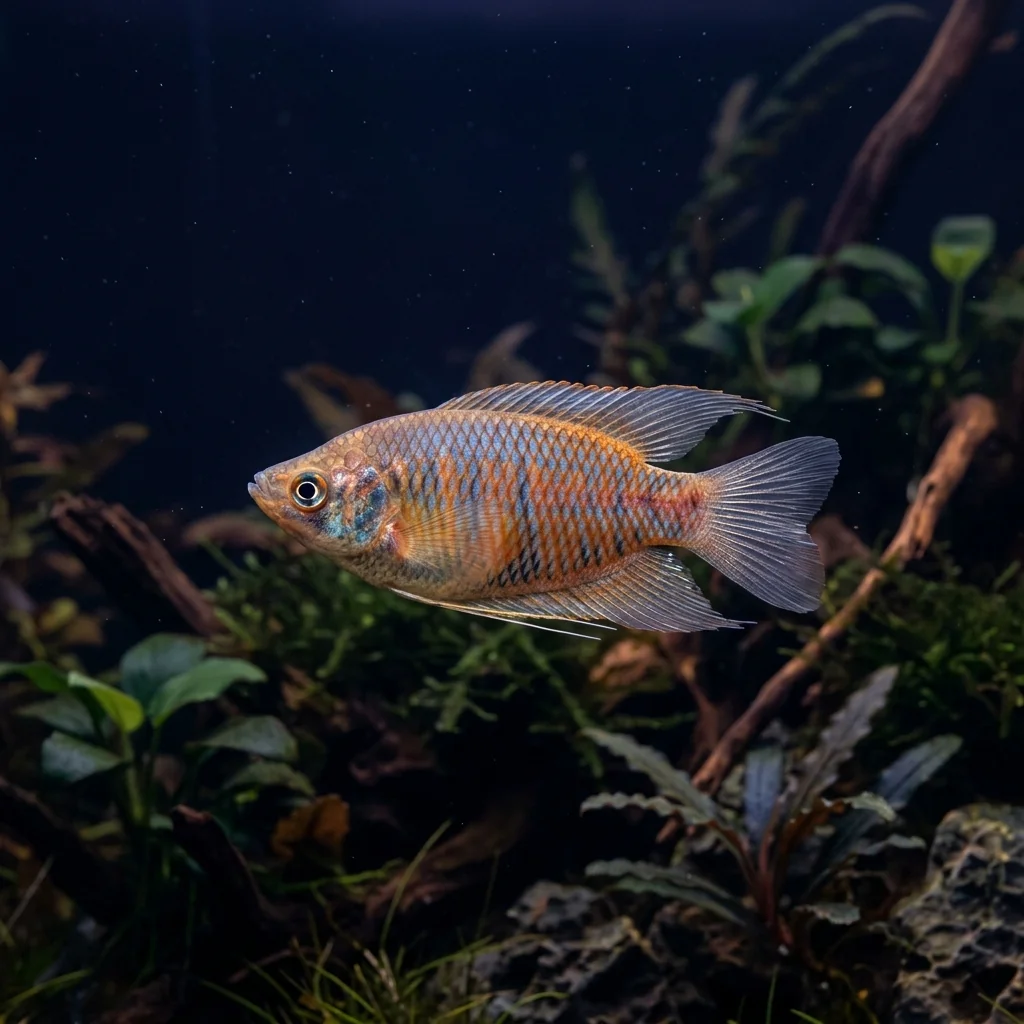
The Dwarf Gourami (Trichogaster lalius) is a renowned tropical freshwater fish loved worldwide for its vibrant neon blue and orange-red stripes and gentle disposition. Equipped with a specialized ‘labyrinth organ,’ they possess the unique ability to breathe atmospheric oxygen directly from the water surface. They also feature modified thread-like pelvic fins used as feelers to explore their environment. In this guide, we decode Dwarf Gourami instinctual signals and present a 3-step homecare routine for surface air protection, color-enhancing nutrition, and harmonious community tank maintenance.
Veterinary & Behavioral Evidence
This content is based on Ornamental Fish International (OFI) Water Quality Standards and Aquatic Veterinary Clinical Guidelines.
 FreshSelf
Keep pet food and supplements perfectly fresh!
FreshSelf
Keep pet food and supplements perfectly fresh!





1. Dwarf Gourami Instincts: Surface Air Gulping and Thread-like Fin Feeling
Dwarf Gourami Instincts: Surface Air Gulping and Thread-like Fin Feeling
Dwarf Gouramis regularly surface to gulp atmospheric air using their specialized labyrinth organ. Additionally, they extend their modified, thread-like pelvic fins forward like sensory antennae to gently touch aquatic plants, substrate, and fellow tankmates to navigate their surroundings.
2. Dwarf Gourami (Trichogaster lalius)‘s Body Language & Behavioral Signals
Surface Air Gulping (Surface Breathing)
Normal atmospheric oxygen intake using the labyrinth organ; also reflects ambient air temperature and dissolved oxygen levels.
Keep an aquarium lid fitted to retain warm, humid air over the water surface, preventing cold drafts from shocking the labyrinth organ.
Pelvic Fin Feeling (Feeler Exploration)
Sensory exploration behavior using nerve-rich thread-like fins to inspect objects, plants, or tankmates out of curiosity.
Remove sharp decorations that could tear their delicate feelers and provide dense live plants for comfortable exploration.
3. Customized 3-Step Home Care Routine for Dwarf Gourami (Trichogaster lalius)
Morning: Water & Air Temp Check and Carotenoid Color Feeding
Ensure water temperature remains stable (24–28°C / 75–82°F) and feed astaxanthin-enriched flakes or pellets to promote vivid neon and red coloration.
Afternoon: Low Water Flow Adjustment & Floating Plant Care
Adjust filter outlets to create gentle, low-current water flow suited for their body shape, and check floating plants (e.g., Frogbit) that provide shade and security.
Evening: High-Protein Live/Frozen Feeding & Gradual Dimming
Offer nutrient-dense frozen bloodworms or brine shrimp for metabolic health, then gradually dim tank lights to encourage stress-free evening rest among plant foliage.
📌 Frequently Asked Questions (FAQ)
Which tankmates are compatible with Dwarf Gouramis? ▼
They thrive alongside peaceful, small community fish such as Neon Tetras, Harlequin Rasboras, Corydoras, and Otocinclus. Avoid aggressive fin-nippers (e.g., Tiger Barbs) or other territorial labyrinth fish (like male Bettas or rival male Gouramis).
Why is an aquarium cover/lid essential for Dwarf Gouramis? ▼
Because Dwarf Gouramis inhale air above the water line into their delicate labyrinth organ. A lid traps humidity and warmth, preventing cold room air from causing organ damage or respiratory inflammation.