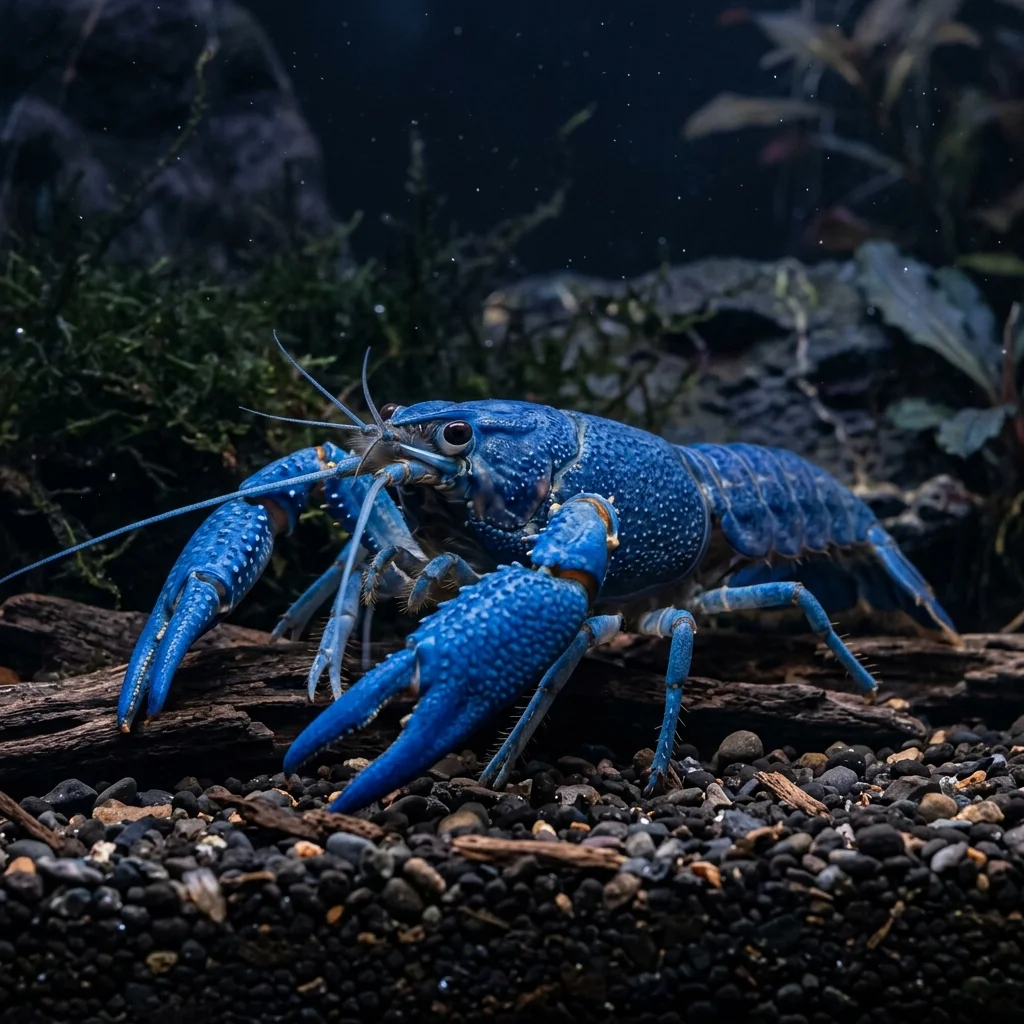
The Electric Blue Crayfish (Procambarus alleni) is a stunning freshwater crustacean famous for its vibrant cobalt blue coloration. Reaching 10 to 15 cm as adults, they feature powerful claws and engaging behaviors. However, like all crustaceans, they undergo periodic molting (ecdysis) to grow. Immediately after molting, their soft exoskeleton leaves them extremely vulnerable to predation and cannibalism. Providing adequate calcium/magnesium minerals for shell hardening and avoiding cohabitation with slow bottom fish or dwarf shrimp is vital. In this guide, outlines Electric Blue Crayfish behavioral signals and shares a 3-step husbandry routine.
Veterinary & Behavioral Evidence
This content is based on The Crustacean Society & Ornamental Crustacean Clinical Guidelines.
 FreshSelf
Keep pet food and supplements perfectly fresh!
FreshSelf
Keep pet food and supplements perfectly fresh!








1. Electric Blue Crayfish Instincts: Pre-molt Behavioral Shifts and Claw Threat Displays
Electric Blue Crayfish Instincts: Pre-molt Behavioral Shifts and Claw Threat Displays
When threatened, Electric Blue Crayfish execute a 'Claw Display', raising both chelae high to appear larger. Prior to molting, they refuse food and retreat deep inside caves in a 'Pre-molt Hiding' strategy to minimize movement and vulnerability.
2. Electric Blue Crayfish (Procambarus alleni)‘s Body Language & Behavioral Signals
Claw Display & Defensive Posture
Widening and raising pincers upward, signaling territorial defense or a warning response to physical stimuli.
Avoid inserting nets or hands unnecessarily; observe quietly to minimize stress.
Pre-molt Anorexia & Hiding
Refusing food pellets and staying hidden in dark shelters, indicating imminent ecdysis (molting).
Prevent disturbance by tankmates and ensure adequate PVC pipes or rock caves are available.
3. Customized 3-Step Home Care Routine for Electric Blue Crayfish (Procambarus alleni)
Morning: Water Hardness (GH/KH) & Temperature Check (20–25°C)
Verify mineral parameters (GH 6–15 dGH, pH 7.0–8.0) and inspect calcium supplements or cuttlebone availability.
Afternoon: Exuvia Inspection & Hide Maintenance
Leave the shed exoskeleton (exuvia) in the tank for 2–3 days, as the crayfish ingests it to recycle calcium.
Evening: Sinking Invertebrate Pellet Feeding & Filter Flow Adjustment
Provide high-calcium sinking pellets or fresh blanched vegetables at night, and ensure filter currents are gentle for soft post-molt individuals.
📌 Frequently Asked Questions (FAQ)
Should I immediately remove the shed exoskeleton after my crayfish molts? ▼
No! Crayfish consume their own molted shell (exuvia) to reabsorb essential calcium and minerals needed to harden their new exoskeleton quickly. Only remove leftover unconsumed pieces after 3 days to maintain water cleanliness.
Is it safe to keep Electric Blue Crayfish with dwarf shrimp or small fish? ▼
Cohabitation is not recommended. Crayfish are opportunistic hunters that will catch sleeping fish, bottom-dwellers, and dwarf shrimp with their pincers. They also uproot aquatic plants, making single-specimen tanks ideal.