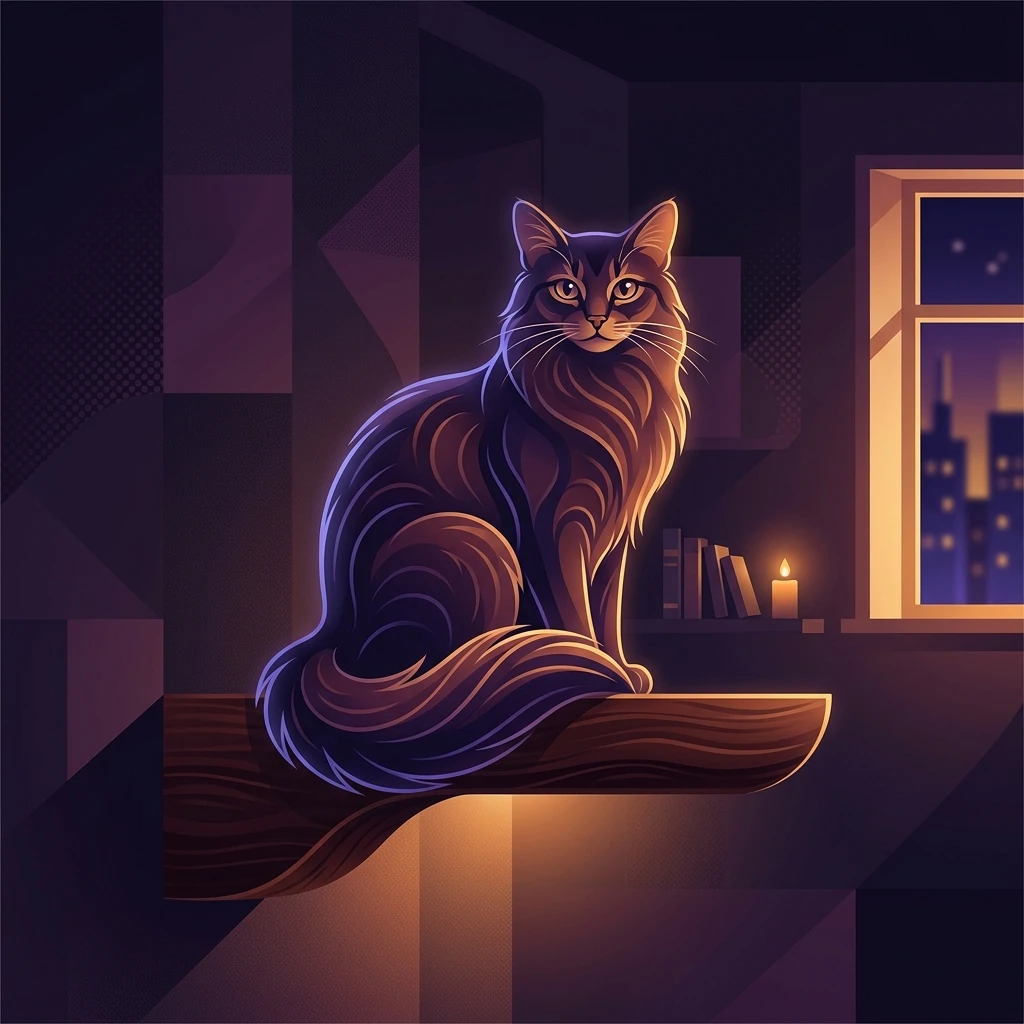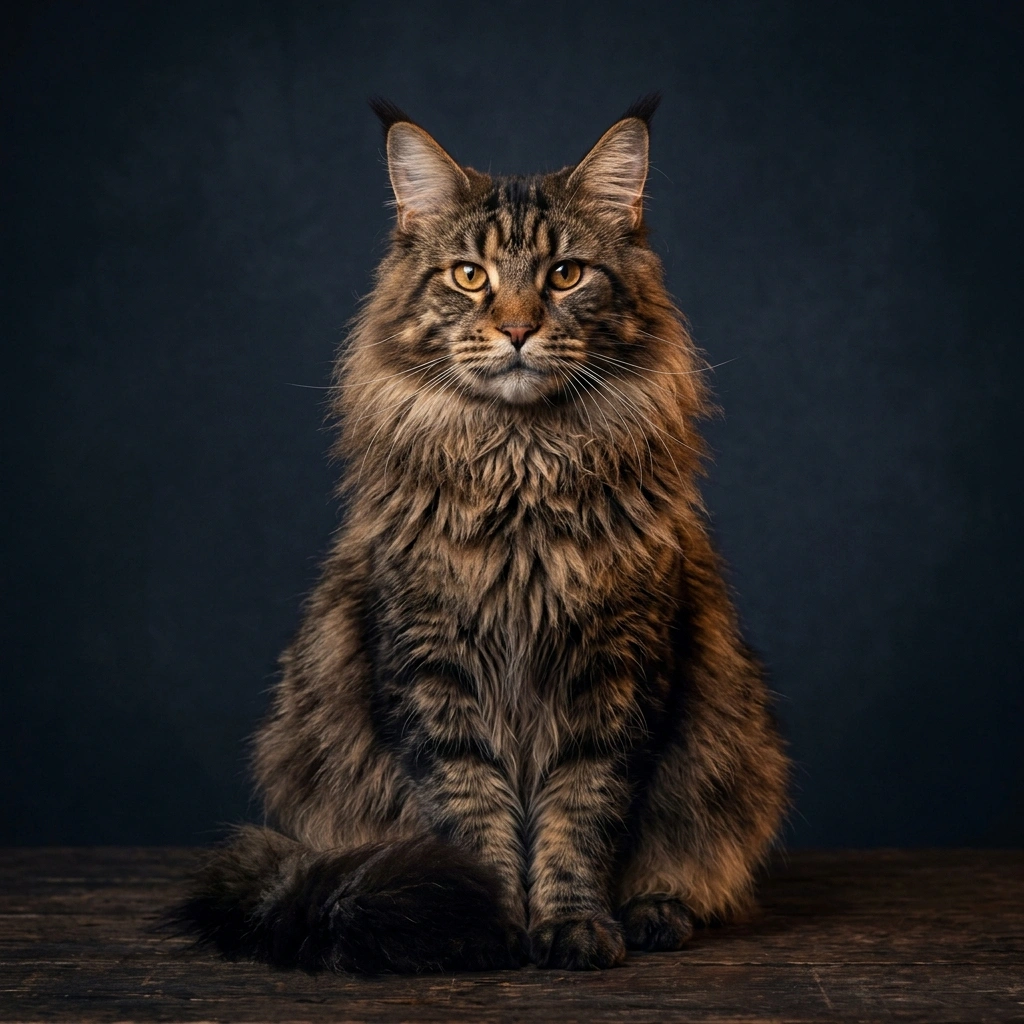
The Maine Coon, native to North America, is a naturally occurring breed known as the ‘Gentle Giant’ of the feline world. They feature a plush, lion-like ruff around their neck, tufted lynx tips on their ears, and a strong, square muzzle. Despite their imposing physical presence, they have extremely gentle, affectionate personalities, get along well with children and other animals, and possess a rare fondness for playing with water. 🐈
However, because adult males frequently reach heavy weights of 8 to 12 kg, gravitational stress on their joints and skeletal structure is significant. Crucially, Maine Coons carry a higher genetic predisposition for Hypertrophic Cardiomyopathy (HCM) than most breeds. Therefore, establishing a home care routine that daily monitors resting respiration rates to track cardiac workload and cushions joint landings from high places is vital for their lifelong health.
In this guide, decodes the calming signals and body language of the Maine Coon while introducing a safe 3-step homecare routine to protect their heart and maintain their magnificent double coat.
Veterinary & Behavioral Evidence
This content is based on Maine Coon Breeders & Fanciers Association (MCBFA) Guidelines & AAFP Large Feline Management Protocols.
 FreshSelf
Keep pet food and supplements perfectly fresh!
FreshSelf
Keep pet food and supplements perfectly fresh!





1. Maine Coon Body Language: Friendly Trilling and Alert Puffed Tail
Maine Coon Body Language: Friendly Trilling and Alert Puffed Tail
Maine Coons are highly social and curious, exhibiting a stronger urge to communicate with their owners compared to other cats. Typical communication signals include 'Trilling' and a 'Puffed Tail'. A soft, chirping 'trill' sound made while approaching is a warm greeting expressing deep affection and requesting interaction. Conversely, when startled by unexpected appliance noises or unfamiliar environments, the fur along their entire tail puffs out into a thick bottle-brush shape. When you notice a puffed tail, remove the stressor immediately and allow them time to calm down undisturbed in a quiet room.
2. Maine Coon (Felis catus)‘s Body Language & Behavioral Signals
Trilling
A friendly vocalization expressing supreme trust and affection toward the owner, requesting gentle conversation or interaction.
Reply in a soft, cheerful high tone or offer light petting on their cheeks to return the love.
Puffed Tail
An involuntary reaction to sudden auditory or visual frights, indicating that excitement and alertness have reached a peak.
Identify and remove the frightening trigger immediately, and do not force physical contact; allow the cat to settle down on its own.
3. Customized 3-Step Home Care Routine for Maine Coon (Felis catus)
Morning: Portion-Controlled Feeding for Weight & HCM Risk Management
Hypertrophic Cardiomyopathy (HCM) in Maine Coons worsens with obesity. Weigh their food every morning on a digital scale based on precise daily caloric requirements, and ensure a clean, abundant water supply.
Afternoon: Steel Comb Full-Body Grooming to Prevent Long Double Coat Mats
The lion-like ruff and armpit fur mat easily, leading to skin inflammation. Use a steel comb to comb deeply into the undercoat to detangle knots, remove dander, and maintain proper coat ventilation.
Evening: Landing Shock Cushion Mat Inspection & Sleeping Respiration Monitoring
As a giant breed, high jumps put heavy impact on their joints. Check the condition of cushion mats beneath cat trees and sofas, and measure their sleeping respiration rate (should be under 30 breaths per minute) to prevent cardiac overload.
📌 Frequently Asked Questions (FAQ)
How should I manage the Maine Coon's high risk of Hypertrophic Cardiomyopathy (HCM)? ▼
Regular veterinary cardiac ultrasounds (echocardiograms) are crucial. At home, strictly manage daily meal portions to prevent obesity. If their sleeping respiration rate consistently exceeds 30 breaths per minute or is accompanied by open-mouth panting, seek immediate veterinary evaluation.
What happens if I forcibly brush a Maine Coon's matted double coat? ▼
Maine Coons are large and physically strong. If grooming causes pain and creates fear, they may become defensively aggressive, making future handling unmanageable. Always spritz matted areas (such as armpits or groin) with a detangling spray first and untangle them gently in small sessions.