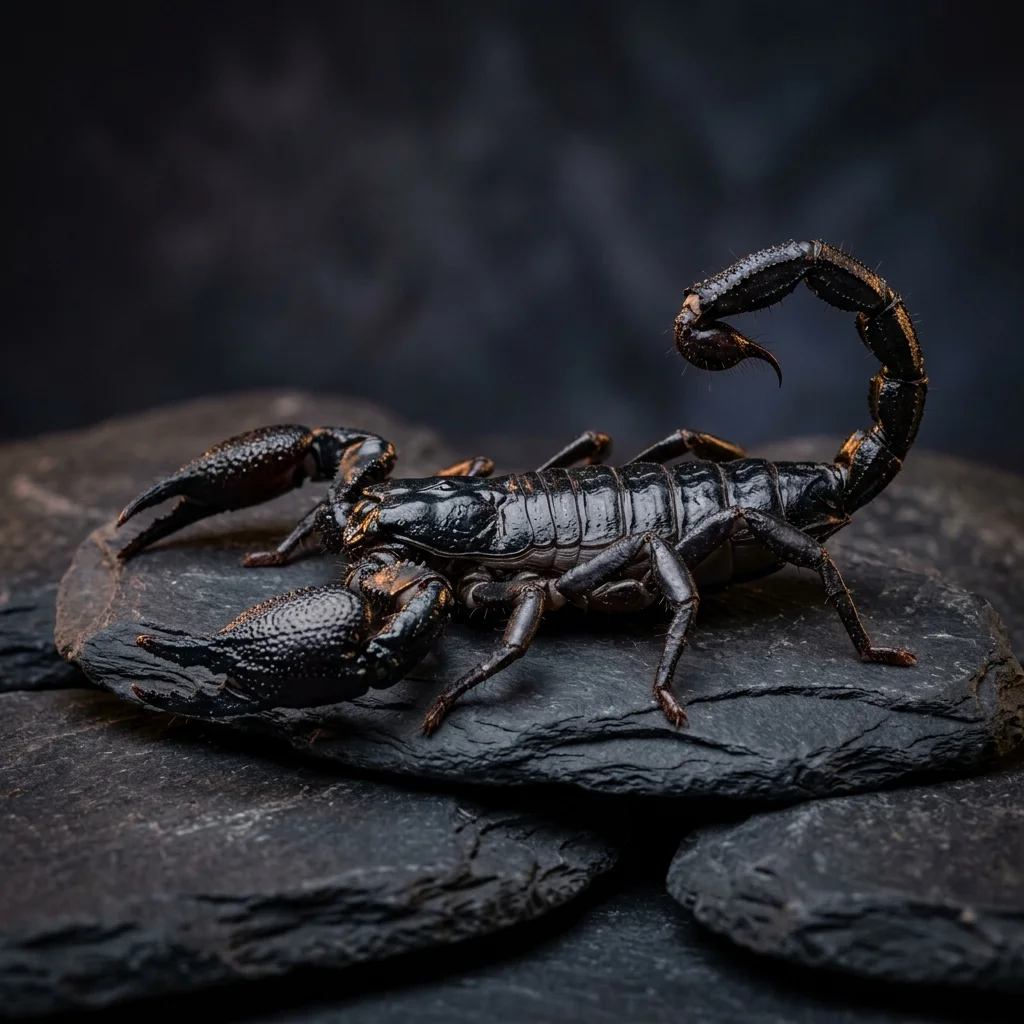
Highly favored alongside the Mexican Redknee Tarantula among exotic pet keepers worldwide, the Emperor Scorpion is a grand arachnid recognized by its glossy black body and massive pedipalps. Growing up to 20 cm in length, they rely on their powerful pincers rather than their venomous stinger for defense and capturing prey, possessing venom so mild it is comparable to a bee sting. A fascinating biological feature of this species is their outer cuticle (hyaline layer), which fluoresces a brilliant cyan/blue-green under ultraviolet (UV/blacklight) illumination. Native to West African rainforests, maintaining high humidity (75–85%) and warm temperatures (26–30°C) is essential. In this guide, breaks down threat and burrowing signals while outlining a 3-step homecare routine for environmental management.
Veterinary & Behavioral Evidence
This content is based on Arachnid Care Standards and Exotic Pet Veterinary Protocols.
 FreshSelf
Keep pet food and supplements perfectly fresh!
FreshSelf
Keep pet food and supplements perfectly fresh!






1. Emperor Scorpion Instincts: UV Fluorescence and Pedipalp Threat Display
Emperor Scorpion Instincts: UV Fluorescence and Pedipalp Threat Display
Emperor Scorpions display 'UV Fluorescence', glowing cyan under ultraviolet light due to organic compounds in their cuticle hyaline layer. When threatened or provoked, they adopt a 'Threat Display', widening their massive pedipalps (pincers) and arching their metasoma (stinger) forward to ward off danger.
2. Emperor Scorpion (Pandinus imperator)‘s Body Language & Behavioral Signals
Pedipalp Flare & Stinger Arching (Threat Display)
Widening pincers and curling the tail over the head, signaling intense fear or a defense warning against intruders.
Close the enclosure lid gently and leave them undisturbed to settle down on their own.
Substrate Burrowing & Hiding (Burrowing / Hiding)
Digging into damp coco fiber to conceal themselves, indicating molting preparation or low ambient humidity.
Mist the substrate thoroughly and remove live feeder insects immediately if molting is taking place.
3. Customized 3-Step Home Care Routine for Emperor Scorpion (Pandinus imperator)
Morning: Substrate Moisture Check (75–85% Humidity) & Water Dish Refill
Inspect the dampness of the coco fiber substrate, mist as needed, and refill the shallow water dish with clean water.
Afternoon: Temperature Monitoring (26–30°C) & Hide Inspection
Verify enclosure temperature using a digital thermo-hygrometer and check heating pad settings for stability.
Evening: Feeder Insect Offering & Brief UV Observation
Offer live crickets or roaches as nocturnal activity begins and remove uneaten prey leftovers.
📌 Frequently Asked Questions (FAQ)
Can I leave a UV blacklight on continuously in the enclosure? ▼
No. While UV fluorescence is mesmerizing, continuous UV light induces severe stress and can irritate their sensory organs. Use UV light sparingly for a few seconds during brief observations.
Is it safe to handle an Emperor Scorpion with bare hands? ▼
It is not recommended. Although their venom is mild, their massive pincers can inflict painful pinches and injuries. Handling also causes immense stress to the scorpion; use plastic tongs or catch cups for transport.