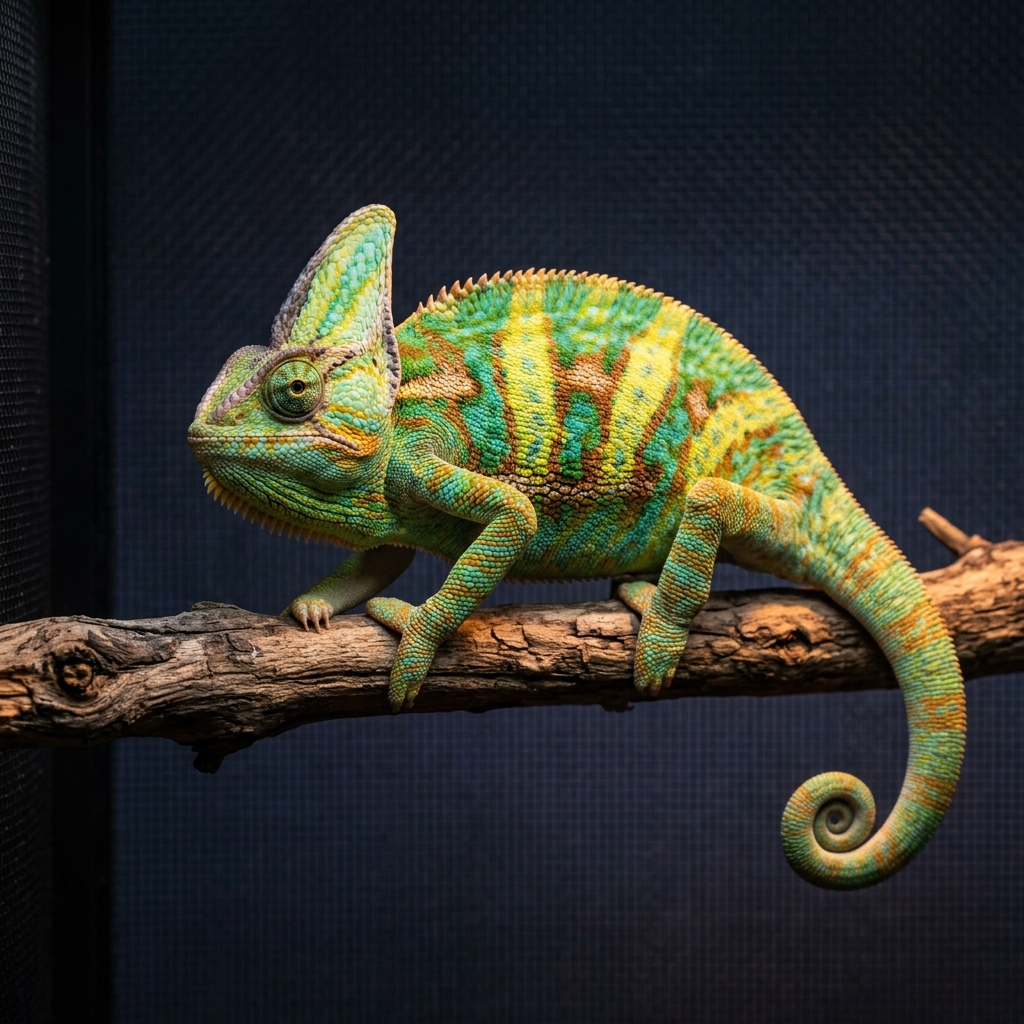
The Veiled Chameleon (Chamaeleo calyptratus) is a striking diurnal, arboreal reptile native to Yemen and Saudi Arabia, famous for the majestic helmet-like crest (cask) atop its head and its vivid color-changing abilities. Preferring height and three-dimensional branch structures, it is widely regarded as the top beginner species among chameleon keepers. However, because they do not recognize standing water in bowls and only drink water droplets off leaves, a water dripper or automated misting system is strictly mandatory. Furthermore, they are highly susceptible to upper respiratory infections in stagnant air, making a well-ventilated vertical screen enclosure and proper UVB/basking lighting essential for their survival. In this guide, we detail Veiled Chameleon defense signals, vertical setup management, and a 3-step daily hydration routine.
Veterinary & Behavioral Evidence
This content is based on Association of Reptilian and Amphibian Veterinarians (ARAV) Clinical Guidelines and Chameleon Academy Captive Care Standards.
 FreshSelf
Keep pet food and supplements perfectly fresh!
FreshSelf
Keep pet food and supplements perfectly fresh!







1. Veiled Chameleon Color Signals and Defense Behaviors: Gaping and Puffing
Veiled Chameleon Color Signals and Defense Behaviors: Gaping and Puffing
Chameleons alter their color not only for camouflage, but primarily to regulate body temperature, express stress, and display warnings. Dark colorations or black spots indicate stress or hypothermia, while gaping the mouth widely and puffing up the body serves as a strong warning signal.
2. Veiled Chameleon (Chamaeleo calyptratus)‘s Body Language & Behavioral Signals
Gaping & Body Puffing
A defensive warning stance triggered by fear or an attempt to cool down when ambient temperatures in the enclosure are excessively high.
Step back immediately without attempting to handle the animal, and verify that the basking zone temperature has not exceeded safe limits.
Dark Coloration & Stress Spots
Indicates the chameleon is trying to absorb heat due to low temperatures, or is experiencing severe stress from environmental changes.
Check enclosure temperature gradients and UVB function, and provide visual barriers around the cage to minimize external stress.
3. Customized 3-Step Home Care Routine for Veiled Chameleon (Chamaeleo calyptratus)
Morning: UVB/Basking Activation & Water Dripper Operation
Turn on UVB and basking spot lamps to raise body temperature, and start the water dripper or mister to form drinking droplets on leaves.
Afternoon: Ventilation & Basking Zone Temperature Check
Inspect screen cage airflow and ensure the thermal gradient between the basking site (32–35°C / 90–95°F) and lower zone (22–25°C / 72–77°F) is maintained.
Evening: Removing Live Feeder Insects & Dark Sleep Setup
Remove uneaten live crickets that could bite the chameleon overnight, and turn off all lights to provide complete darkness for restful sleep.
📌 Frequently Asked Questions (FAQ)
Can I use a regular water bowl for a Veiled Chameleon? ▼
No. Veiled Chameleons do not recognize standing water in a bowl as drinkable. They can dehydrate and die even with a full water dish present. You must provide water via a dripping system or misting on leaves.
Why should I use a vertical screen enclosure instead of a glass terrarium? ▼
Chameleons are extremely prone to fatal upper respiratory infections (URI) in stagnant, humid glass enclosures. Vertical full-screen mesh cages ensure continuous airflow, preventing bacterial growth and respiratory disease.