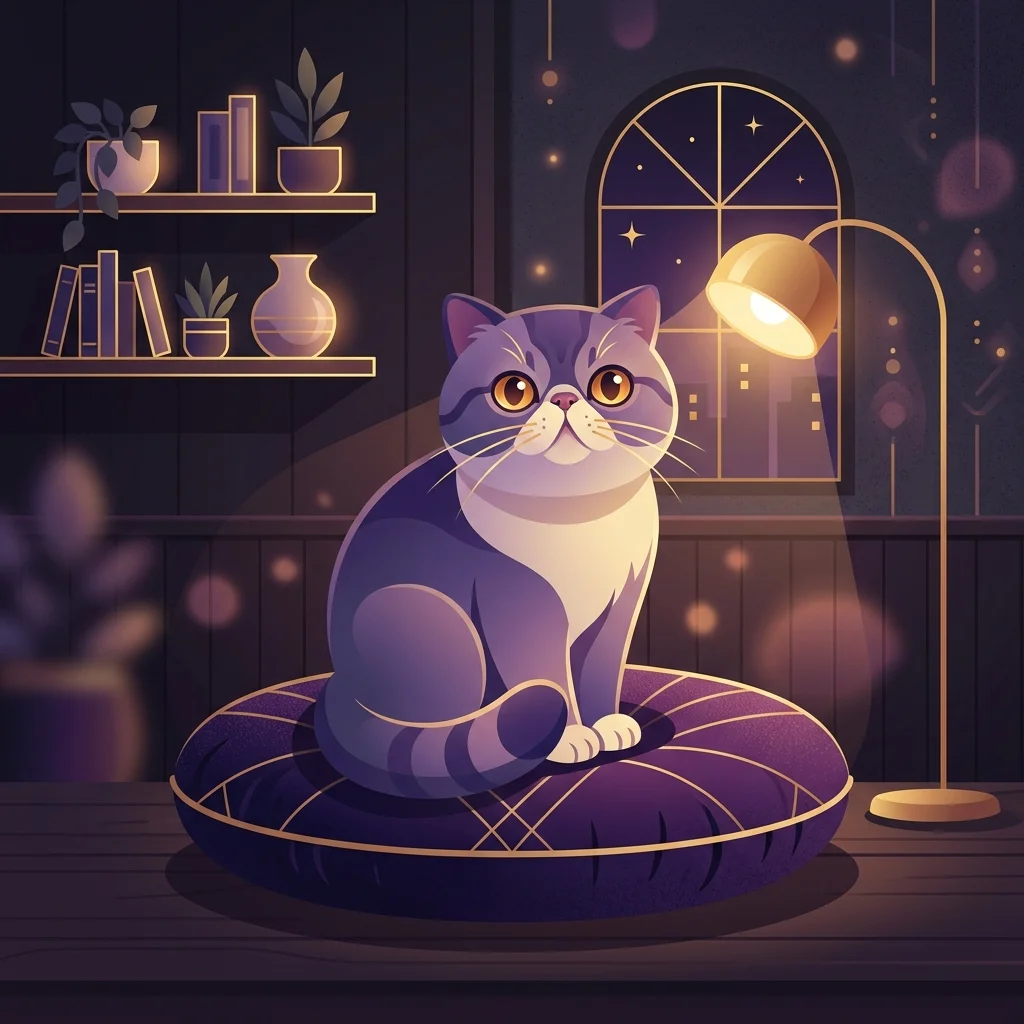
Often referred to as the ‘Persian in Pajamas,’ the Exotic Shorthair is cherished worldwide for its flat face, round eyes, and quiet, sweet personality. Combining the placid nature of the Persian with the playful friendliness of the American Shorthair, they are wonderful companions. However, their brachycephalic (flat-faced) facial structure makes them highly susceptible to Brachycephalic Airway Syndrome (BAS) and tear duct overflow. Additionally, they carry a genetic risk for Polycystic Kidney Disease (PKDef). In this guide, presents a 3-step daily care routine to decode your Exotic Shorthair’s body language and protect their health.
Veterinary & Behavioral Evidence
This content is based on Cat Fanciers' Association (CFA) & The International Cat Association (TICA) Care Standards.
 FreshSelf
Keep pet food and supplements perfectly fresh!
FreshSelf
Keep pet food and supplements perfectly fresh!






1. Exotic Shorthair Body Language: Gentle Purring and Bunting (Head-Rubbing)
Exotic Shorthair Body Language: Gentle Purring and Bunting (Head-Rubbing)
Exotic Shorthairs have soft voices and express affection through physical contact and subtle vibrations. Rubbing their cheeks or forehead against your hand or body 'Bunting / Cheeking' deposits facial pheromones, marking you as trusted family. Conversely, lying comfortably while emitting a quiet, rhythmic vibration 'Purring' signals complete contentment and psychological safety in their environment.
2. Exotic Shorthair’s Body Language & Behavioral Signals
Gently Rubbing Cheeks and Forehead Against Owner (Bunting / Cheeking)
A signature sign of affection that deposits facial pheromones to claim the owner as family and show deep trust.
Respond gently by stroking their chin or cheeks and speaking in a calm, soothing voice.
Lying Relaxed with Half-Closed Eyes while Purring Softly (Purring)
Indicates complete emotional comfort, contentment, and a stress-free state in their current surroundings.
Maintain a quiet, warm environment so they can continue to rest peacefully without sudden disruptions.
3. Customized 3-Step Home Care Routine for Exotic Shorthair
Morning: Facial Fold & Tear Stain Hygiene & Wet Feeding for PKDef Prevention
Wipe facial folds and tear overflow gently with a damp wipe due to short tear ducts, and feed wet food to ensure high hydration for kidney health.
Afternoon: Climate Control (Airway Protection) & Low-Impact Weight Management Play
Keep indoor temperature cool (22°C–24°C) as flat-faced breeds overheat easily, engaging in gentle rod toy play to prevent obesity.
Evening: Dense Double-Coat Brushing & Low-Dust Litter Box Maintenance
Brush daily to remove loose fur from their plush double coat, ensuring a clean, low-dust litter environment to prevent airway irritation.
📌 Frequently Asked Questions (FAQ)
Why does my Exotic Shorthair snore or breathe noisily? ▼
Exotic Shorthairs have a shortened facial structure with compressed nasal passages (Brachycephalic Airway Syndrome, BAS), causing mild snorting or snoring naturally. However, if you observe open-mouth breathing, bluish gums, or severe wheezing, consult a veterinarian immediately.
How should Polycystic Kidney Disease (PKDef) be managed and prevented? ▼
Polycystic Kidney Disease (PKDef) is a fatal inherited condition common in Persian-derived breeds where fluid-filled cysts develop in the kidneys. Ensure genetic screening (PKDef DNA test) at adoption, schedule annual renal ultrasound and blood tests after age 1, and maintain high daily water intake through wet food.