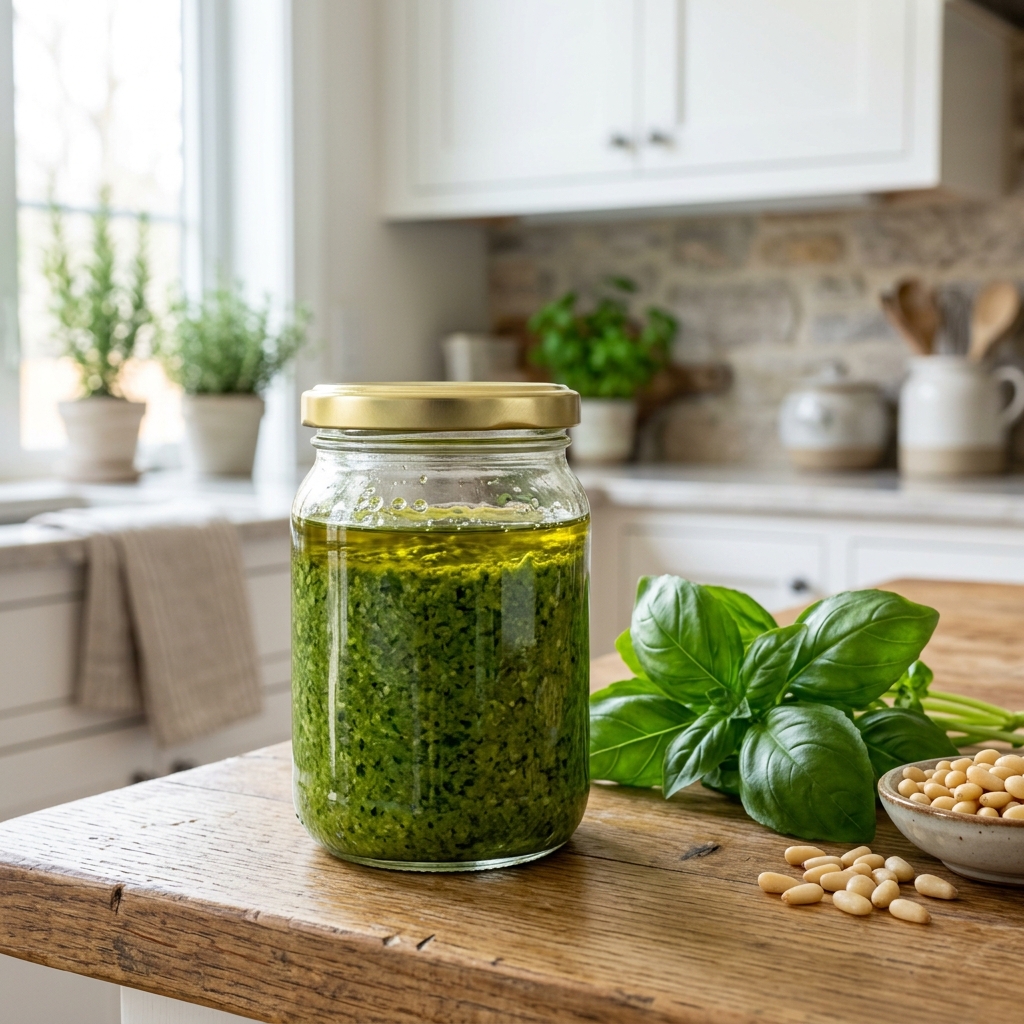
Basil pesto brings a rich, fragrant flavor of fresh basil, pine nuts, garlic, and parmesan cheese to pasta and sandwiches! 🌿🧀
The vibrant green color and fresh aroma are the heart of basil pesto. However, once exposed to air, the chlorophyll in basil oxidizes rapidly into a dull brown color, and the oil-submerged herbs and garlic create an anaerobic environment where Clostridium botulinum bacteria can thrive if improperly stored.
In this guide, based on scientifically verified guidelines from the USDA, FDA, and MFDS, we present a 3-step optimal storage strategy to prevent chlorophyll breakdown (browning) and eliminate botulism risks. 🛡️
Food Safety & Scientific Evidence
This content is based on USDA & FDA & MFDS.
 FreshSelf
Zero waste! Your smart storage assistant
FreshSelf
Zero waste! Your smart storage assistant









1. Scientifically Proven Storage Guide
Pour a layer of extra virgin olive oil over the surface — Oil Film Oxygen Barrier 🫒
Transfer pesto into a container, smooth the top surface flat with a spoon, and pour a 2–3 mm layer of extra virgin olive oil over it. This oil film completely blocks oxygen contact, preventing chlorophyll from oxidizing into brown pheophytin.
Refrigerate strictly at or below 0–4°C — Botulism Prevention Cold Storage (7–14 Days) ❄️
Store the oil-sealed pesto in an airtight container deep inside the refrigerator at 0–4°C (32–39°F). Low temperature is mandatory to inhibit Clostridium botulinum toxin production. Consume opened store-bought or homemade pesto within 7 to 14 days.
Portion into ice cube trays and freeze for long-term storage — Freezer Storage (3–6 Months) 🧊
If you have excess pesto, spoon single-use portions into ice cube trays and freeze. Once solid, transfer the pesto cubes into a Ziploc freezer bag at -18°C (0°F) or below. You can pop out single servings whenever needed while keeping color and aroma for 3 to 6 months.
2. Essential Storage Rules and Cautions
Submerging fresh herbs, garlic, and nuts in olive oil creates an anaerobic (oxygen-free) environment that encourages the growth of Clostridium botulinum, a bacterium producing deadly neurotoxins. Always refrigerate immediately at or below 4°C.
The green pigment in basil, chlorophyll, reacts with oxygen and light to convert into brown pheophytin, causing rapid browning and loss of fresh flavor. Always seal tightly after use.
📌 Frequently Asked Questions (FAQ)
The top layer of my basil pesto turned brown. Is it still safe to eat? ▼
Yes, if it is simple oxidation where chlorophyll converted to pheophytin due to air exposure, it is safe to consume. You can simply scrape off the top brown layer and use the green pesto underneath. However, if it has a rancid sour odor, mold growth, or container bloating, discard it immediately.
How long can homemade basil pesto be safely stored in the refrigerator? ▼
Because homemade pesto is unpasteurized, even with an olive oil seal, it should be consumed within 7 to 10 days under refrigeration (at or below 4°C) to ensure safety against Clostridium botulinum. For longer storage, freeze it immediately.