Have you ever left a bottle of ketchup on the kitchen counter like a diner, only to notice it darkening into a dull brown with an overly acidic taste? 🥫
Ketchup is naturally resistant to bacterial growth due to the acidity and osmotic pressure from tomatoes, vinegar, sugar, and salt. However, once opened, exposure to oxygen and room heat oxidizes lycopene, dulling its vibrant red color and degrading its sweet, tangy umami flavor.
In this guide, introduces a scientifically proven 3-step ketchup storage guide based on official guidelines from the FDA, USDA, and food safety experts to preserve its rich taste and bright color long after opening. 🛡️
Food Safety & Scientific Evidence
This content is based on FDA & USDA & MFDS.
 FreshSelf
Zero waste! Your smart storage assistant
FreshSelf
Zero waste! Your smart storage assistant




1. Scientifically Proven Storage Guide
Pantry before opening, refrigerate immediately after — Refrigerated Storage (180 Days) ❄️
Unopened ketchup can be stored in a cool pantry for up to 1 year, but opening it accelerates oxidation and color fading. 💡 Storage Tip: Always refrigerate ketchup once opened (0–4°C / 32–39°F) and consume within 6 months (180 days) for peak flavor and color.
Store on refrigerator door or middle shelf — Maintain Optimal Refrigeration Temperature 🌡️
Ketchup maintains its viscosity best at stable refrigeration temperatures around 4–8°C (39–46°F). 💡 Storage Tip: Avoid the coldest back wall near cold air vents. Placing ketchup on the refrigerator door shelf or the front of middle shelves keeps it properly chilled without risk of freezing.
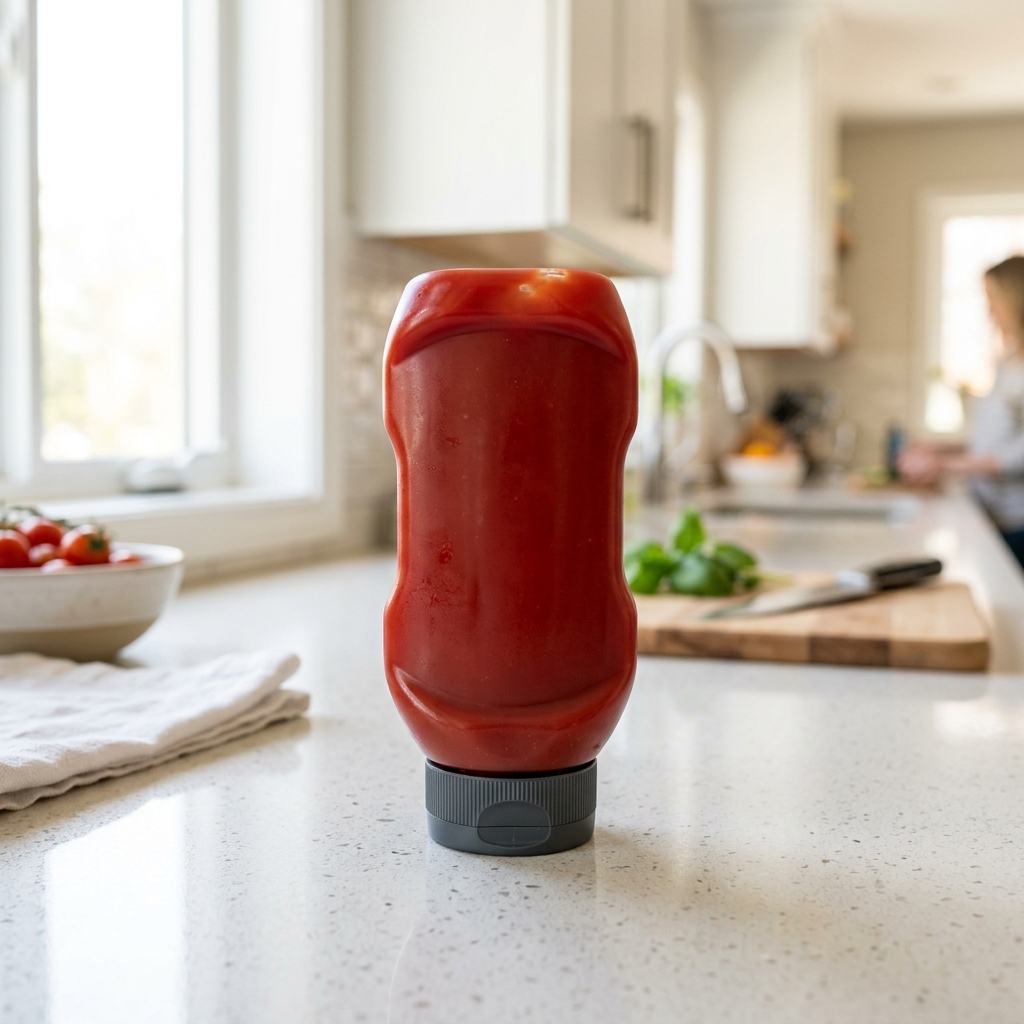
Store squeeze bottles upside down — Minimize Air Exposure 🧴
For flexible squeeze bottles, reducing internal air exposure prevents darkening and oxidation. 💡 Storage Tip: Storing the bottle inverted (cap-down) keeps the ketchup packed near the nozzle, blocking air intrusion and ensuring smooth dispense down to the last drop.
2. Essential Storage Rules and Cautions
Freezing ketchup breaks its emulsion-like structure, causing severe syneresis (liquid-solid separation). When thawed, watery liquid separates from clumpy solids and cannot be remixed, ruining the texture.
Residual ketchup around the cap hardens into a crust and can invite mold growth upon prolonged air exposure. Wipe the nozzle clean with a paper towel immediately after use and seal tightly.
📌 Frequently Asked Questions (FAQ)
A watery liquid squirted out first when I squeezed the ketchup. Has it gone bad? ▼
No, this liquid separation (syneresis) is completely natural. When ketchup sits undisturbed, vinegar and tomato water naturally separate to the top. Simply shake the bottle well before opening or discard the small watery squirt.
I left opened ketchup at room temperature. Is refrigeration really necessary? ▼
Because ketchup is highly acidic and contains salt, dangerous bacteria rarely grow at room temperature. However, leaving it out causes rapid lycopene oxidation (darkening), flavor degradation, and drastically shortens its shelf life to a few weeks. Refrigeration is strongly recommended to preserve fresh color and flavor.