Do you wash fresh mushrooms with water and seal them in plastic containers out of concern for surface dirt? 🍄
Mushrooms are fungi, not plants, composed of a porous network of microscopic hyphae that act like a sponge. Washing mushrooms before storage causes them to absorb water rapidly, breaking down cellular structures and creating the perfect environment for bacterial soft rot (Pseudomonas) and mold.
In this guide, shares a scientifically proven 3-step storage guide based on recommendations from the USDA and RDA to protect the firm texture, rich umami flavor, and freshness of your mushrooms for longer. 🛡️
Food Safety & Scientific Evidence
This content is based on RDA & MFDS & USDA.
 FreshSelf
Zero waste! Your smart storage assistant
FreshSelf
Zero waste! Your smart storage assistant






1. Scientifically Proven Storage Guide
Never wash with water before storage — Prevent Water Absorption & Breakdown ❌💧
Mushrooms have a porous structure that absorbs moisture instantly. 💡 Storage Tip: Washing mushrooms before storage causes cells to become waterlogged, destroying their chewy texture and guanylic acid umami flavor while accelerating mold growth. Gently wipe off dirt with a dry cloth or soft brush right before cooking.
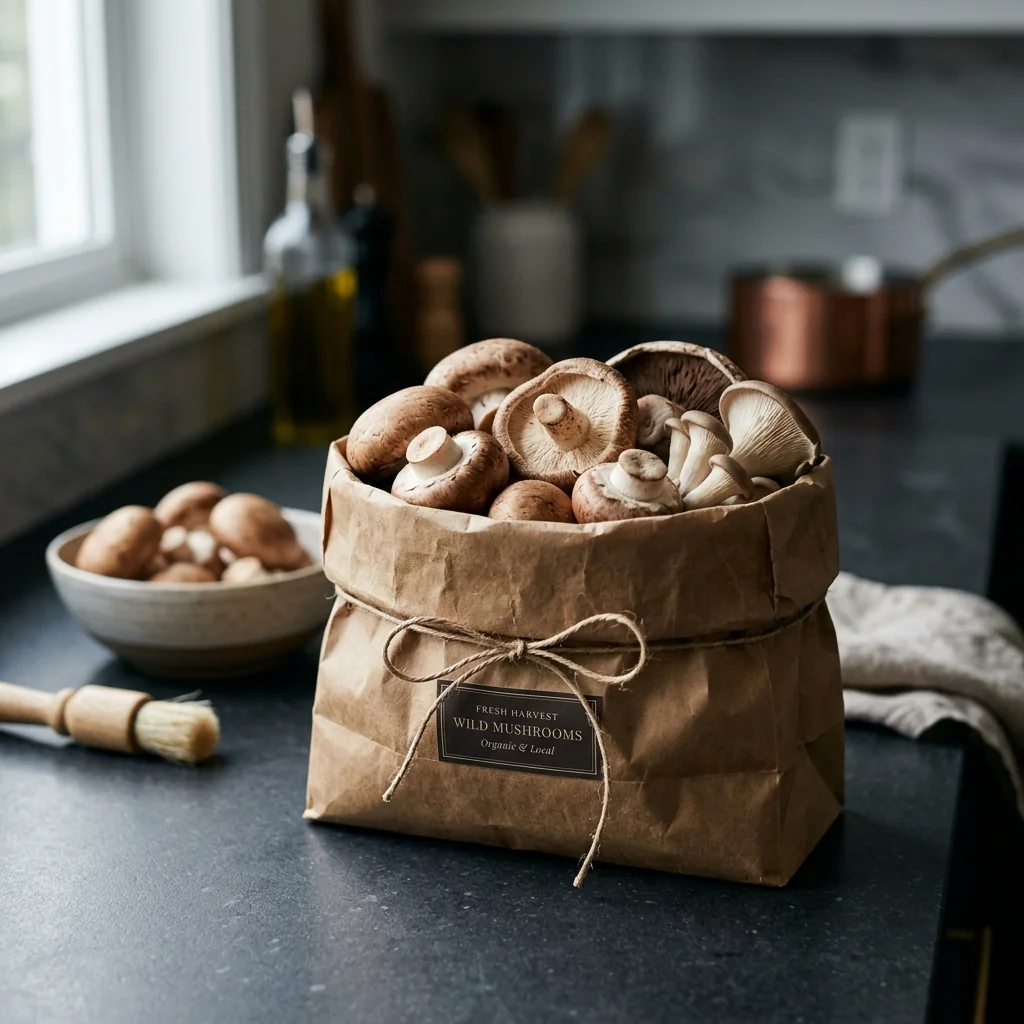
Wrap in a paper bag or paper towels — Moisture Control & Airflow 📦
Storing mushrooms in plastic bags traps respiratory moisture, creating condensation. 💡 Storage Tip: Wrap mushrooms in paper towels or place them inside a brown paper bag (kraft paper) that absorbs moisture while providing breathability, keeping the mushroom surface dry.
Store on a refrigerator shelf without compression — Cold Storage (3–5 Days) ❄️
Mushrooms are physically delicate. 💡 Storage Tip: Placing heavy items on top of mushrooms crushes their cell walls, causing rapid browning and decay. Store them loosely on an upper refrigerator shelf or on top of the crisper drawer (1–4°C).
2. Essential Storage Rules and Cautions
If mushrooms develop a slimy translucent coating or emit a sour smell, bacteria (such as Pseudomonas) have decomposed their proteins and organic matter. Bacterial toxins are heat-resistant, so discard the entire batch immediately to prevent food poisoning.
Raw mushrooms kept in the fridge undergo browning and softening within 3 to 5 days. For storage beyond 5 days, blanch sliced mushrooms in boiling water for 30 seconds to stop enzymatic browning, squeeze out excess water, and freeze (-18°C) for up to 6 months.
📌 Frequently Asked Questions (FAQ)
What is the scientific reason for NEVER washing mushrooms before storage? ▼
Mushrooms consist of a porous hyphal network that absorbs water like a sponge. Water absorption weakens cellular walls, triggers rapid enzymatic browning, accelerates bacterial soft rot, and leaches out essential amino acids and guanylic acid umami compounds. Always clean them with a brush or cloth right before cooking.
What is the best way to freeze mushrooms for long-term storage? ▼
Slice mushrooms into bite-sized pieces and blanch in boiling water with a pinch of salt for 30 seconds. Cool immediately in ice water, pat completely dry with paper towels, and place in a freezer Ziploc bag below -18°C (-0.4°F). This preserves texture and nutrients for up to 6 months, and they can be added directly to hot dishes without thawing.