Have you ever bought fresh live mussels, only to find them dead and emitting a harsh fishy odor inside your fridge? 🦪
Mussels are live filter-feeding bivalves. Submerging them directly in tap water (freshwater) causes osmotic shock, leading to cell lysis and rapid death. Immediately upon dying, autolysis and bacterial proliferation occur, releasing unpleasant trimethylamine (TMA) rot odors.
Based on official guidelines from the National Institute of Fisheries Science (NIFS) and the US FDA, this 3-step scientific storage guide demonstrates how to store live mussels safely without suffocation or osmotic death. 🛡️
Food Safety & Scientific Evidence
This content is based on NIFS & FDA & USDA.
 FreshSelf
Zero waste! Your smart storage assistant
FreshSelf
Zero waste! Your smart storage assistant






1. Scientifically Proven Storage Guide
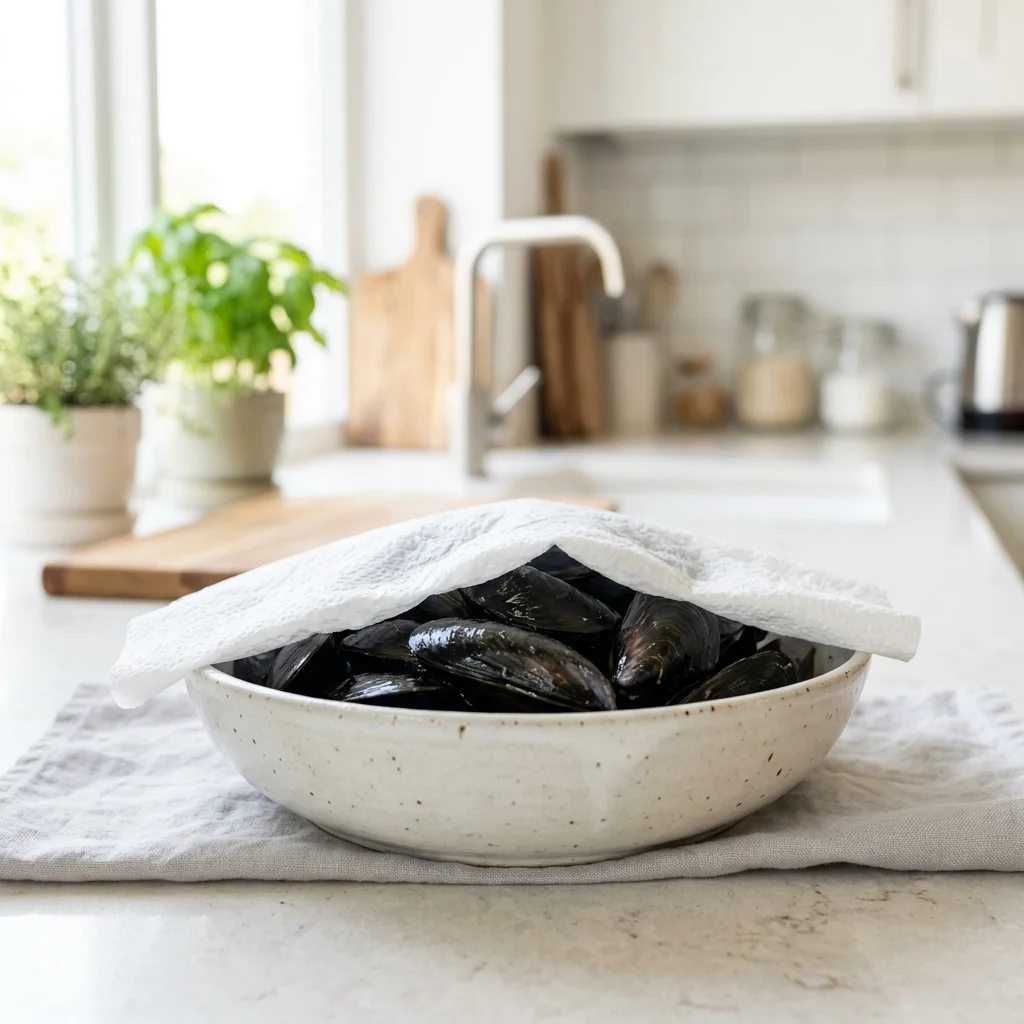
Cover with a damp paper towel in a breathable container — Live Cold Storage (2–3 Days) 🦪
Live mussels must maintain minimal respiration at low temperatures. 💡 Storage Tip: Place unwashed mussels in a colander or open bowl, cover with a damp paper towel or cloth, and refrigerate (1–4°C / 34–39°F). Do not seal with a lid so oxygen can circulate.
Rinse in 3% saltwater and trim byssus threads — Hygienic Prep 🌊
When cleaning mussels, avoid plain tap water submersion. 💡 Storage Tip: Rinse briefly in cold 3% saltwater (30g salt per 1L water) and pull off the byssus threads (beards) right before cooking to maintain viability.
Steam and freeze with broth for long-term storage — Cooked Frozen Storage (30–60 Days) 🧊
Freezing raw mussels degrades their cellular moisture, leaving the meat tough and rubbery. 💡 Storage Tip: Lightly steam or boil fresh mussels, remove meat from shells, and freeze the meat together with strained broth in airtight containers at -18°C (0°F).
2. Essential Storage Rules and Cautions
Submerging mussels in un-salted tap water causes cell lysis from osmotic shock, killing them instantly. Sealing them in airtight containers cuts off oxygen, causing suffocation. Always keep them unsealed and breathable.
Dead mussels undergo autolysis, producing toxic compounds, TMA foul odors, and rapid bacterial growth. If an open shell does not close when tapped gently, the mussel is dead and must be discarded immediately.
📌 Frequently Asked Questions (FAQ)
Why do mussels die quickly and smell fishy when submerged in tap water? ▼
Mussels are marine bivalves. Tap water lacks salinity, causing osmotic shock that bursts their cells (lysis) and kills them. Death triggers autolysis and rapid bacterial growth, generating smelly trimethylamine (TMA).
How can I tell if live mussels are dead or spoiled? ▼
Gently tap shells that are slightly open; live mussels will slowly clamp shut. If a shell stays open after tapping, is broken, or emits a foul odor, the mussel is dead and must be thrown away immediately.