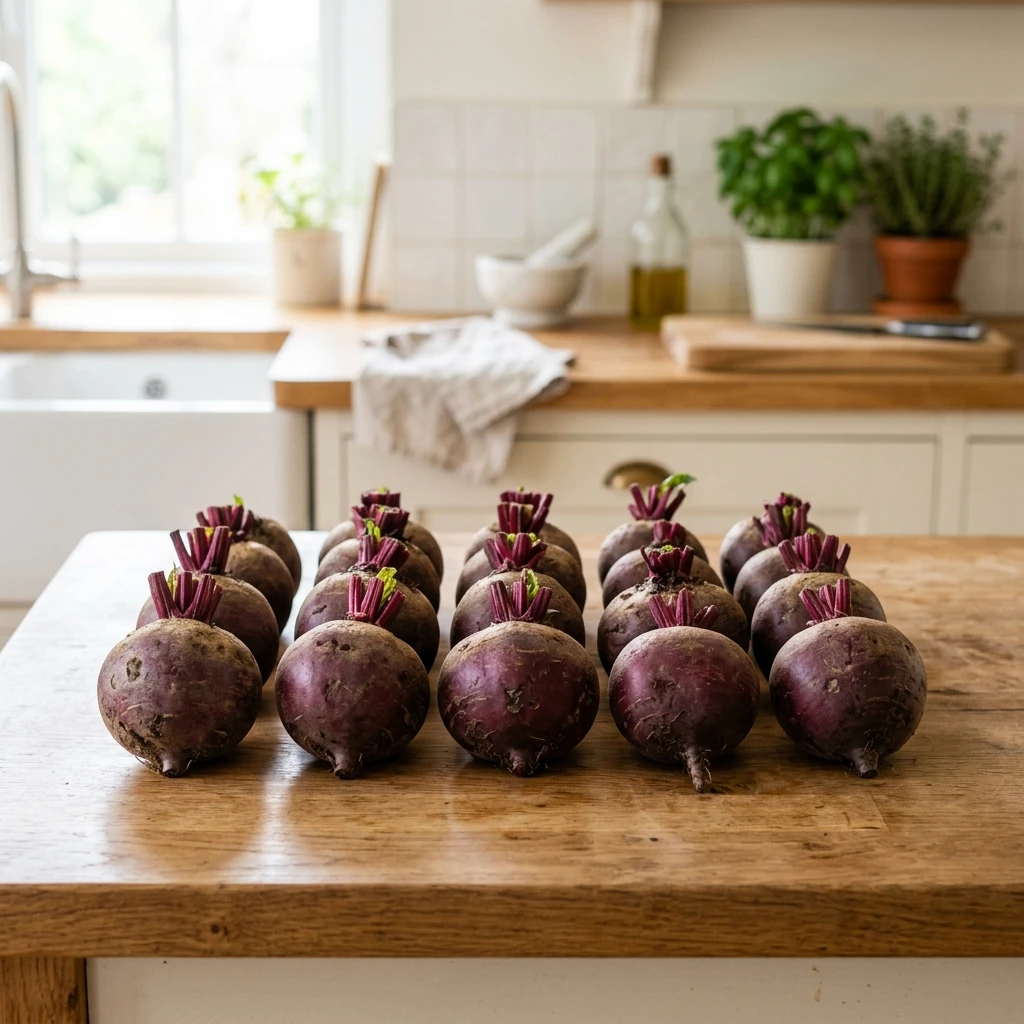
Have you ever bought beetroot for healthy juices or salads, only to find it shriveled and spongy after just a few days? Beetroot is a vibrant root vegetable and global superfood used in everything from Eastern European borscht to detox smoothies.
However, leaving the top leaves and stems attached causes continuous transpiration, drawing stored moisture and nutrients out of the bulb to nourish the leaves. This causes the root flesh to become woody and soft. Furthermore, betacyanin, the powerful antioxidant water-soluble pigment that gives beetroot its deep red color, easily degrades under light and heat.
In this guide, we introduce a scientifically proven 3-step beetroot storage guide recommended by agriculture and food safety experts to preserve freshness and nutrition. 🛡️
Food Safety & Scientific Evidence
This content is based on USDA & FDA & MFDS.
 FreshSelf
Zero waste! Your smart storage assistant
FreshSelf
Zero waste! Your smart storage assistant



1. Scientifically Proven Storage Guide
Trim top leaves, leaving about 2 cm (1 inch) of stem — Block Moisture & Nutrient Loss ✂️
Stopping transpiration caused by the leaves is the crucial first step. 💡 Storage Tip: Cutting stems flush with the bulb creates open wounds that bleed betacyanin juices. Leave about 2 cm (1 inch) of stem intact to seal off moisture and nutrient loss routes.
Wrap in paper towels or newspaper and store at 0–4°C — Cold Storage (3–4 Weeks) ❄️
Blocking light prevents betacyanin breakdown while keeping proper humidity. 💡 Storage Tip: Keep unwashed beets wrapped in paper towels or newspaper to regulate humidity, place inside airtight containers or Ziploc bags, and store in the fridge crisper (0–4°C / 32–39°F). Trimmed beets last 3–4 weeks (leaving leaves on reduces shelf life to just 5 days).
Steam or boil, cube, and freeze in Ziploc bags — Freezer Storage (10–12 Months) 🧊
Freezing raw beetroot damages cellular walls, making it mushy upon thawing. 💡 Storage Tip: Steam or boil beetroots whole with skin on until cooked, peel, cube, and place into freezer Ziploc bags (-18°C / 0°F). Great for smoothies or soups for 10–12 months without nutrient loss.
2. Essential Storage Rules and Cautions
The top leaves continuously draw moisture and sugars out of the root bulb and release them through transpiration. If you leave the leaves intact, the root quickly becomes woody, spongy, and limp.
Washing introduces surface moisture that encourages mold growth. Trimming the bottom taproot too close to the bulb creates wounds that leak betacyanin pigment and juices, accelerating decay. Gently brush off dirt instead.
📌 Frequently Asked Questions (FAQ)
What should I do if the paper towel wrapped around the beetroot gets damp? ▼
Moisture naturally released by the beetroot can damp the wrapping paper, encouraging mold or soft spots. Check periodically and replace damp towels with fresh, dry ones to extend the storage period.
Should beet greens be discarded, or can they be eaten? ▼
Do not throw them away! Beet greens are rich in iron, calcium, and vitamin A. Wash them immediately after trimming and use them like spinach in salads, sautéed dishes, or soups. Since leaves decay quickly, consume them within 1–2 days.