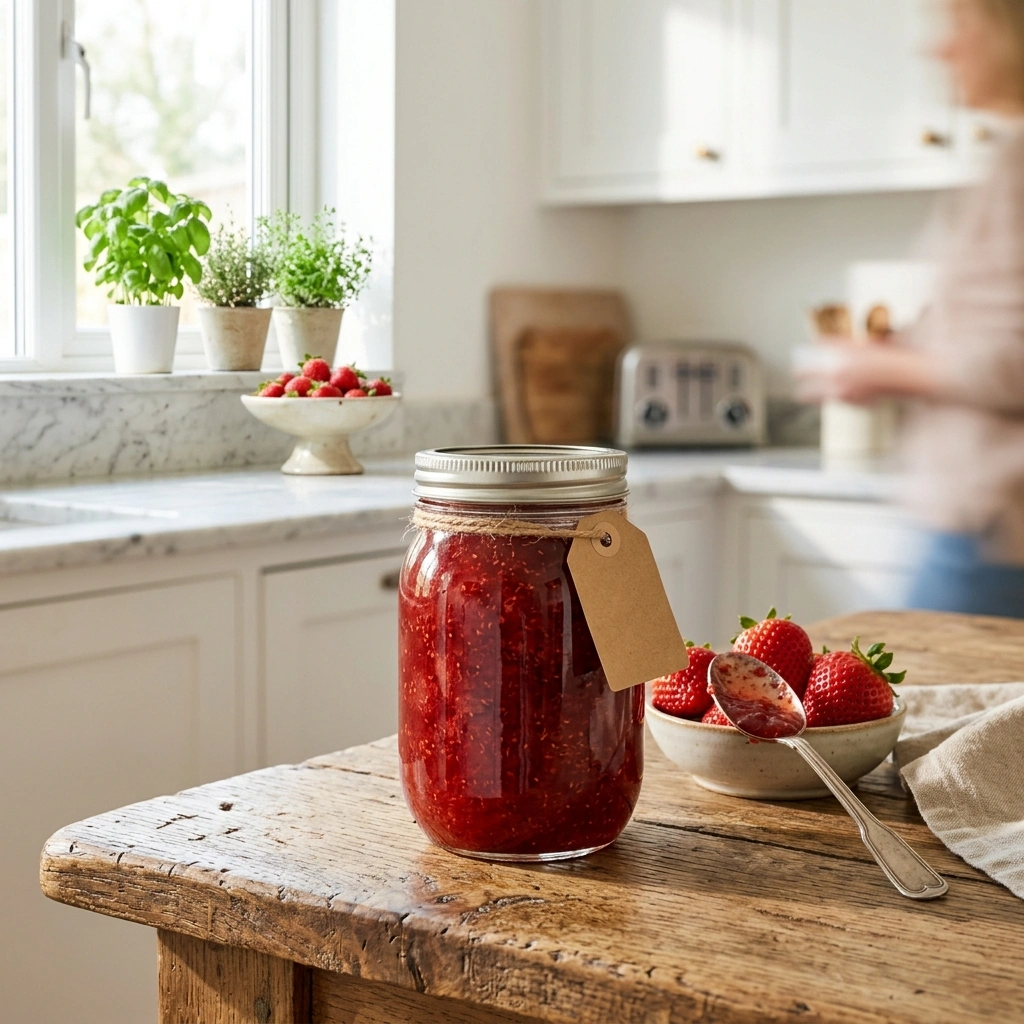
Have you ever opened a jar of delicious fruit jam only to find white or blue mold growing on the surface a few days later? 🍓
While high sugar content generally inhibits bacterial growth, mold spores, breadcrumbs, butter, or saliva entering the jar can cause mold to thrive quickly. Low-sugar or homemade jams have lower natural preservative qualities, making proper post-opening care essential.
In this guide, introduces a scientifically proven 3-step fruit jam storage guide based on safety guidelines from the USDA, FDA, and MFDS to keep your jam fresh and mold-free. 🛡️
Food Safety & Scientific Evidence
This content is based on USDA & FDA & MFDS.
 FreshSelf
Zero waste! Your smart storage assistant
FreshSelf
Zero waste! Your smart storage assistant




1. Scientifically Proven Storage Guide
Store unopened jars in a cool, dark pantry — Room Temperature (1 Year) 📦
Unopened, vacuum-sealed jars are shelf-stable at room temperature. 💡 Storage Tip: Keep jars in a cool, dark pantry (15–20°C / 59–68°F) away from direct sunlight and stove heat. They maintain freshness for up to 1 year unopened.
Refrigerate immediately after opening — Customized Refrigeration (1–6 Months) ❄️
Once opened, jam must be refrigerated to prevent bacterial and mold contamination. 💡 Storage Tip: Seal the lid tightly and store in the refrigerator (0–4°C / 32–39°F). Traditional high-sugar jam lasts up to 6 months refrigerated, while low-sugar or artisan jams should be consumed within 1–3 months.
Wipe the rim clean and seal tightly — Mold Prevention 🛡️
Jam residue on the jar rim attracts airborne mold spores, encouraging growth under the lid. 💡 Storage Tip: After each use, thoroughly wipe the rim and inner lid with a dry paper towel before sealing tightly to minimize air exposure and prevent mold around the opening.
2. Essential Storage Rules and Cautions
Introducing a butter knife, saliva, or crumbs into the jam jar adds moisture and organic matter, causing mold to multiply rapidly. Always use a dedicated, clean, and completely dry spoon.
High sugar levels act as a natural preservative in traditional jam, whereas low-sugar or homemade jams have higher water activity and are far more vulnerable to mold. Low-sugar jams have a much shorter shelf life after opening.
📌 Frequently Asked Questions (FAQ)
Is it safe to scrape off a small spot of mold on top of the jam and eat the rest? ▼
Absolutely not! The visible spot is only a fraction of the mold. Microscopic mold hyphae and mycotoxins spread easily through the moisture and sugar matrix of the jar. Always discard the entire jar if mold appears.
How long can opened jam be kept in the refrigerator? ▼
According to USDA guidelines, commercial fruit jam with traditional sugar levels can be stored in the refrigerator (0–4°C) for up to 6 months after opening. Low-sugar or preservative-free artisan jams should be consumed within 1 to 3 months.