Celebrated for its crisp texture and clean flavor, bok choy is an essential leafy green in Asian stir-fries, soups, and global cuisine! However, have you ever stored bok choy only to find its leaves yellowing and stalks turning mushy within days? 🥬
Bok choy has a very rapid transpiration rate through its broad leaf stomata. Even minimal moisture loss drastically drops turgor pressure, causing rapid wilting. Furthermore, exposing bok choy to freezing temperatures below 0°C causes chilling injury, collapsing cell membranes and causing water-soaking breakdown.
In this guide, we introduce a scientifically proven 3-step bok choy storage guide based on guidelines from agricultural and food safety authorities to prevent water loss, maintain vertical growth alignment, and keep it crisp. 🛡️
Food Safety & Scientific Evidence
This content is based on RDA & USDA & MFDS.
 FreshSelf
Zero waste! Your smart storage assistant
FreshSelf
Zero waste! Your smart storage assistant






1. Scientifically Proven Storage Guide
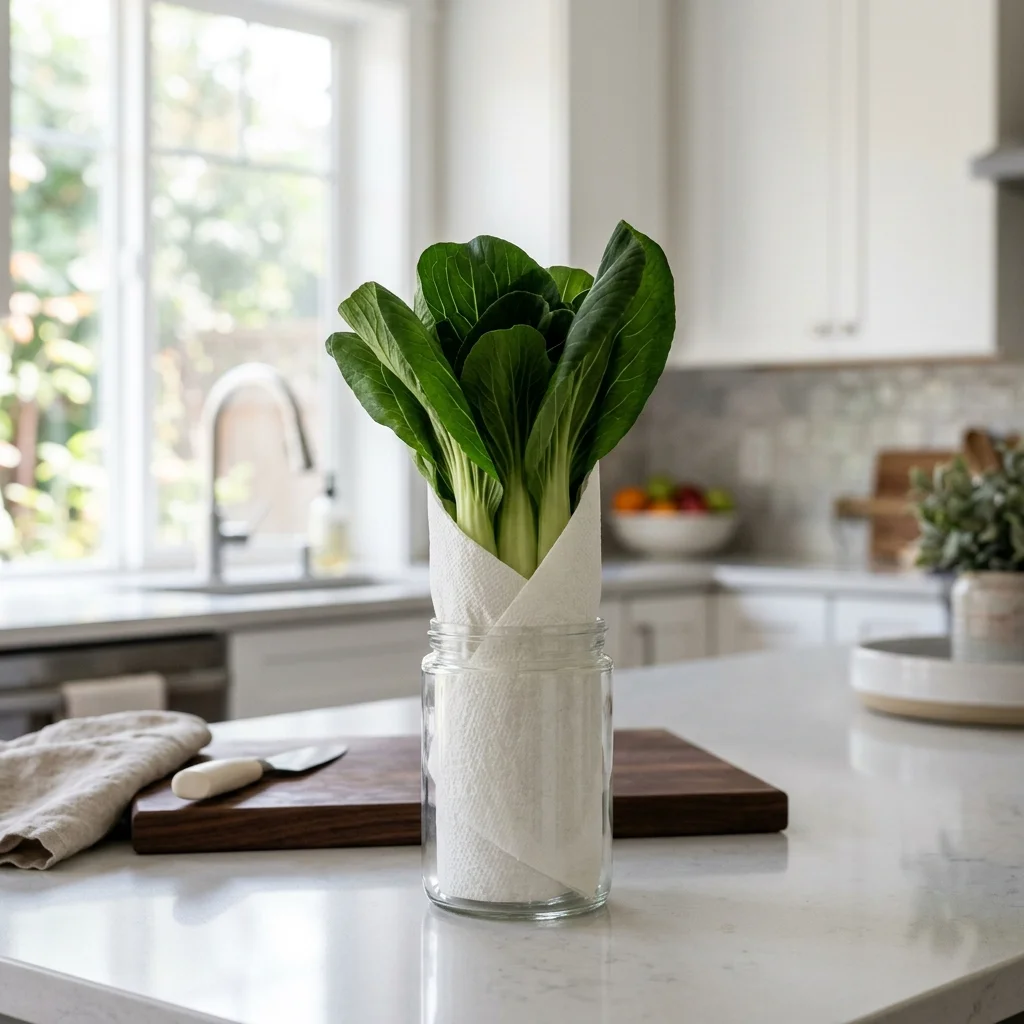
Wrap unwashed bok choy in paper towels — Moisture Control 📦
Wipe away surface moisture and wrap the unwashed bok choy in paper towels. 💡 Storage Tip: Paper towels absorb exuded moisture to prevent bacterial decay while retaining enough humidity to maintain turgor pressure and prevent wilting.
Store upright with stems facing down at 1–4°C — Vertical Refrigeration (1–2 Weeks) ❄️
Storing leafy greens horizontally triggers geotropic responses, causing them to expend energy and lose moisture while trying to bend upright. 💡 Storage Tip: Place wrapped bok choy upright with root stems down in a plastic bag or container in the crisper drawer (1–4°C / 34–39°F) to preserve crispness for 1 to 2 weeks.
Blanch and freeze below -18°C — Freezer Storage (6–8 Months) 🧊
For long-term storage, blanching is required to deactivate cell-degrading enzymes. 💡 Storage Tip: Blanch in boiling salted water for 20–30 seconds, plunge into ice water, squeeze dry, seal in Ziploc bags, and store in the freezer (-18°C / 0°F) for 6 to 8 months.
2. Essential Storage Rules and Cautions
Trapped moisture between bok choy leaves leads to condensation, promoting rapid bacterial growth and stalk rot. Lightly brush off dry dirt and wash immediately before cooking.
Bok choy is cold-sensitive. Exposure to sub-zero temperatures damages cell membranes (chilling injury). Store away from freezer vents at optimal temperatures of 1–4°C.
📌 Frequently Asked Questions (FAQ)
How can I revive wilted, limp bok choy? ▼
Trim 1 cm off the root base and submerge the bok choy in ice water mixed with 1 spoonful of sugar and 1 spoonful of vinegar for 15–20 minutes. Osmosis rehydrates the cells, restoring turgor pressure and crispness.
Are tiny black specks on bok choy stalks safe to eat? ▼
Yes! Small black dots on stalks are known as 'peppering' or 'black specks.' This is a cosmetic physiological condition caused by high nitrogen absorption or temperature changes during growth. It is not mold or rot, and is completely safe to consume.