Have you ever brought home fresh clams or mussels for a flavorful soup, only to submerge them in tap water and find them dead hours later? 🦪
Live shellfish are highly perishable marine organisms. Sealing them in airtight plastic bags or soaking them in fresh tap water starves them of oxygen or causes osmotic shock, killing them rapidly and triggering swift bacterial decay.
In this guide, introduces a scientifically proven 3-step storage guide recommended by seafood safety authorities to purge, chill, and preserve live shellfish safely. 🛡️
Food Safety & Scientific Evidence
This content is based on NOAA & USDA & MFDS.
 FreshSelf
Zero waste! Your smart storage assistant
FreshSelf
Zero waste! Your smart storage assistant






1. Scientifically Proven Storage Guide
Purge in saltwater in a dark environment — Sand Purging & Cleaning 🌊
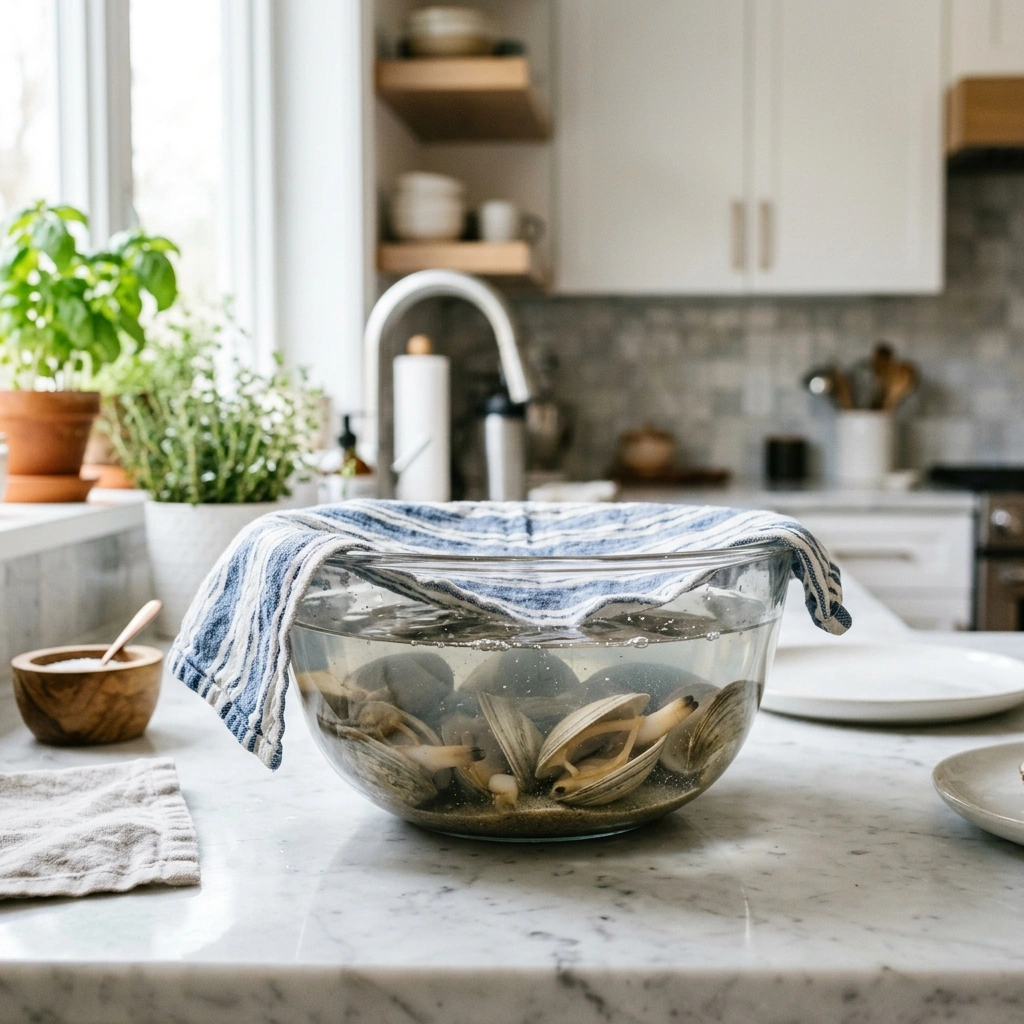
Submerge clams in a 3% saltwater solution (approx. 30g salt per 1L water). Add a stainless steel spoon, cover with a dark plastic bag, and place in a cool spot (0–4°C) for 2–3 hours to purge sand.
Cover with a damp towel and refrigerate at 0–4°C — Cold Storage (1–2 Days) ❄️
After purging, rinse with clean saltwater, drain thoroughly, place in an open bowl, and cover with a damp paper towel or cloth to keep them moist in the fridge for up to 1–2 days.
Purge, drain, seal, and freeze — Long-Term Storage (3 Months) 🧊
For extended storage, purge and clean the shellfish, drain completely, and seal into freezer Ziploc bags below -18°C. Cook directly from frozen in boiling broth to ensure shells open properly.
2. Essential Storage Rules and Cautions
Fresh tap water causes fatal osmotic shock to saltwater clams, and sealing them in airtight bags suffocates them. Live shellfish must be stored with access to air so they can breathe.
Clams or mussels with broken shells or those that remain wide open after tapping are already dead, posing a high risk of bacterial toxins. Discard them immediately.
📌 Frequently Asked Questions (FAQ)
Why won't my frozen clams open during cooking? ▼
Placing frozen clams into cold water and heating them slowly prevents the adductor muscles from contracting sharply. Always drop frozen clams directly into boiling broth so the heat shock opens the shells instantly.
Should I remove mussel beards before storing them? ▼
No. Pulling out the thread-like mussel beard tears the internal tissue, killing the mussel quickly. Leave the beard attached during storage and trim or pull it off right before cooking.