Have you ever bought fresh eggplants only to find their skins wrinkled or their flesh turned brown and seedy within just a few days? 🍆
As warm-climate produce, eggplants are extremely cold-sensitive, soft-textured, and hyper-responsive to temperature fluctuations, moisture loss, and ethylene gas. Storing raw eggplants at standard refrigerator temperatures (0–4°C) causes severe chilling injury, resulting in pitting, internal browning, soft texture, and a bitter taste.
In this guide, introduces a scientifically proven 3-step eggplant storage guide recommended by agriculture and food safety experts to maximize freshness and tender texture. 🛡️
Food Safety & Scientific Evidence
This content is based on RDA & USDA & MFDS.
 FreshSelf
Zero waste! Your smart storage assistant
FreshSelf
Zero waste! Your smart storage assistant









1. Scientifically Proven Storage Guide
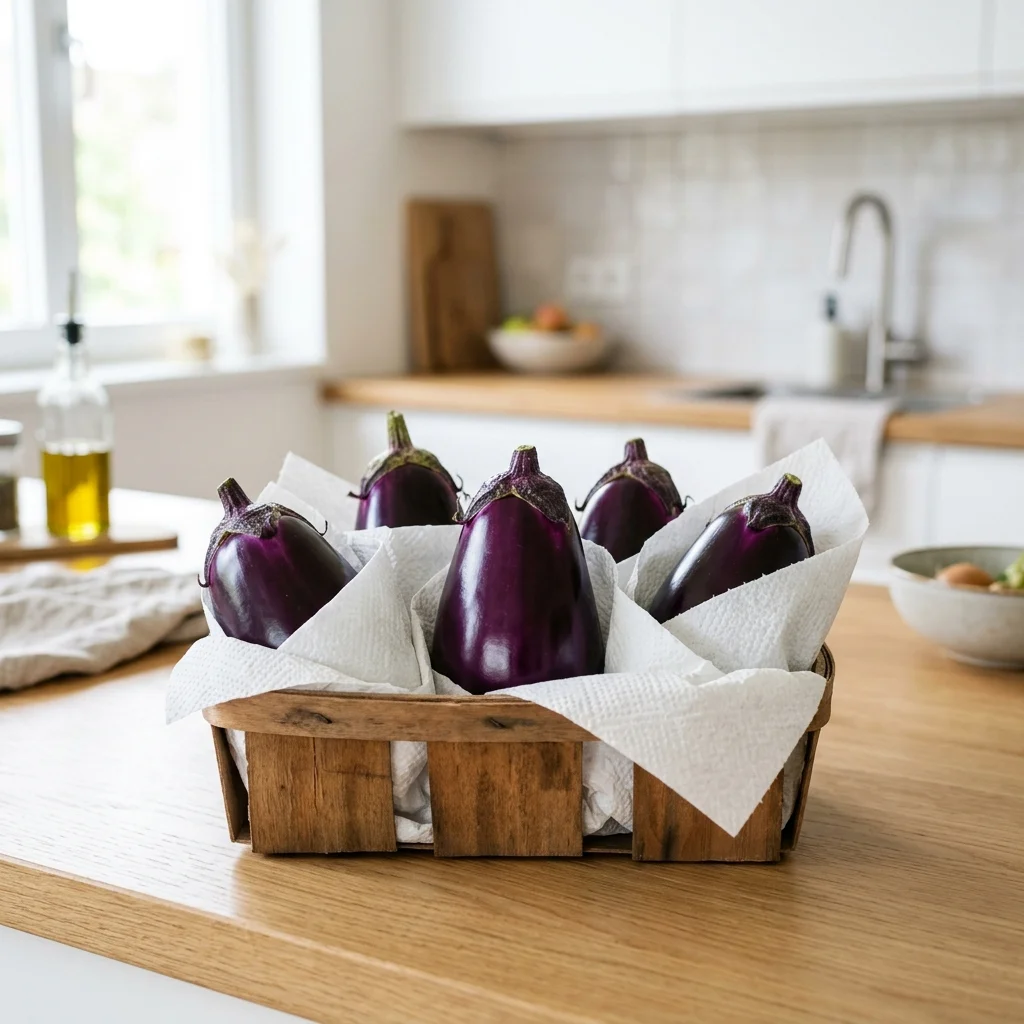
Wrap individually with paper towels or newspaper — Retain Moisture & Cushion Cold Air 🧻
Preventing surface moisture evaporation while shielding the skin from direct cold draft is key. 💡 Storage Tip: Wrap each dry, unwashed eggplant tightly in a paper towel or sheet of newspaper.
Place in a plastic bag and store in the crisper drawer — Optimal Cold Storage (5–7 Days) 📦
Put paper-wrapped eggplants inside a plastic bag or Ziploc and tie the opening loosely. 💡 Storage Tip: Store them in the crisper drawer (8–10°C / 46–50°F), where temperatures are milder and steady, keeping them fresh for up to a week.
Lightly cook (roast or blanch) before freezing — Long-Term Storage (1–3 Months) ❄️
Freezing raw eggplants causes ice crystals to rupture cell walls, resulting in a soggy, waterlogged mess upon thawing. 💡 Storage Tip: Slice the eggplant, lightly sauté without oil or blanch briefly, let cool, and freeze in airtight single-serving portions (-18°C or below).
2. Essential Storage Rules and Cautions
The optimal storage temperature for eggplants is 10–12°C (50–54°F). Storing them in the coldest spots of a refrigerator causes surface pitting, internal discoloration, and increased bitterness due to chilling injury.
Eggplants are highly sensitive to ethylene gas. Storing them near apples, bananas, or tomatoes causes rapid softening, internal browning, and accelerated decay.
📌 Frequently Asked Questions (FAQ)
Is it safe to eat eggplants if the seeds inside have turned black? ▼
Browning around the seeds is often caused by dehydration or chilling injury. As long as there is no sour odor, slime, or total mushiness, you can cut away the discolored seed area and cook the remaining flesh safely.
Can eggplants be stored at room temperature? ▼
Since eggplants prefer 10–12°C, they can be kept at cool, shaded room temperatures for 2–3 days during mild seasons. However, in hot or humid summer weather, they wilts rapidly, so wrapping them in paper towels and placing them in the crisper drawer is safest.