Have you ever purchased sweet, delicate scallops only to find them smelling fishy and losing their firm texture after a short time in the fridge? 🦪
Scallop adductor muscles are high in glycogen and have delicate protein tissue, making them highly susceptible to rapid post-mortem autolysis by endogenous enzymes. Additionally, Trimethylamine N-oxide (TMAO) present in scallops is reduced into Trimethylamine (TMA) by spoilage bacteria, generating an offensive fishy odor. Therefore, ultra-low temperature storage at 0–2°C is essential.
In this guide, we share a scientifically proven 3-step scallop storage guide based on guidelines from NOAA, USDA, and MFDS to preserve their natural sweetness and plump texture. 🛡️
Food Safety & Scientific Evidence
This content is based on NOAA & USDA & MFDS.
 FreshSelf
Zero waste! Your smart storage assistant
FreshSelf
Zero waste! Your smart storage assistant



1. Scientifically Proven Storage Guide
Eviscerate, rinse with salt water, and store ultra-cold — Refrigerated Storage (1–2 Days) ❄️
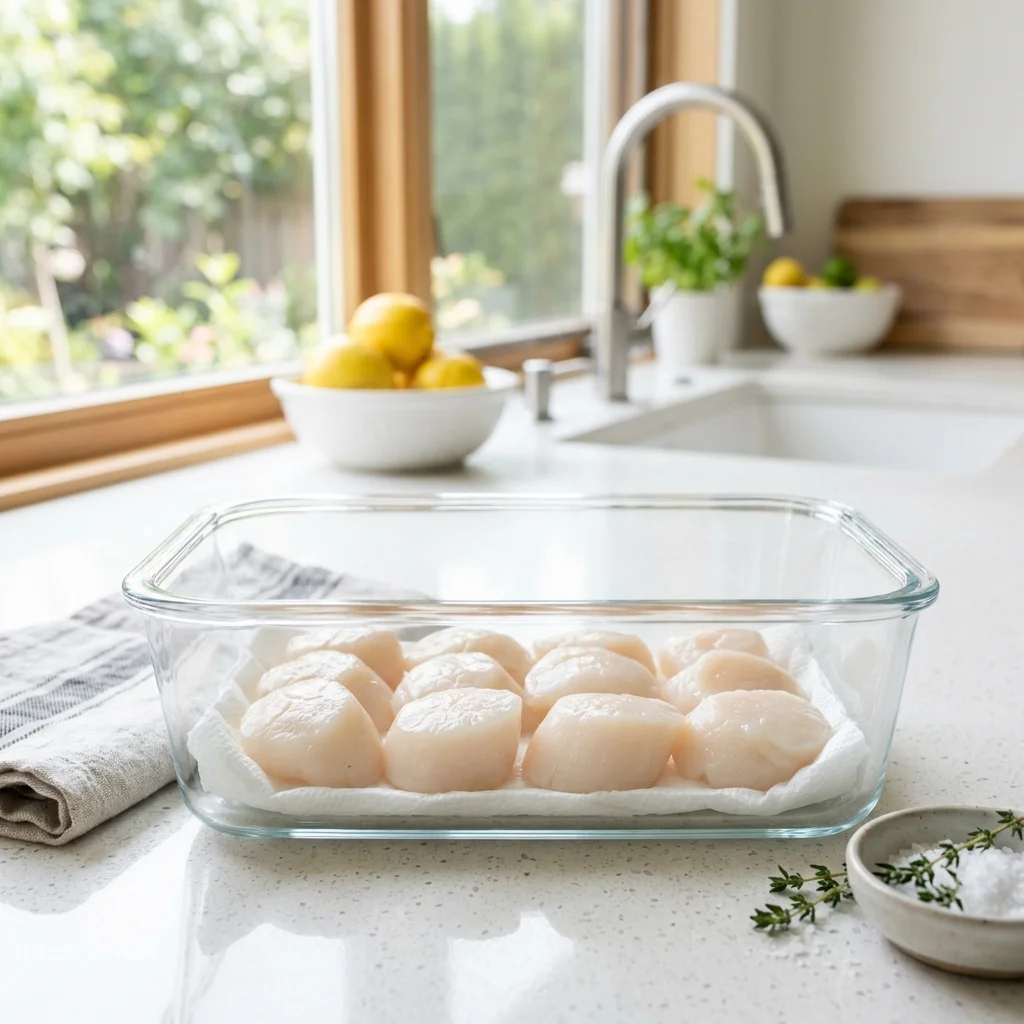
Fresh raw scallops should be eviscerated immediately, washed gently in cold light salt water ( ~ 3% salinity), and thoroughly patted dry. 💡 Storage Tip: Line an airtight container with paper towels, lay the scallops flat, and store them in the coldest compartment (0–2°C / 32–35°F). Consume within 1 to 2 days.
Flash freeze to halt autolysis and tissue degradation — Frozen Storage (90–180 Days) 🧊
If storing for more than 2 days, freeze scallops immediately to halt autolytic enzyme activity and TMA formation. 💡 Storage Tip: Dry scallop meats completely, wrap tightly in vacuum or plastic film in single-meal portions, and freeze below -18°C (0°F). Maintains texture for 3 to 6 months.
Thaw slowly in the fridge or cold saline to prevent drip loss — Scientific Thawing 🧪
Thawing frozen scallops at room temperature or in warm water destroys cell walls, leading to excessive drip loss and flavor leakage. 💡 Storage Tip: Transfer to the refrigerator (0–4°C / 32–39°F) 24 hours prior to cooking, or submerge wrapped scallops in cold salt water for quick, safe thawing.
2. Essential Storage Rules and Cautions
Enzymatic autolysis rapidly degrades scallop muscle protein after harvest. Microbial breakdown of TMAO into TMA accelerates spoilage and creates harsh fishy smells, making strict temperature control at 0–2°C mandatory.
Soaking scallops in fresh tap water disrupts osmotic balance, causing cells to swell and leak sweet flavor compounds. Always rinse gently with cold saline water and promptly remove internal organs before storing.
📌 Frequently Asked Questions (FAQ)
My scallops have a strong, pungent fishy odor. Are they still safe to eat? ▼
No, they are not safe! A strong fishy odor is a direct indicator of spoilage caused by bacteria converting TMAO into TMA (Trimethylamine). If scallops smell unpleasantly pungent or feel mushy and slimy, bacterial proliferation has occurred, and they should be discarded immediately.
Why is it necessary to dry scallops and line containers with paper towels? ▼
Excess surface moisture accelerates autolytic enzyme action and provides a breeding ground for spoilage bacteria. Thoroughly patting scallops dry and resting them on paper towels absorbs purge (drip loss), suppressing the conversion of TMAO into offensive TMA compounds.