Have you ever stored a fresh green head of broccoli in the fridge, only to find it turning yellow, blooming, or developing a bad odor in just a few days? 🥦
Broccoli is a cruciferous vegetable with densely clustered flower buds. It has a very high respiration rate and actively emits ethylene gas and respiratory heat. Poor humidity control can cause bacteria to multiply within the dense florets or lead to rapid nutrient loss through yellowing.
In this guide, shares a scientifically proven 3-step storage guide based on recommendations from the USDA and RDA to preserve moisture, prevent chlorophyll breakdown, and keep your broccoli crisp and green. 🛡️
Food Safety & Scientific Evidence
This content is based on RDA & USDA & EFSA.
 FreshSelf
Zero waste! Your smart storage assistant
FreshSelf
Zero waste! Your smart storage assistant









1. Scientifically Proven Storage Guide
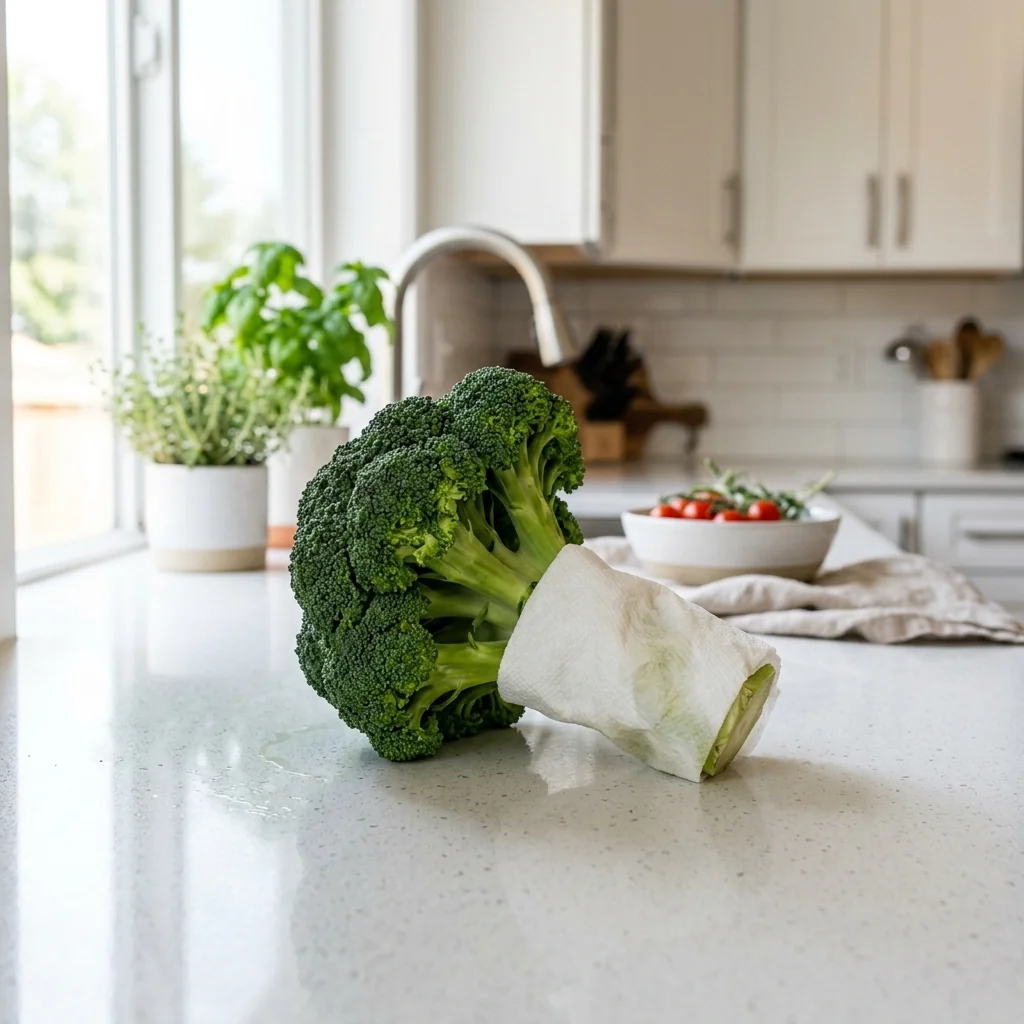
Trim the stem base and wrap with a damp paper towel — Stem Hydration 🥦
The thick stem of broccoli is the main channel supplying water and nutrients to the upper florets. 💡 Storage Tip: Trim about 0.5 cm off the bottom of the stem and wrap the stem base with a wet paper towel that has been wrung out. Supplying continuous moisture like flowers in a vase prevents the florets from drying out and blooming.
Place loosely in a perforated plastic bag — Ensure Proper Airflow 📦
Blocking air entirely causes rot, while exposing it completely causes wilting. 💡 Storage Tip: Place broccoli in a perforated plastic bag with holes, or leave a Ziploc bag open by about one-third. This maintains ideal humidity while allowing respiratory heat and ethylene gas to escape freely.
Store upright in the crisper drawer — Vertical Cold Storage (7 Days) ❄️
Laying broccoli on its side triggers a gravitropic response as the plant expends energy trying to stand upward against gravity, leading to rapid aging. 💡 Storage Tip: Store broccoli standing straight up with the florets on top and the stem on the bottom in the crisper drawer (0–2°C). Maintaining its natural growth direction minimizes gravity stress and nutrient decay.
2. Essential Storage Rules and Cautions
Broccoli continues to respire actively after harvest, releasing heat and ethylene gas. Completely sealing it in plastic wrap or airtight containers traps heat and moisture, accelerating yellowing and bacterial soft rot.
Water easily gets trapped deep inside the dense floret clusters and does not dry well. Storing wet broccoli in the fridge creates the ultimate environment for mold and bacterial growth. Always wash broccoli right before cooking.
📌 Frequently Asked Questions (FAQ)
My broccoli has turned yellow and bloomed. Is it still safe to eat? ▼
Yes, yellowing is simply the breakdown of chlorophyll and the opening of flower buds; it is not toxic and remains safe to eat. However, key nutrients like Vitamin C decrease significantly, the texture becomes woody, and a slightly bitter taste may develop. It is best to consume broccoli before it turns yellow.
What is the correct way to blanch and freeze broccoli for long-term storage? ▼
Cut broccoli into bite-sized florets, wash in saltwater, and blanch in boiling water for 30 to 45 seconds. Plunge immediately into ice water to stop the cooking, pat completely dry with paper towels, and pack into freezer Ziploc bags. Stored below -18°C, blanched broccoli retains its crispness and nutrients for up to 1 year.