Have you ever bought crisp, nutritious Brussels sprouts only to store them in the fridge and find their outer leaves yellowing or wilting in a matter of days? 🥦
Brussels sprouts are a powerhouse cruciferous vegetable packed with vitamins C and K, fiber, and antioxidants, but they are highly sensitive to moisture loss and ethylene gas. Improper humidity causes leaves to turn soft and moldy, while exposure to ethylene-emitting fruits rapidly turns them yellow.
In this guide, shares a scientifically proven 3-step storage guide based on guidelines from the USDA and RDA to keep your Brussels sprouts crisp, vibrant, and nutrient-rich for up to 3 weeks. 🛡️
Food Safety & Scientific Evidence
This content is based on USDA & RDA & MFDS.
 FreshSelf
Zero waste! Your smart storage assistant
FreshSelf
Zero waste! Your smart storage assistant





1. Scientifically Proven Storage Guide
Trim damaged outer leaves and remove surface moisture — Prep & Clean 🥬
Remove any yellowed, soft, or damaged outer leaves upon purchase, and gently pat the surface dry with paper towels. 💡 Storage Tip: Removing decaying outer leaves prevents spoilage from spreading inward. Leave the stem end intact to minimize moisture loss.
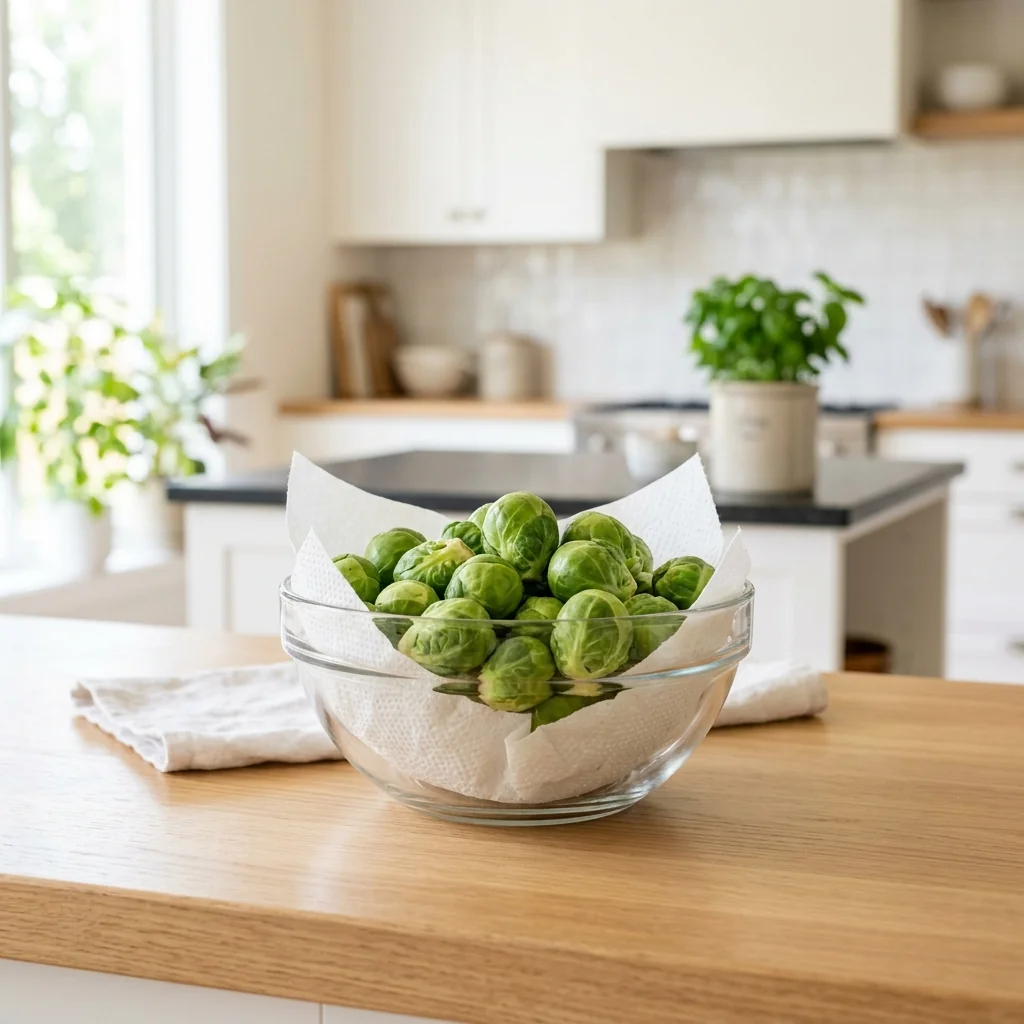
Place in paper towel-lined container or perforated plastic bag — Humidity Control 📰
Brussels sprouts require high humidity with adequate ventilation to remain crisp over time. 💡 Storage Tip: Line the bottom of an airtight container with paper towels or use a breathable perforated plastic bag. The paper towels absorb excess condensation to prevent sogginess.
Refrigerate at 0–2°C in the crisper drawer — Cold Storage (2–3 Weeks) ❄️
Brussels sprouts preserve maximum crispness in low-temperature, high-humidity environments (0–2°C with 90–95% RH). 💡 Storage Tip: Keep prepared sprouts in the refrigerator crisper drawer. This preserves their green color and firm texture for 2–3 weeks.
2. Essential Storage Rules and Cautions
Storing wet Brussels sprouts traps moisture between the tightly packed leaves, triggering mold, bacterial growth, and rapid rotting. Gently wipe away dirt with a dry cloth or paper towel, and wash them only right before cooking.
Brussels sprouts are extremely sensitive to ethylene gas. Storing them alongside high ethylene producers like apples, bananas, and pears breaks down chlorophyll, turning the leaves yellow and mealy. Keep them sealed separately.
📌 Frequently Asked Questions (FAQ)
Can I blanch and freeze Brussels sprouts for long-term storage? ▼
Yes, blanching before freezing is the best method for long-term storage. Blanch Brussels sprouts in salted boiling water for 2–3 minutes, plunge them immediately into an ice bath, and dry thoroughly. Store them in freezer Ziploc bags at or below -18°C for 10–12 months without loss of nutrition.
The outer leaves of my Brussels sprouts turned yellow. Are they still safe to eat? ▼
Yes, as long as only the outer leaves are yellowed, they are safe to eat. Yellowing is a natural reaction to ethylene exposure or moisture loss. Simply peel away the yellowed outer leaves and consume the firm green inner head. However, if you spot black spots, mold, or slimy moisture, discard them immediately.