Have you ever put sesame oil in the refrigerator to keep it fresh, only to find it frozen solid into a cloudy white mass with faded aroma? 🫗
Unlike perilla oil, sesame oil contains powerful natural antioxidants called lignans (such as sesamol and sesamolin), making it highly resistant to lipid oxidation (rancidity). However, storing sesame oil in cold environments below 10°C (such as a refrigerator) causes it to solidify into white crystals, which impairs its rich aromatic oil compounds. Conversely, exposure to direct sunlight or heat near stovetops causes rapid oxidation.
In this guide, introduces a scientifically proven 3-step storage guide recommended by food safety experts to preserve the nutty aroma, rich flavor, and nutrients of your sesame oil for up to 1 to 2 years. 🛡️
Food Safety & Scientific Evidence
This content is based on RDA & USDA & MFDS.
 FreshSelf
Zero waste! Your smart storage assistant
FreshSelf
Zero waste! Your smart storage assistant









1. Scientifically Proven Storage Guide
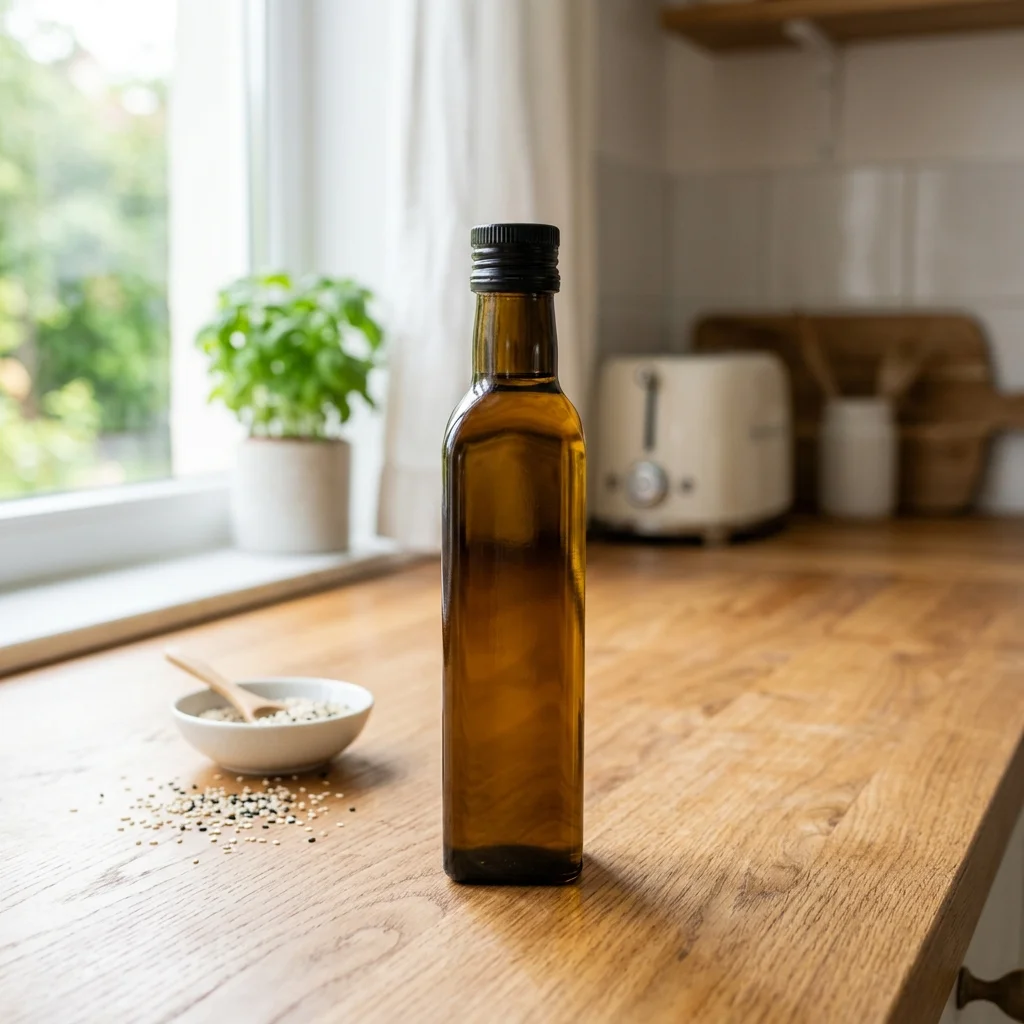
Use dark brown glass bottles or wrap with aluminum foil — Complete UV & Light Protection 🍾
Blocking light is the single most important rule to prevent oil oxidation. 💡 Storage Tip: Keep sesame oil in dark brown glass bottles. If using a clear glass bottle, wrap the entire container with aluminum foil or newspaper to block light completely.
Store in a cool, dark pantry at 15–25°C — Optimal Room Temperature Storage (1–2 Years) 🌡️
Sesame oil maintains its aroma and quality best at room temperatures between 15–25°C (59–77°F). 💡 Storage Tip: Store in a dark cabinet away from heat sources like stoves, ovens, or sunny windows.
Seal tightly immediately after use — Prevent Oxygen Exposure 🔒
Exposure to atmospheric oxygen consumes natural antioxidants and triggers rancidity. 💡 Storage Tip: Wipe off any excess oil around the bottleneck after use and seal the cap tightly to prevent air intake.
2. Essential Storage Rules and Cautions
Sesame oil begins to solidify (freeze) at temperatures below 10–15°C (50–59°F). Refrigerating it makes it hard and inconvenient to use, while repeated freezing and thawing destroys its rich aromatic compounds. Always store at cool room temperature.
Ultraviolet (UV) rays and direct light are major triggers for lipid photo-oxidation. Use dark brown glass bottles or wrap clear bottles with aluminum foil or paper to completely block light.
📌 Frequently Asked Questions (FAQ)
Why do storage methods differ between sesame oil and perilla oil? ▼
Perilla oil contains over 60% omega-3 (alpha-linolenic acid), which oxidizes extremely fast in air, requiring constant refrigeration (below 4°C). In contrast, sesame oil contains natural antioxidants (lignans/sesamol) that resist oxidation at room temperature, while cold temperatures cause it to freeze and lose flavor. Therefore, room temperature storage is ideal for sesame oil.
There is sediment at the bottom of my sesame oil bottle. Is it safe to consume? ▼
Yes. The sediment at the bottom consists of natural sesame solids (proteins and fibers) produced during roasting and pressing. It is not spoilage; you can safely shake the bottle and consume it.