Have you ever bought a head of crisp, sweet Napa cabbage, only to find the leaves wilted, soggy, or rotting from the inside a few days later? 🥬
Napa cabbage consists of nearly 95% water, making temperature and humidity control the most critical factors in maintaining its freshness. Moisture trapped between leaves or storing it flat leads to crushing and rapid bacterial spoilage.
In this guide, introduces a scientifically proven 3-step Napa cabbage storage guide recommended by agriculture and food safety experts to maximize crispness and flavor. 🛡️
Food Safety & Scientific Evidence
This content is based on RDA & USDA & MFDS.
 FreshSelf
Zero waste! Your smart storage assistant
FreshSelf
Zero waste! Your smart storage assistant



1. Scientifically Proven Storage Guide
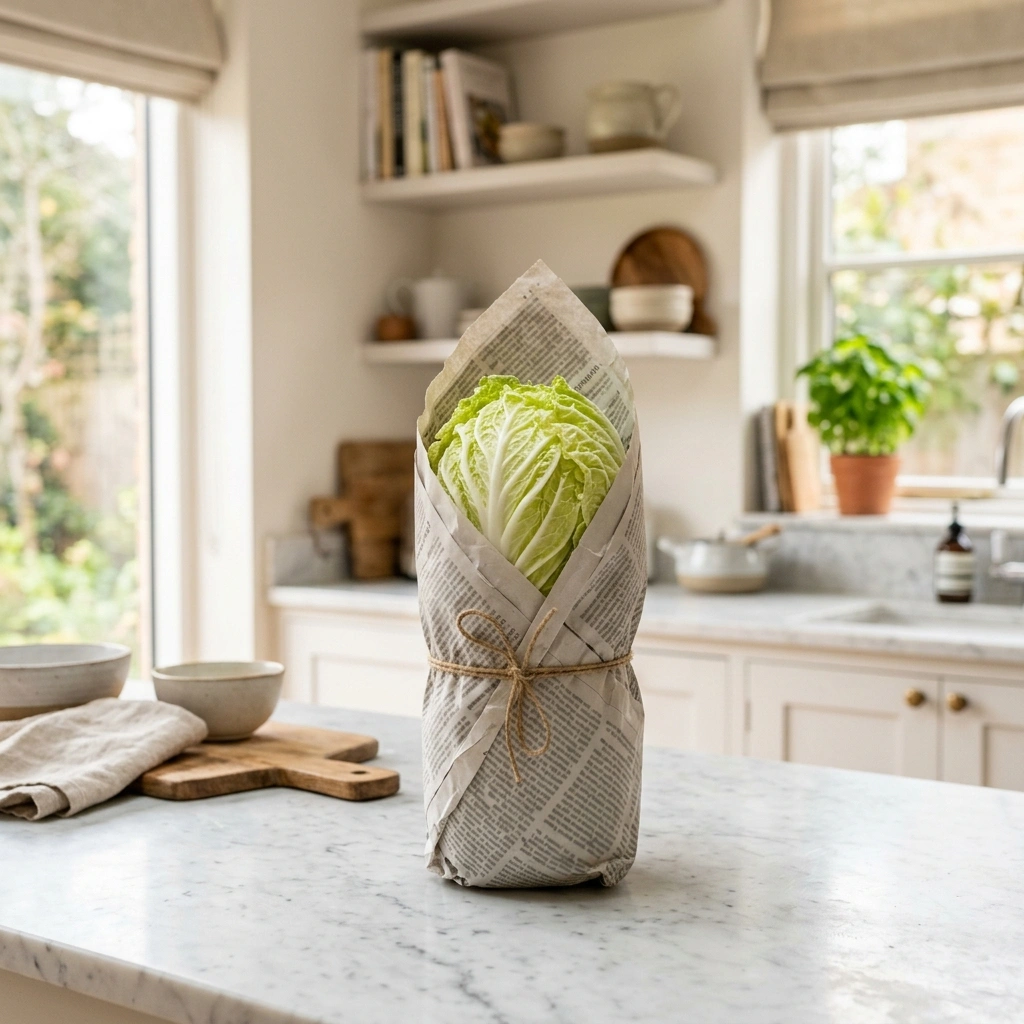
Trim outer leaves and wrap in paper towels or newspaper — Moisture Control 📰
Remove wilted outer leaves and wrap the head dry in newspaper or paper towels to prevent moisture loss while absorbing excess humidity. 💡 Storage Tip: Wrapping the head with its firm outer leaves serves as a natural barrier to retain inner sweetness and water.
Store upright with the stem down at 0–4°C — Cold Storage (2–4 Weeks) ❄️
Napa cabbage stays fresh much longer when stored upright in its natural growing orientation. 💡 Storage Tip: Place the paper-wrapped cabbage stem-side down in your refrigerator crisper drawer or kimchi fridge (0–4°C).
Blanch, squeeze dry, and freeze — Long-Term Storage (2–3 Months) 🧊
For extended preservation beyond a month, blanching and freezing is ideal. 💡 Storage Tip: Blanch cabbage leaves in boiling water for 1–2 minutes, shock in ice water, squeeze out excess water, and freeze in Ziploc bags below -18°C for soups and stews.
2. Essential Storage Rules and Cautions
Washing Napa cabbage prior to storage traps water between the densely packed leaves, creating an ideal environment for mold and bacteria to thrive. Wipe off dirt with a dry towel and wash immediately before cooking.
When storing halved or quartered Napa cabbage, cut out the dense bottom core. This stops the plant from continuing to grow and consume its internal moisture and nutrients, preventing premature rot.
📌 Frequently Asked Questions (FAQ)
There are small black spots on the cabbage white ribs. Is it safe to eat? ▼
Yes! These small black spots are called 'pepper spots' (Gomasho), caused by a harmless physiological response to nutrient shifts during growth. They are not mold or bacteria and are completely safe to consume.
How should I store leftover cut Napa cabbage? ▼
Cut cabbage loses moisture rapidly from its exposed surfaces. Cut out the stem core, place a dry paper towel over the cut face, and wrap tightly with food-grade plastic wrap before refrigerating.