Have you ever stored burdock root only to find it turned tough, woody, and impossible to chew like a piece of timber? 🪵
Burdock root is prone to lignification—a biological defense mechanism where cell walls rapidly accumulate tough lignin polymers when the root dries out or is cut, rendering it hard and woody. Furthermore, exposing cut surfaces to air activates Polyphenol Oxidase (PPO), leading to rapid browning. Therefore, keeping the soil intact to retain internal moisture is the scientific key to preserving its crisp texture.
In this guide, we share a scientifically proven 3-step burdock root storage guide based on guidelines from MAFF (Japan), USDA, and MFDS to preserve its fresh texture and nutrient profile. 🛡️
Food Safety & Scientific Evidence
This content is based on MAFF & USDA & MFDS.
 FreshSelf
Zero waste! Your smart storage assistant
FreshSelf
Zero waste! Your smart storage assistant








1. Scientifically Proven Storage Guide
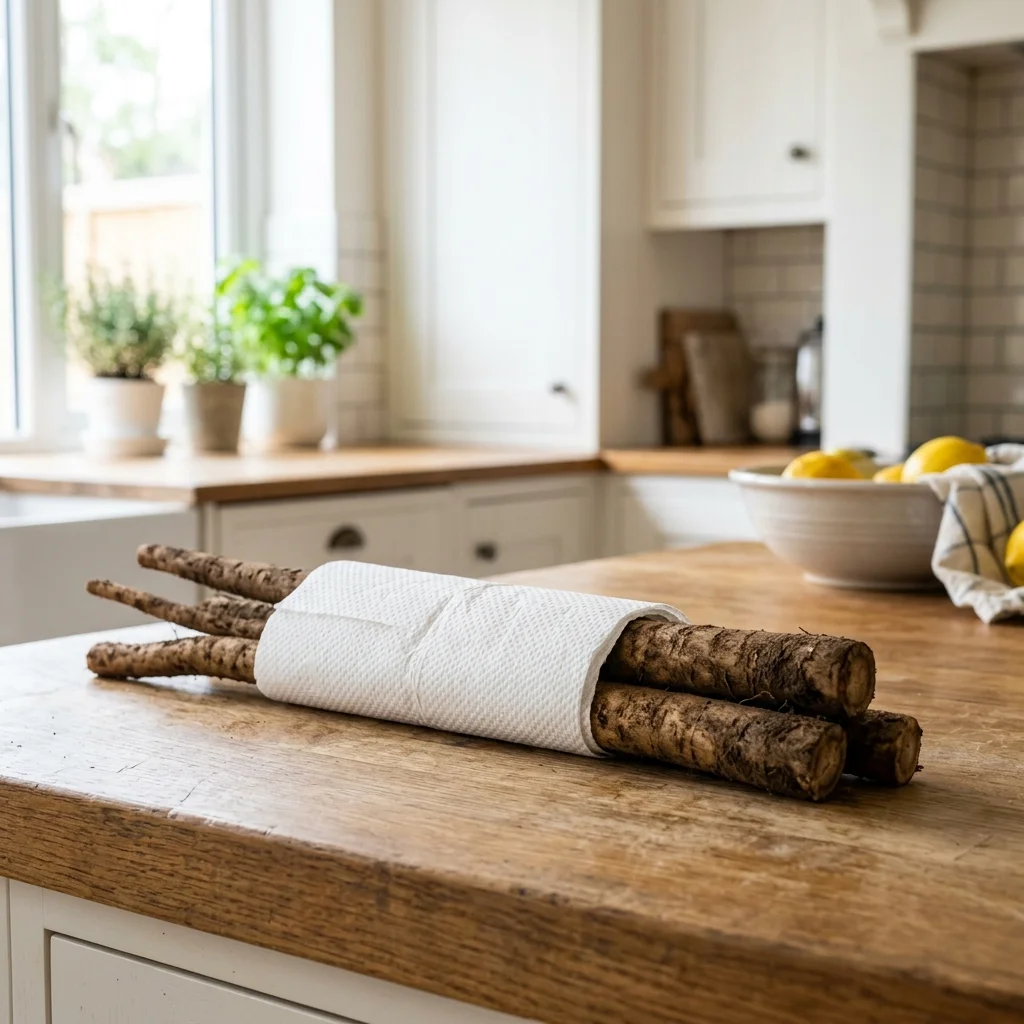
Wrap unwashed, soiled roots in newspaper and refrigerate — Soil Root Storage (30 Days) 📦
Unwashed burdock roots retain moisture naturally via attached soil. 💡 Storage Tip: Keep soil intact, wrap in damp newspaper or paper towels, place inside a plastic bag, and refrigerate in the crisper drawer (0–5°C / 32–41°F). Stays crisp without lignifying for up to 1 month.
Wrap washed burdock tightly in plastic film and refrigerate — Washed Root Storage (7 Days) ❄️
Washed burdock roots dry out and lignify much faster due to the absence of protective soil. 💡 Storage Tip: Wrap washed roots tightly in plastic wrap to seal in moisture and refrigerate at 0–5°C; consume within 1 week.
Blanch sliced roots in vinegar water before freezing — Frozen Storage (180 Days) 🧊
For long-term storage, blanching prevents enzymatic browning and texture degradation. 💡 Storage Tip: Slice burdock, blanch in diluted vinegar water for 1–2 minutes to deactivate PPO enzymes, drain dry, and freeze in airtight bags below -18°C (0°F) for up to 6 months.
2. Essential Storage Rules and Cautions
When burdock root loses moisture, its cells deposit structural lignin, making the root tough and woody. Keeping unwashed soil intact and maintaining moisture prevents this structural hardening.
Peeling or cutting burdock root activates Polyphenol Oxidase (PPO), causing swift browning upon exposure to air. Submerging cut pieces in diluted vinegar water (lowering pH) deactivates PPO enzymes and removes astringency.
📌 Frequently Asked Questions (FAQ)
Why did my burdock root become tough and woody like a branch? ▼
This is due to lignification! When burdock loses moisture, it deposits tough lignin into its cell walls as a protective reaction. Moisture loss is the main cause, so keeping unwashed soil intact and wrapping the root in paper helps maintain humidity and prevent woodiness.
What is the scientific reason for soaking sliced burdock root in vinegar water? ▼
Peeling burdock exposes its Polyphenol Oxidase (PPO) enzymes to oxygen, causing browning. Soaking in diluted vinegar water creates an acidic environment that suppresses PPO activity, blocking browning while neutralizing harsh astringent tannins.