Have you ever put leftover chocolate in the fridge, only to find a white powdery coating on its surface or that it tasted like fridge odors? 🍫
Cocoa butter, the key component of chocolate, is highly sensitive to temperature and humidity changes and acts like a sponge, absorbing strong volatile odors. Storing chocolate unprotected in the fridge causes ‘Sugar Bloom’ (crystallized sugar from dissolved moisture) or ‘Fat Bloom’ (recrystallized fats), destroying its smooth texture and rich aroma.
In this guide, introduces a scientifically proven 3-step storage guide recommended by USDA and chocolate experts to preserve rich flavor and velvety texture. 🛡️
Food Safety & Scientific Evidence
This content is based on USDA & MFDS.
 FreshSelf
Zero waste! Your smart storage assistant
FreshSelf
Zero waste! Your smart storage assistant









1. Scientifically Proven Storage Guide
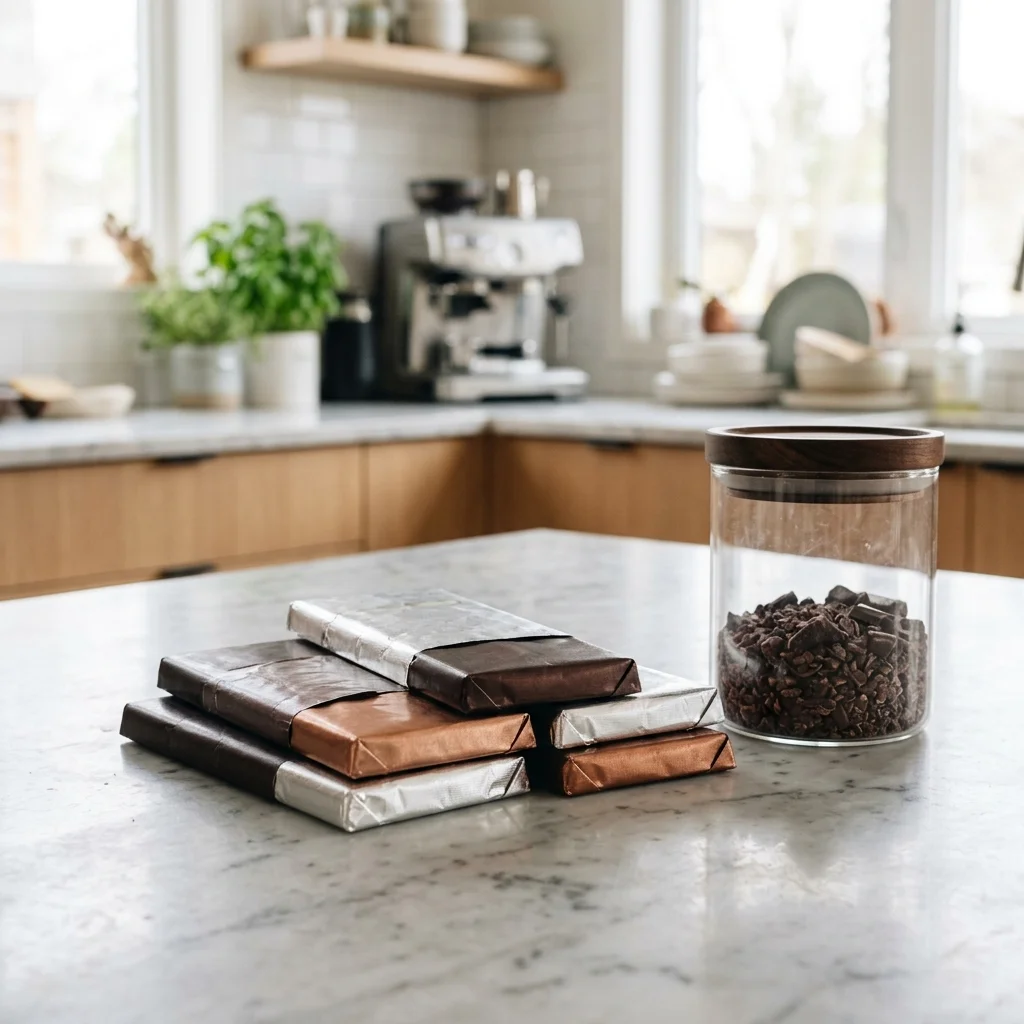
Seal in foil or airtight containers — Block Odors & Moisture 📦
Completely blocking ambient air and odorous molecules is essential. 💡 Storage Tip: Wrap opened chocolate tightly in foil or plastic wrap, then place inside a Ziploc bag or airtight container for double protection.
Store in a cool, dark place at 15–18°C — Optimal Room Temperature Storage (Up to 1 Year) 🍫
The ideal environment for chocolate is 15–18°C (59–64°F) with humidity below 55%. 💡 Storage Tip: Outside of hot summer months, store chocolate in a dark pantry, cabinet, or wine cellar rather than the refrigerator.
Refrigerate/freeze during summer and thaw gradually — Summer & Long-Term Storage ❄️
When ambient temperatures rise above 20°C, seal tightly and refrigerate/freeze. 💡 Storage Tip: Keep sealed in the fridge or freezer. When removing, allow the sealed container to sit at room temperature for at least 30 minutes before opening to prevent condensation.
2. Essential Storage Rules and Cautions
High refrigerator humidity causes condensation on chocolate, dissolving surface sugars that dry into powdery 'Sugar Bloom.' Additionally, cocoa butter readily absorbs ambient odors from garlic, onions, or kimchi.
Temperatures exceeding 20°C cause cocoa butter to melt and rise to the surface, creating a greyish-white film known as 'Fat Bloom' that turns the texture crumbly and degrades flavor.
📌 Frequently Asked Questions (FAQ)
Is chocolate with a white film or powder (bloom) safe to eat? ▼
Yes. The white film is either 'Sugar Bloom' or 'Fat Bloom' caused by moisture or temperature fluctuations. It is completely harmless to eat, though the texture may feel slightly grainy. It is ideal for melting into hot beverages or baking.
Does shelf life differ between dark, milk, and white chocolate? ▼
Yes. Dark chocolate contains fewer milk solids and lasts up to 1–2 years at cool room temperature. Milk chocolate lasts up to 1 year, while white chocolate and fresh truffle (pavé) chocolates contain higher dairy levels and should be eaten within 6 months (1–2 weeks refrigerated for fresh truffles).