Have you ever left butter in the refrigerator door only to find its surface dried out, dark yellow, and full of stale fridge odors? 🧈
Butter is composed of over 80% milk fat, making it highly sensitive to oxygen, light, and temperature fluctuations. It also acts like a sponge, readily absorbing strong volatile aromas from surrounding foods. Improper storage leads to lipid oxidation (rancidity) and loss of flavor.
In this guide, shares a scientifically proven 3-step storage guide based on safety guidelines from the USDA and MFDS to keep your butter rich, creamy, and fresh for over 90 days. 🛡️
Food Safety & Scientific Evidence
This content is based on USDA & MFDS.
 FreshSelf
Zero waste! Your smart storage assistant
FreshSelf
Zero waste! Your smart storage assistant









1. Scientifically Proven Storage Guide
Keep the original aluminum foil wrapper — Block Light & Oxygen 📦
The original foil wrapper of butter provides an exceptional barrier against light and UV exposure, protecting milk fats from oxidation. 💡 Storage Tip: Discarding the foil wrapper and transferring butter to plastic wrap or clear containers increases light and oxygen exposure, drastically accelerating rancidity. Keep it in its original foil.
Double seal in a Ziploc bag or container — Prevent Odor Absorption 📰
Milk fats in butter strongly attract volatile aromatic odor molecules floating in the air. 💡 Storage Tip: Place the foil-wrapped butter inside an airtight Ziploc bag or an opaque container for double sealing. This completely blocks strong food odors like kimchi, garlic, or fish from penetrating the butter.
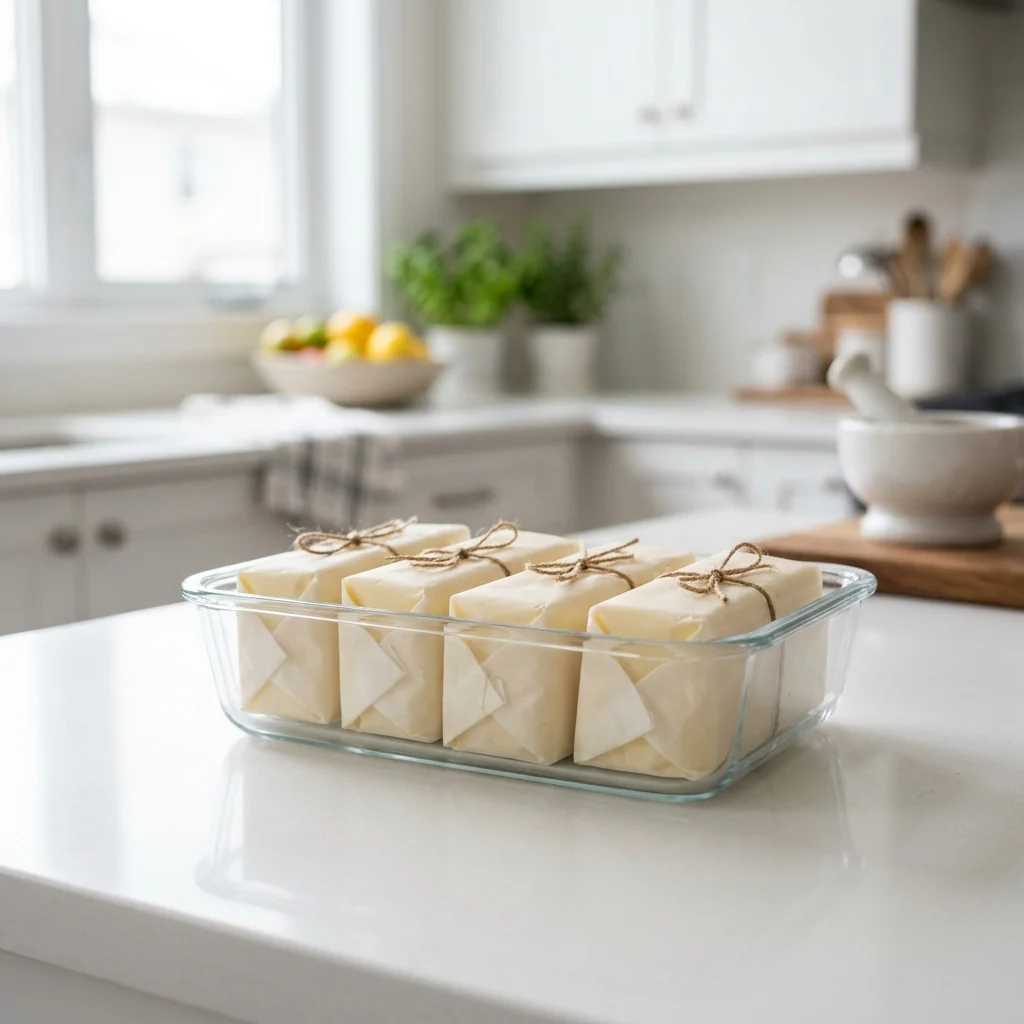
Portion and wrap with parchment paper to freeze — Cold Storage (90 Days) ❄️
For long-term storage, portion the butter into single-use sizes (e.g., 10–20g) using a clean knife. 💡 Storage Tip: Wrap each slice in parchment paper so they do not stick together, then place them in a freezer Ziploc bag and freeze below -18°C. You can easily thaw individual portions at room temperature whenever needed for cooking.
2. Essential Storage Rules and Cautions
The refrigerator door experiences the most severe temperature fluctuations and light exposure every time it opens. Frequent temperature shifts weaken the milk fat structure and accelerate rancidity. Store butter on a cold, deep inner shelf (0–4°C) where the temperature remains stable.
Cutting butter with a wet knife or one previously used on other foods introduces moisture and bacteria, causing mold growth or bacterial rancidity on the cut surface. Always use a dry, sanitized knife when portioning butter.
📌 Frequently Asked Questions (FAQ)
Is it safe to store butter at room temperature? ▼
Salted butter can stay at room temperature for 1–2 days because salt inhibits bacterial growth, but refrigeration is still recommended to prevent lipid oxidation. Unsalted butter is extremely vulnerable to microbial growth and oxidation, so it must always be kept refrigerated (0–4°C).
My butter surface turned dark yellow and smells off. Is it still usable? ▼
Dark yellow discoloration on the surface indicates lipid oxidation caused by exposure to light and air. If the discoloration is minor, you can scrape off the outer yellow layer and use the fresh butter underneath. However, if it has a sour, stale smell or a bitter taste, it has gone rancid and should be discarded.