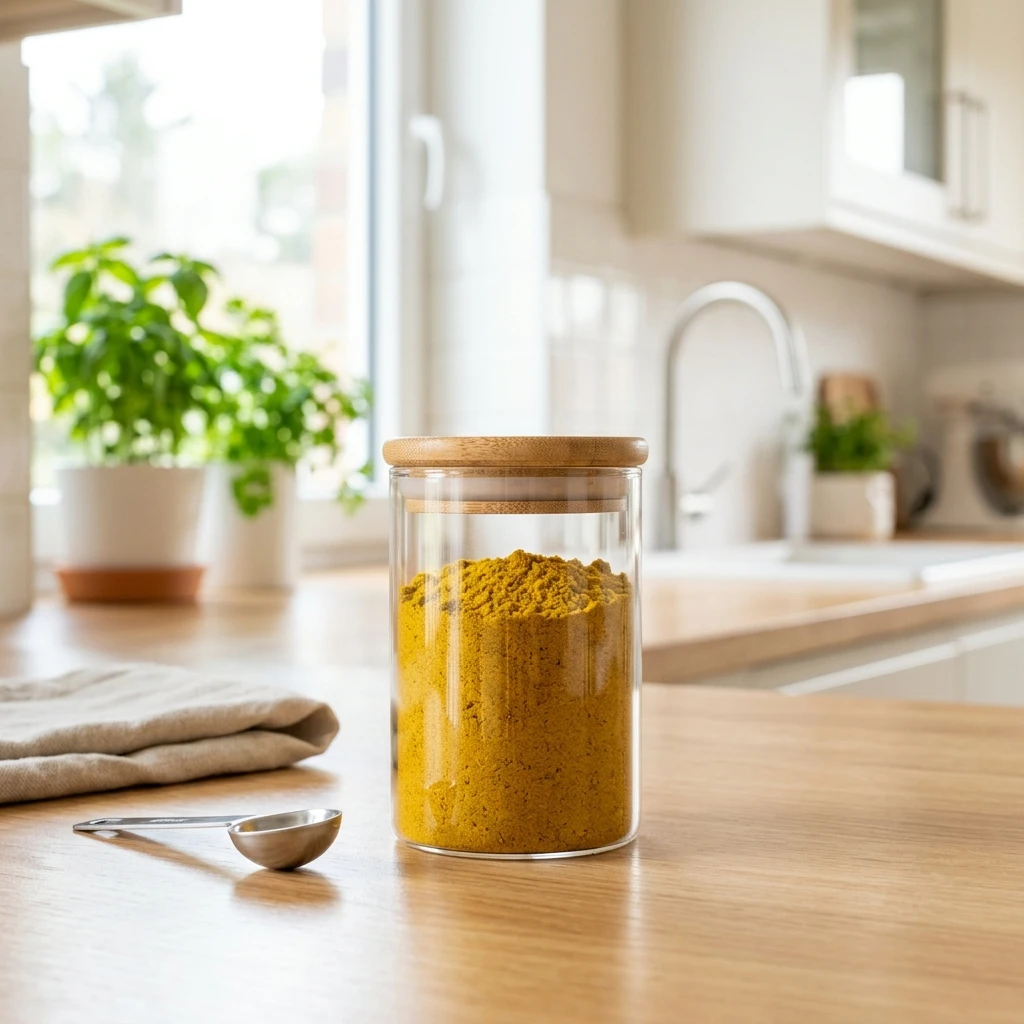
Have you ever pulled out your curry powder to cook a flavorful curry or spiced dish, only to find that its vibrant yellow hue had faded or its aroma had completely disappeared? 🍛
Curry powder is a beloved blend of spices including turmeric, cumin, and cloves used worldwide. However, the active compound in turmeric, curcumin, undergoes rapid photodegradation when exposed to ultraviolet (UV) light, causing loss of both its rich yellow pigment and antioxidant potency. Furthermore, volatile terpene essential oils from cumin and cloves evaporate rapidly upon oxygen exposure, destroying its signature pungent bouquet.
In this guide, we introduce a scientifically proven 3-step curry powder storage guide recommended by international food safety experts to preserve vivid color and rich aromatics. 🛡️
Food Safety & Scientific Evidence
This content is based on FDA & EFSA & MFDS.
 FreshSelf
Zero waste! Your smart storage assistant
FreshSelf
Zero waste! Your smart storage assistant









1. Scientifically Proven Storage Guide
Store in opaque, airtight containers — Block Light and Aroma Evaporation 🫙
Preventing curcumin photodegradation and terpene oil evaporation is the critical first step. 💡 Storage Tip: After opening, transfer the powder from clear jars or original plastic bags into metal tins, opaque airtight containers, or light-blocking Ziploc pouches.
Keep in a cool, dry, dark place at room temperature (15–20°C / 59–68°F) — Cool Room Temp Storage (2 Years Unopened / 6 Months Opened) 🌡️
Storing in an area with low relative humidity and away from ambient heat is essential. 💡 Storage Tip: Keep away from stovetops and ovens inside a dark pantry or cabinet. Unopened curry powder lasts up to 2 years, and sealed opened powder retains full flavor for 6 months.
Use only clean, completely dry spoons — Block Moisture and Steam 🥄
Shaking powder directly over steaming pots introduces moisture. 💡 Storage Tip: Never hold the container over a boiling pot as rising steam enters the container, causing powder to clump and spoil. Always measure with a completely dry utensil into a separate dish.
2. Essential Storage Rules and Cautions
Ultraviolet (UV) light causes severe photodegradation of curcumin in turmeric, bleaching its signature yellow color and breaking down antioxidant compounds. Always store in an opaque container that blocks light.
Taking refrigerated spice containers out to room temperature creates internal condensation from thermal shock. This moisture causes severe powder clumping (caking) and creates a ideal breeding ground for mold.
📌 Frequently Asked Questions (FAQ)
My curry powder has faded to a dull yellow/pale color. Is it still safe to use? ▼
Yes, it is safe to use! The pale color is caused by the photodegradation of curcumin due to UV light exposure. While it is not spoiled or toxic, the antioxidant potency has decreased and the volatile aromatic oils (terpenes) from cumin and cloves have likely evaporated, resulting in a milder flavor.
Why shouldn't curry powder be stored in the refrigerator? ▼
Refrigerators have high ambient humidity, and removing the cold container into room air creates condensation inside the jar. As a dry spice powder, absorbing micro-moisture causes clumping (caking) and significantly increases the risk of mold growth.