Have you ever bought fresh chili peppers for spicy cooking, only to find their stems turning soft and covered in mold after just a few days? 🌶️
Chili peppers consist of 85–90% water, making them vulnerable to humidity and prone to ‘chilling injury’ if stored below 7°C. When moisture collects around the stems, mold spores multiply rapidly, causing soft rot throughout the pepper.
In this guide, introduces a scientifically proven 3-step chili pepper storage guide recommended by agriculture and food safety experts to maximize crispness and spiciness. 🛡️
Food Safety & Scientific Evidence
This content is based on RDA & USDA & MFDS.
 FreshSelf
Zero waste! Your smart storage assistant
FreshSelf
Zero waste! Your smart storage assistant






1. Scientifically Proven Storage Guide
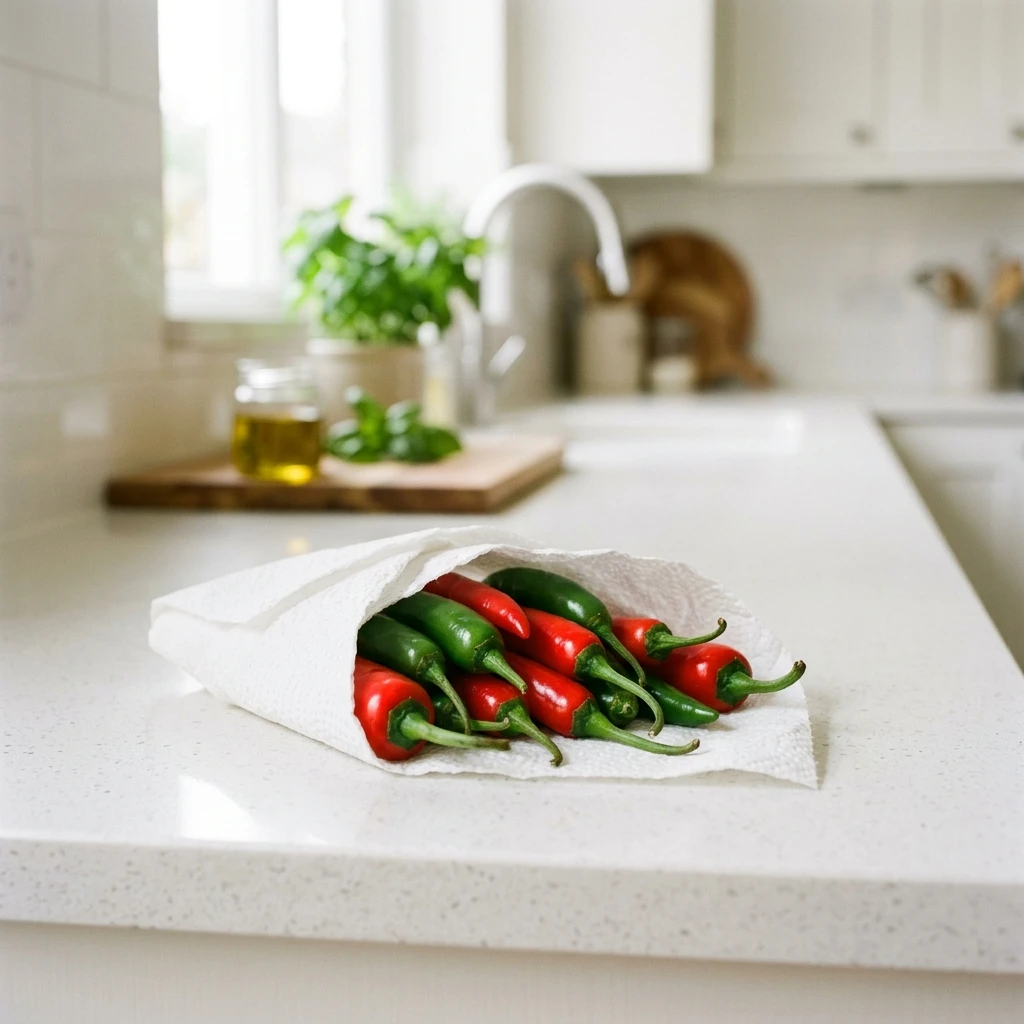
Wipe dry and wrap in paper towels with stems intact — Moisture Control 📦
Managing humidity while preventing dehydration is key. 💡 Storage Tip: Do not wash. Gently wipe off moisture with a dry cloth, then wrap small batches (5–10 peppers) in paper towels, leaving stems intact.
Seal in Ziploc bags and store in the crisper drawer — Cold Storage (1–2 Weeks) ❄️
Place paper-wrapped peppers inside Ziploc bags and gently press out excess air. 💡 Storage Tip: Store them upright in the refrigerator crisper drawer (7–10°C) rather than colder shelves to prevent chilling injury and keep crispness for 1 to 2 weeks.
Slice or mince, then freeze in freezer bags — Frozen Storage (3–6 Months) ❄️
For long-term preservation, pre-chopping for cooking uses before freezing works best. 💡 Storage Tip: Wash peppers, dry completely, slice or mince, spread thinly in freezer Ziploc bags, and freeze below -18°C for 3 to 6 months.
2. Essential Storage Rules and Cautions
Moisture left on the skin or stem creates an ideal breeding ground for mold and bacteria. Keep peppers dry, gently wipe off surface dust with a paper towel, and wash them right before cooking.
Removing the stem leaves an open wound through which air and microorganisms penetrate, evaporating moisture and accelerating decay. Always keep the stems attached when storing whole peppers in the fridge.
📌 Frequently Asked Questions (FAQ)
Can I thaw frozen chili peppers and eat them raw? ▼
Freezing ruptures the cell walls of chili peppers, causing moisture loss and soft texture upon thawing. Frozen chili peppers are best used directly without thawing in soups, stews, sauces, or stir-fries.
My green chili peppers turned red in the fridge. Are they still safe to eat? ▼
Yes, this is a natural ripening process where chlorophyll breaks down and carotenoid pigments develop. They are completely safe and may taste slightly sweeter. However, if they feel mushy or slimy, they have spoiled and should be discarded.