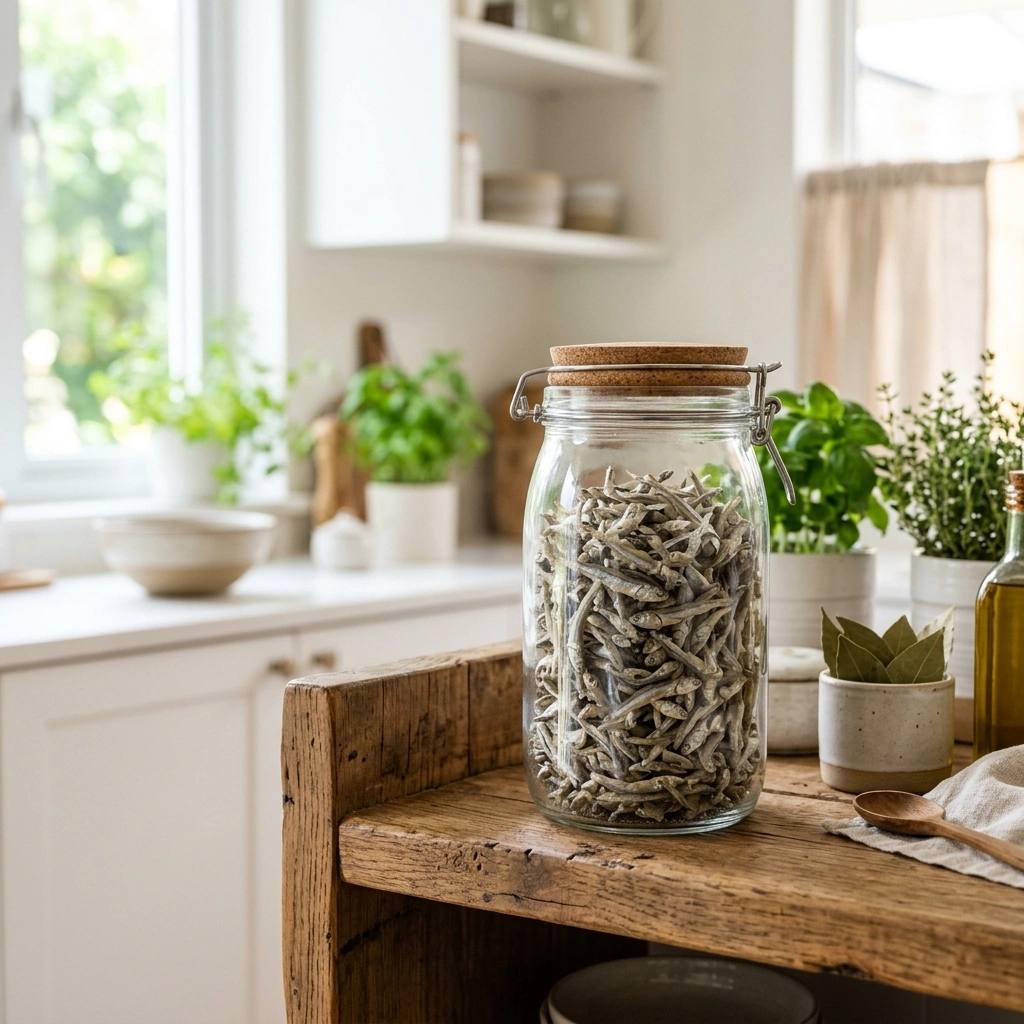
Have you ever kept dried anchovies at room temperature, only to find them turned yellow, stale, smelling unpleasantly fishy, or covered in mold? 🐟
Anchovies are rich in unsaturated fatty acids (DHA, EPA) and protein, but exposure to ambient air, light, and humidity rapidly triggers lipid oxidation (rancidity) and decay. Absorbing moisture worsens their fishy odor and creates an ideal breeding ground for mold.
In this guide, introduces a scientifically proven 3-step anchovy storage guide recommended by seafood and food safety experts to preserve crispness and rich flavor for months. 🛡️
Food Safety & Scientific Evidence
This content is based on NIFS & USDA & MFDS.
 FreshSelf
Zero waste! Your smart storage assistant
FreshSelf
Zero waste! Your smart storage assistant






1. Scientifically Proven Storage Guide
Dry-roast briefly and portion — Remove Moisture & Odors 📦
If anchovies feel slightly damp, dry-roast them in a pan without oil over low heat for 1–2 minutes to evaporate excess moisture. 💡 Storage Tip: Allow them to cool completely before portioning into single-meal plastic bags or Ziploc pouches.
Double-seal in airtight containers — Prevent Odor Absorption & Oxidation 📰
Minimizing oxygen exposure is essential to prevent lipid oxidation of unsaturated fatty acids. 💡 Storage Tip: Place the portioned bags inside an airtight container or opaque box for double sealing against air, light, and ambient odors.
Freeze below -18°C — Frozen Storage (6–12 Months) ❄️
The optimal long-term storage location for dried anchovies is the freezer, not the refrigerator cabinet. 💡 Storage Tip: Store sealed anchovies in the freezer (-18°C or below). This halts fat rancidity and mold growth, preserving fresh aroma for 6 to 12 months.
2. Essential Storage Rules and Cautions
Exposing dried anchovies to ambient air, light, and moisture causes rapid fat oxidation, leading to yellowish discoloration, a bitter taste, and stale odors. Absorbing room humidity is the primary cause of mold growth.
Anchovies act like a sponge, absorbing volatile odor molecules floating inside the freezer. Freezing them without airtight packaging results in freezer burn, dryness, and absorption of unpleasant freezer smells.
📌 Frequently Asked Questions (FAQ)
My dried anchovies turned yellowish and smell stale. Are they still safe to eat? ▼
Yellowish discoloration indicates that the fats in anchovies have oxidized due to oxygen exposure (rancidity). If the discoloration is severe, accompanied by a sour smell or bitter taste, harmful oxidation byproducts have formed and they should be discarded.
How can I remove the fishy odor from frozen anchovies before cooking? ▼
Take the anchovies out of the freezer and dry-toast them in a pan without oil over low heat for 1–2 minutes. Evaporating residual moisture drives off volatile fishy amines, restoring a crisp texture and savory aroma.