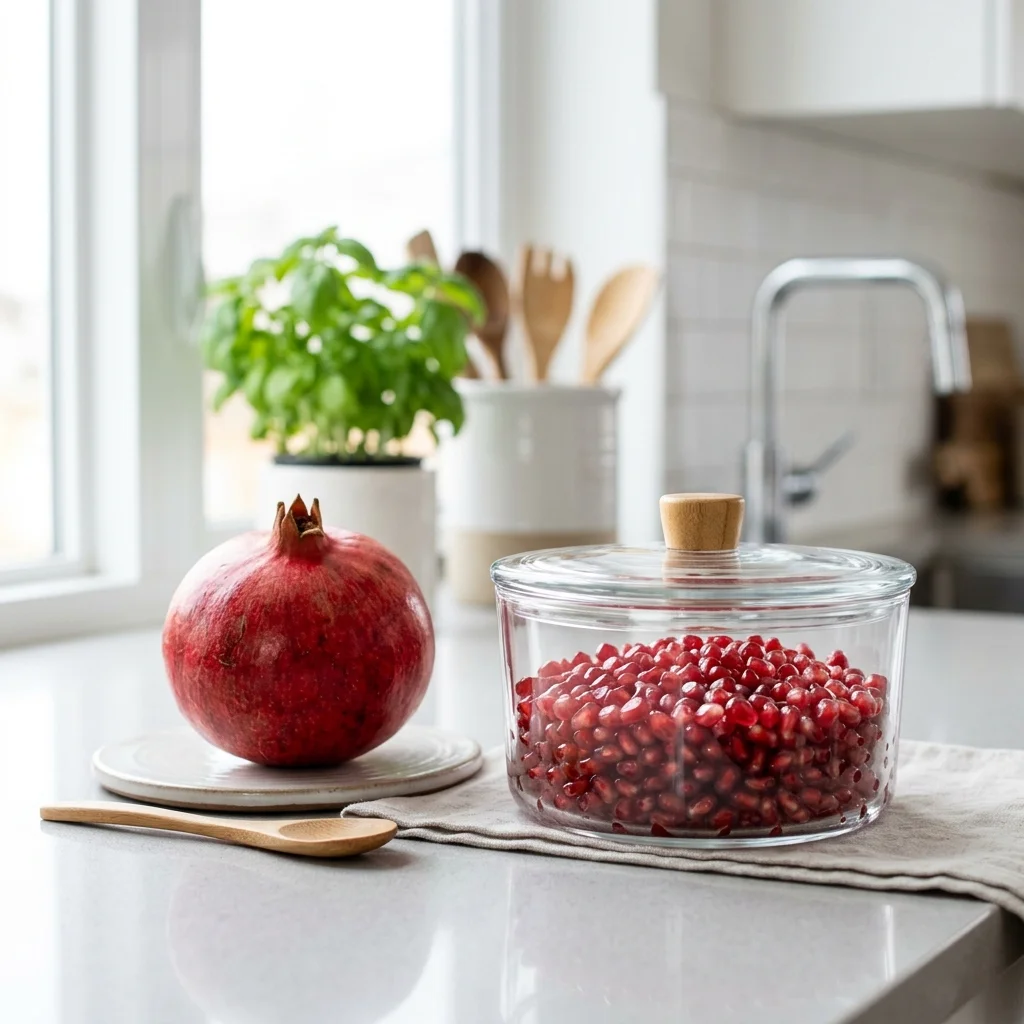
Pomegranates are a beloved health fruit worldwide, prized for their sweet-tart flavor, rich phytoestrogens, and powerful antioxidants! However, have you ever stored pomegranates only to find their rind drying and shriveling, or their extracted arils turning brown? Ruby-red gems of nature 💎
The moment extracted pomegranate arils come into contact with air, polyphenol oxidase (PPO) becomes activated, rapidly oxidizing antioxidants like anthocyanins and ellagic acid, resulting in browning and nutrient loss. Furthermore, whole pomegranates lose internal moisture through rind transpiration if left unmanaged.
In this guide, we introduce a scientifically proven 3-step pomegranate storage guide based on guidelines from agricultural and food safety authorities to prevent moisture loss and suppress PPO activity to preserve antioxidants. 🛡️
Food Safety & Scientific Evidence
This content is based on RDA & USDA & MFDS.
 FreshSelf
Zero waste! Your smart storage assistant
FreshSelf
Zero waste! Your smart storage assistant









1. Scientifically Proven Storage Guide
Wrap whole fruit in plastic wrap at 5–7°C and 80–85% RH — Prevent Rind Transpiration (2–3 Months) 📦
For whole, uncut pomegranates, preventing water loss through the skin is paramount. 💡 Storage Tip: Wrap whole pomegranates in plastic wrap or place in perforated plastic bags at 5–7°C (41–45°F) with 80–85% relative humidity (crisper drawer). This prevents chilling injury and moisture loss for 2 to 3 months.
Dry extracted arils and store in airtight containers in the fridge — Suppress PPO Oxidation (1–2 Weeks) ❄️
To prevent oxidative browning of extracted arils, oxygen contact and enzyme activity must be minimized. 💡 Storage Tip: Thoroughly wipe moisture off extracted arils with paper towels, then seal in an airtight container in the fridge (0–4°C / 32–39°F). Inhibiting PPO keeps arils vibrant and nutritious for 1 to 2 weeks.
Flash freeze arils on a tray then seal for long-term storage — Freezer Storage (1 Year) 🧊
For long-term preservation, flash freezing arils individually prevents clumping and maintains quality. 💡 Storage Tip: Spread dried arils on a tray so they do not touch and freeze until firm. Transfer to Ziploc freezer bags or airtight containers (-18°C / 0°F) to use in salads or smoothies for up to 1 year.
2. Essential Storage Rules and Cautions
Exposing whole pomegranates to ultra-cold temperatures below 5°C for extended periods causes chilling injury, resulting in surface pitting, skin decay, and internal aril quality breakdown. The optimal storage temperature for whole fruit is 5–7°C.
When extracted arils are exposed to atmospheric oxygen, polyphenol oxidase (PPO) catalyzes the oxidative browning of anthocyanins and ellagic acid. Always wipe moisture dry and seal tightly to prevent mold.
📌 Frequently Asked Questions (FAQ)
Is it safe to eat pomegranate arils that have turned brown? ▼
Arils turning brown is a result of polyphenol oxidase (PPO) reacting with oxygen, oxidizing key antioxidants like anthocyanins and ellagic acid. If there is no foul odor or mold, they are safe to consume, though antioxidant potency will be reduced. It is best to consume them while fresh.
What is the easiest way to seed a pomegranate? ▼
Cut off the top crown of the pomegranate, then make shallow vertical score marks along the white membrane ridges. Gently pull the sections apart over a large bowl of water. Submerge the sections and pop the arils out underwater—the heavy arils sink to the bottom while the white pith floats to the top for easy separation.