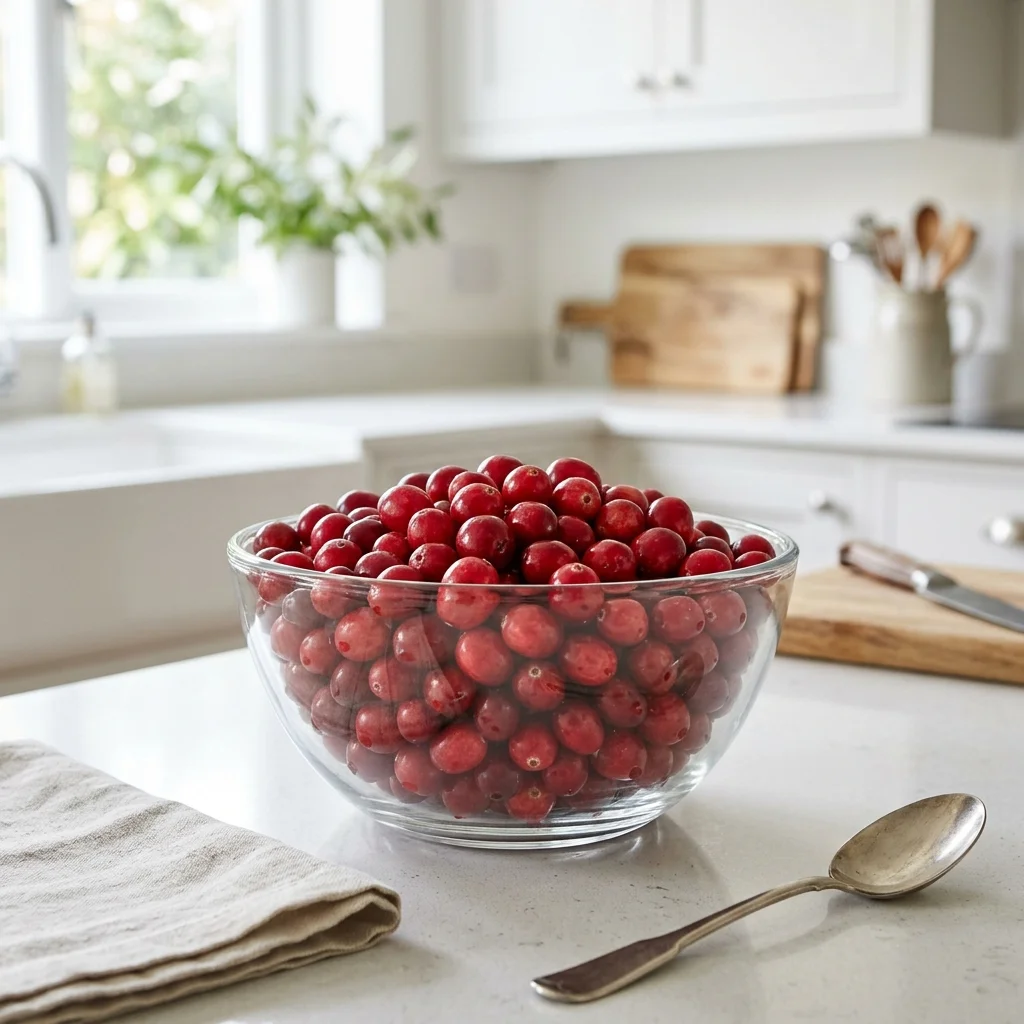
When buying fresh cranberries for salads or juices, have you ever worried they might spoil or grow mold quickly like strawberries or blueberries? 🫐
Cranberries naturally contain rich amounts of benzoic acid—a potent natural preservative—and organic acids, creating a strongly acidic environment with a pH between 2.3 and 2.5. This endows them with superior natural antibacterial and antifungal properties compared to most berries. However, when moisture evaporates, micro-cracks form in the skin, allowing mold to invade. Thus, maintaining 90–95% relative humidity while regulating respiration is the scientific secret to long storage.
In this guide, we share a scientifically proven 3-step cranberry storage guide based on guidelines from the USDA, FDA, and MFDS to safely preserve their tart flavor and firm texture. 🛡️
Food Safety & Scientific Evidence
This content is based on USDA & FDA & MFDS.
 FreshSelf
Zero waste! Your smart storage assistant
FreshSelf
Zero waste! Your smart storage assistant







1. Scientifically Proven Storage Guide
Keep in perforated plastic bags to maintain humidity — Refrigerated Storage (21–28 Days) ❄️
Fresh cranberries boast the longest shelf life among berries thanks to their high benzoic acid content. 💡 Storage Tip: Place cranberries in a perforated plastic bag or breathable container in the crisper drawer (0–4°C / 32–39°F, 90–95% RH) to keep them firm and fresh for 3 to 4 weeks.
Sort and discard soft or damaged berries immediately — Quality Sorting 🔎
Soft, bruised, or damaged berries lose their natural benzoic acid defense, making them prone to mold and contaminating surrounding sound fruits. 💡 Storage Tip: Inspect and sort out defective cranberries before storing.
Wash, dry thoroughly, and freeze for long-term storage — Frozen Storage (300–360 Days) 🧊
If storing for longer than a month, freezing is the optimal method. 💡 Storage Tip: Rinse cranberries clean, dry them completely with towels, and freeze in airtight bags below -18°C (0°F). Preserves nutrients and texture for 10 to 12 months.
2. Essential Storage Rules and Cautions
When cranberries lose moisture, micro-cracks develop in their skin, rendering them vulnerable to mold infection. Storing them in perforated plastic bags maintains high relative humidity (90–95%) to prevent transpiration.
Washing raw cranberries before storage strips away their protective natural wax layer and leaves moisture trapped on the skin, inviting mold growth. Always wash them right before consumption.
📌 Frequently Asked Questions (FAQ)
Why do fresh cranberries last so much longer in the fridge than strawberries or blueberries? ▼
Cranberries naturally contain abundant benzoic acid, a natural antimicrobial preservative, along with organic acids that drop their pH to 2.3–2.5. This strongly acidic environment suppresses microbial growth, allowing fresh cranberries to stay fresh for 3 to 4 weeks.
Why should cranberries be stored in perforated plastic bags? ▼
When cranberries lose moisture, micro-cracks open in their skin where mold spores can enter. Perforated plastic bags allow necessary air exchange while maintaining a high relative humidity of 90–95%, preventing moisture loss and mold invasion.