Have you ever frozen fresh squid only to find that pungent seafood odors transferred to all your other frozen foods? 🦑
Squid is high in moisture, and its internal organs contain dense concentrations of microorganisms and digestive enzymes (proteases). If stored uncleaned, these enzymes trigger rapid autolysis and decomposition, releasing fishy trimethylamine (TMA) odors that easily taint neighboring foods.
In this guide, shares a scientifically proven 3-step storage guide based on guidelines from the National Institute of Fisheries Science (NIFS) and USDA to eliminate fishy odors, prevent freezer burn, and maintain a tender, chewy texture. 🛡️
Food Safety & Scientific Evidence
This content is based on NIFS & MFDS & USDA.
 FreshSelf
Zero waste! Your smart storage assistant
FreshSelf
Zero waste! Your smart storage assistant









1. Scientifically Proven Storage Guide
Completely remove guts, ink sac, and suction cup ring debris — Block Fishy Odors & Rot 🦑
Squid viscera and suction cup impurities are the primary sources of fishy odors and bacterial growth. 💡 Storage Tip: Slice the mantle open, remove entrails, ink sac, and quill (backbone). Rub the tentacles with coarse salt or flour under running water to scrub away chitinous suction rings.
Dry surface moisture 100% and wrap tightly in plastic wrap — Cold Storage (1–2 Days) 📦
Residual moisture forms large ice crystals during freezing, rupturing muscle cell walls and leaving the squid mushy upon thawing. 💡 Storage Tip: Firmly pat both inside and outside the squid mantle dry with paper towels, then wrap single portions tightly in plastic wrap.
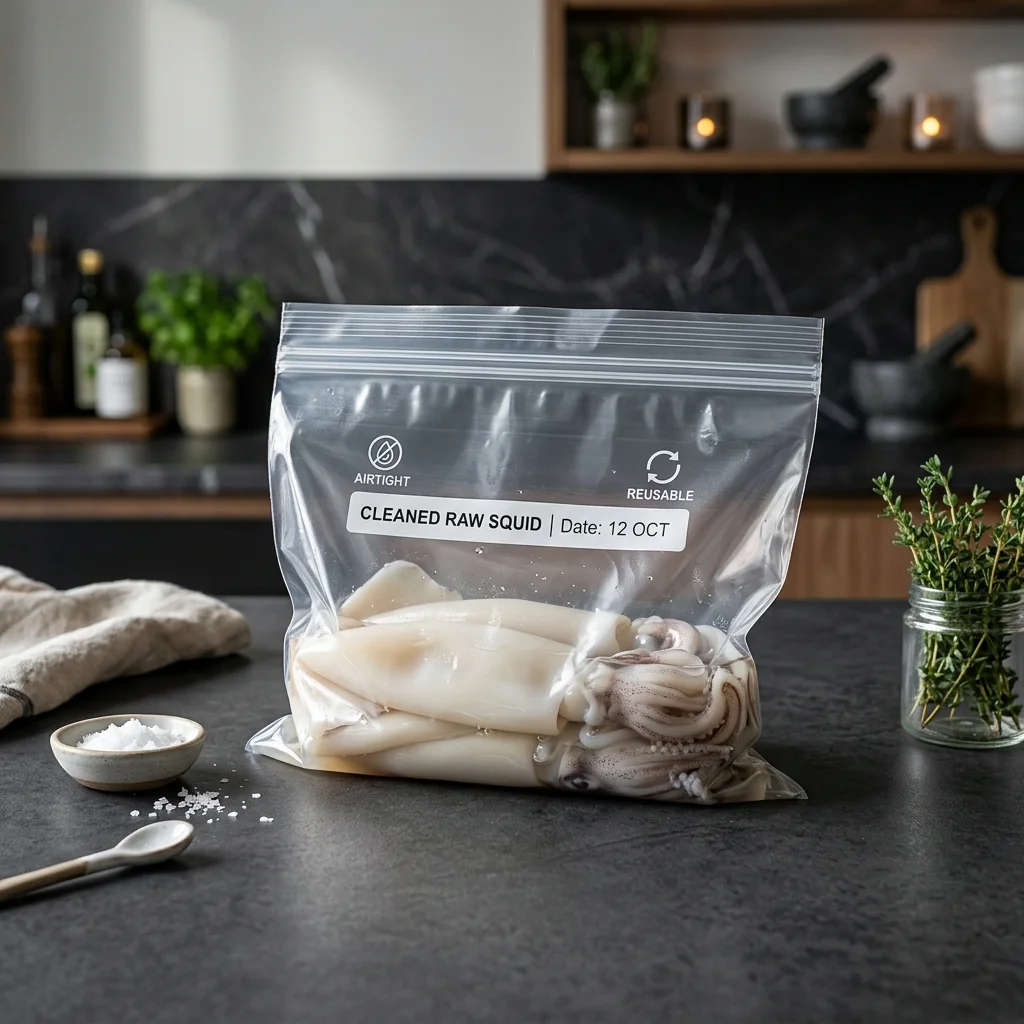
Double-seal in a freezer Ziploc bag and freeze — Frozen Storage (60–90 Days) ❄️
Volatile fishy odor molecules easily travel to other frozen foods inside the freezer. 💡 Storage Tip: Place wrapped squid inside a freezer Ziploc bag, press out all air, and store below -18°C (-0.4°F). Double sealing blocks cross-odor contamination and prevents freezer burn.
2. Essential Storage Rules and Cautions
When freezing squid for extended periods, blanching sliced squid in boiling water with a drop of vinegar or salt for 10–15 seconds, then cooling and drying it completely before freezing, stops enzyme activity and maintains a chewy, tender texture upon thawing.
Raw seafood has soft protein structures and high water activity, allowing psychrotrophic spoilage bacteria to multiply rapidly even in the fridge (0–4°C). Clean and cook raw squid within 48 hours or freeze immediately below -18°C.
📌 Frequently Asked Questions (FAQ)
Why is it dangerous to refrigerate raw squid without removing the viscera (guts)? ▼
Raw squid viscera contain high concentrations of autolytic enzymes and microorganisms that initiate rapid decomposition immediately post-harvest. Leaving guts intact produces severe fishy odors (trimethylamine) and bitter off-flavors while allowing spoilage bacteria to invade the mantle flesh. Always eviscerate, wash, and dry raw squid right after purchase.
How can I prevent fishy odors and tough texture when thawing frozen squid? ▼
The optimal method is slow refrigerator thawing by transferring the frozen squid to the fridge (0–4°C) 12 hours before cooking. For fast thawing, submerge the sealed, wrapped squid in cold water. Sprinkling a dash of cooking wine (sake/mirin) or lemon juice during thawing neutralizes trimethylamine (TMA) and retains moisture for a tender, chewy bite.