Have you ever bought a box of oranges only to find their skins shreveeled and dry, or covered in blue-green mold after a few days? 🍊
Oranges are rich in moisture and vitamin C, but as citrus fruits, they continue to respire and release water even after harvesting. Leaving them at room temperature causes moisture loss that makes the flesh soft and tasteless, while trapped humidity rapidly breeds green and blue molds that infect neighboring fruit.
In this guide, introduces a scientifically proven 3-step orange storage guide recommended by agriculture and food safety experts to maximize freshness. 🛡️
Food Safety & Scientific Evidence
This content is based on RDA & USDA & MFDS.
 FreshSelf
Zero waste! Your smart storage assistant
FreshSelf
Zero waste! Your smart storage assistant









1. Scientifically Proven Storage Guide
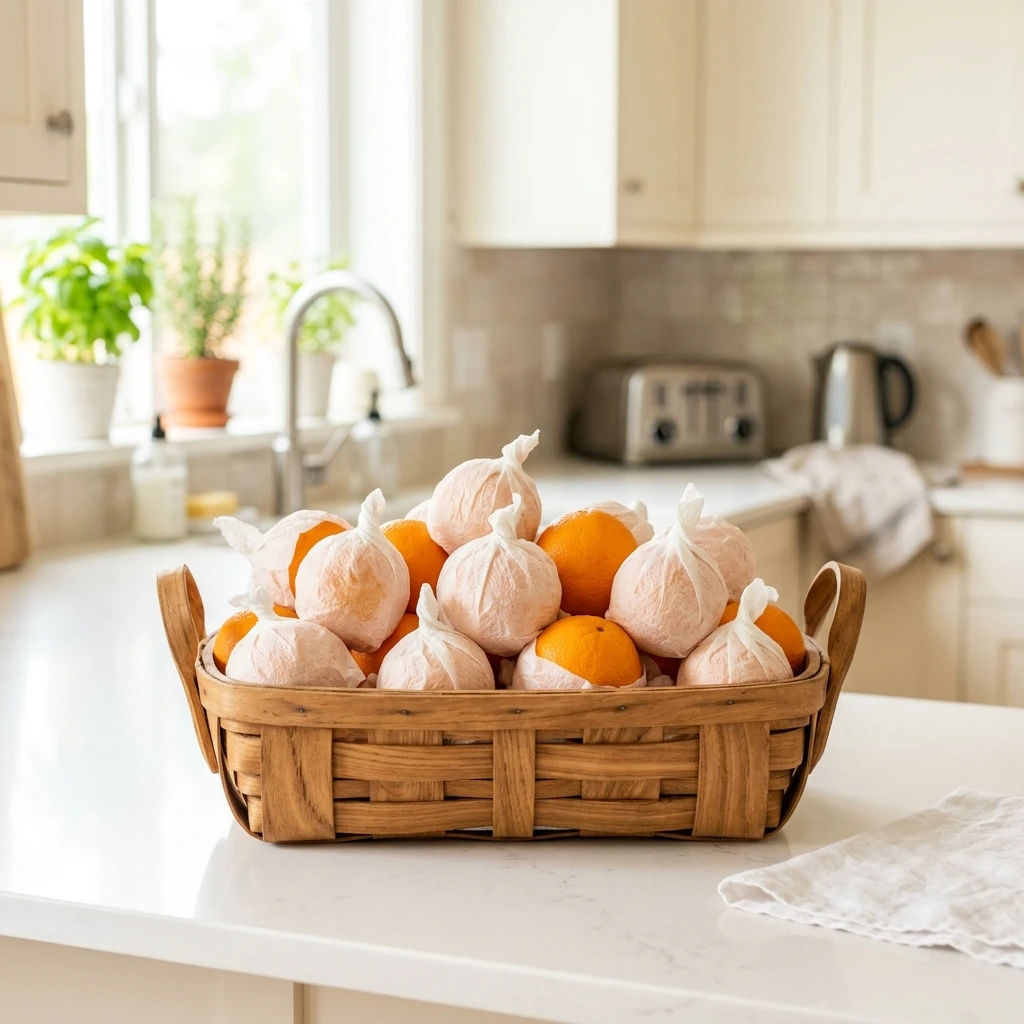
Wrap individually in paper towels or newspaper — Moisture Retention & Mold Barrier 📦
Direct contact between oranges causes friction and traps moisture, accelerating spoilage. 💡 Storage Tip: Wrap each unwashed orange tightly in a paper towel or newspaper. This traps moisture inside the fruit while preventing mold spores from spreading.
Store in cold refrigeration at 4–8°C — Cold Storage (3–4 Weeks) ❄️
The optimal temperature to preserve orange freshness for a long time is 4–8°C (39–46°F). 💡 Storage Tip: Place wrapped oranges inside a perforated plastic bag or container in the refrigerator crisper drawer. This slows respiration, preserving juicy sweetness for 3 to 4 weeks.
Peel and segment before freezing for long-term storage — Frozen Storage (2–3 Months) ❄️
Freezing whole unpeeled oranges breaks down cellular walls, turning the flesh mushy upon thawing. 💡 Storage Tip: Peel the orange, remove seeds and white pith, portion the segments into Ziploc bags, and freeze below -18°C for smoothies and juices (2–3 months).
2. Essential Storage Rules and Cautions
Moisture left on the orange peel creates an ideal environment for mold spores to thrive. Wipe off surface dirt or dust with a dry cloth or paper towel before storage, and wash oranges right before eating.
Blue and green molds on citrus spread rapidly through airborne spores. As soon as you spot an orange starting to mold, separate and discard it immediately to protect the remaining fruit.
📌 Frequently Asked Questions (FAQ)
Is it okay to store oranges at room temperature? ▼
During cool seasons (10–15°C / 50–59°F), oranges can be kept at room temperature in a well-ventilated, shaded area for 1 to 2 weeks. However, in warmer weather or for longer storage, wrapping them individually and refrigerating at 4–8°C is essential to prevent moisture loss and mold.
Is the white powder or shiny coating on the orange peel safe? ▼
The shine comes from food-grade natural waxes applied during processing to prevent moisture evaporation, and white residue is often calcium spray. While harmless, rinse oranges thoroughly in warm water with baking soda or vinegar right before consuming.