Have you ever wrapped leftover Cheddar or hard cheese tightly in plastic wrap, only to find it turned hard, cracked, or covered in fuzzy mold a few days later? 🧀
Cheese is a living fermented food containing active cultures and beneficial bacteria that continue to breathe. Sealing cheese in non-breathable plastic wrap creates an anaerobic environment, trapping harsh ammonia gases and moisture, which leads to oily surfaces and rapid mold growth.
In this guide, shares a scientifically proven 3-step storage guide based on guidelines from the USDA and FSA to allow your cheese to ‘breathe’ properly, retaining its rich flavor and ideal texture for over a month. 🛡️
Food Safety & Scientific Evidence
This content is based on USDA & FSA & MFDS.
 FreshSelf
Zero waste! Your smart storage assistant
FreshSelf
Zero waste! Your smart storage assistant









1. Scientifically Proven Storage Guide
Remove tight plastic film or packaging — Avoid Anaerobic Traps 📦
Tight plastic wrap suffocates cheese, trapping natural moisture and byproduct gases that accelerate spoilage. 💡 Storage Tip: Completely removing airtight plastic packaging after opening is the essential first step to proper cheese preservation.
Wrap in parchment paper or wax paper — Airflow & Moisture Balance 📰
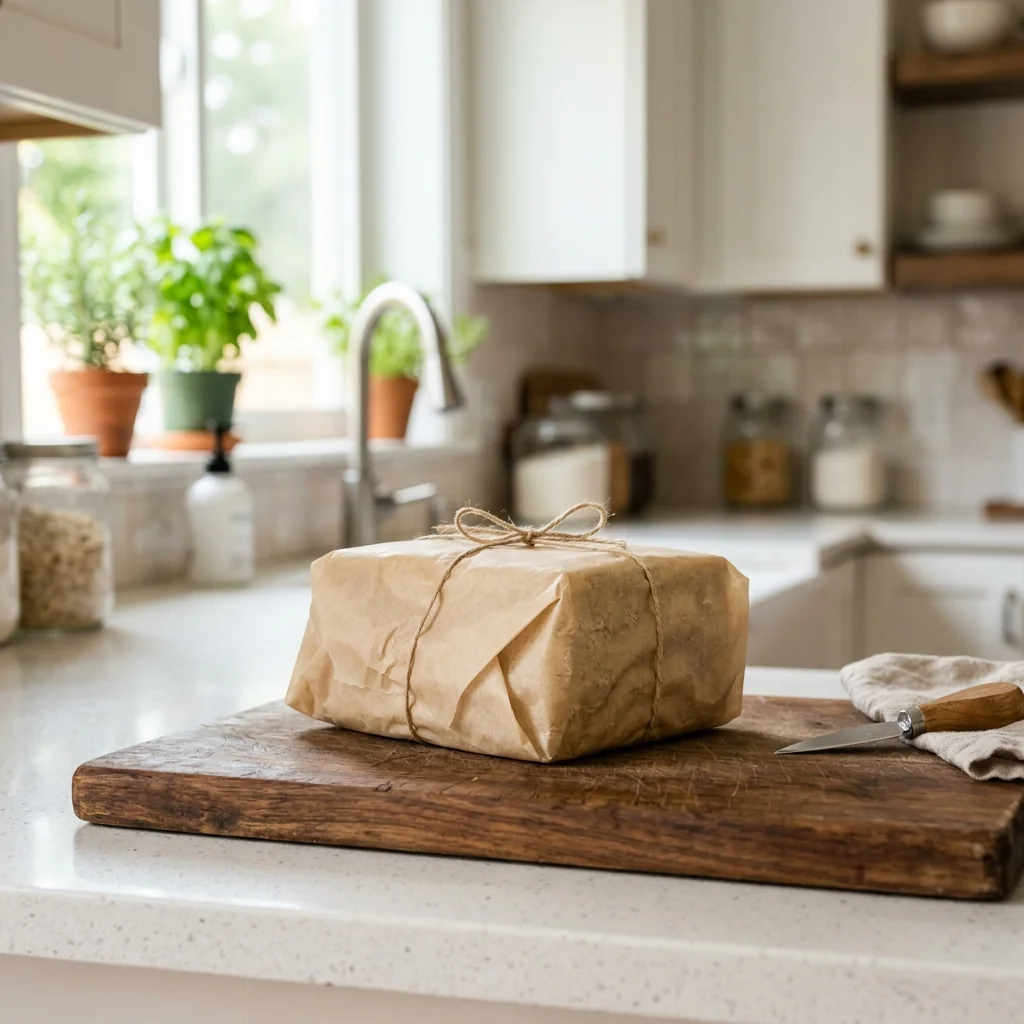
Cheese requires controlled air circulation without completely drying out. 💡 Storage Tip: Wrap the cheese loosely in parchment paper or wax paper. Paper acts as a breathable barrier, allowing metabolic gases to dissipate while protecting the cheese from excessive drying.
Place loosely in a Ziploc bag in the crisper — Preserve Humidity (21 Days) ❄️
Standard refrigerator shelves feature cold, dry airflow that causes cheese to dry out and crack. 💡 Storage Tip: Place paper-wrapped cheese in a Ziploc bag, leaving it slightly open, and store it in the refrigerator crisper drawer (4–6°C / 39–43°F). The gentle temperature and higher humidity keep it rich and fresh for up to 3 weeks.
2. Essential Storage Rules and Cautions
The high milk-fat content in cheese absorbs surrounding volatile odors exceptionally well. Keep cheese isolated from pungent foods like garlic, onions, or fish to preserve its natural creamy flavor.
Leaving cheese at room temperature (above 15°C / 59°F) for extended periods causes fats to melt and separate, breaking down its internal structure and ruining its flavor. After serving, wrap and refrigerate it promptly.
📌 Frequently Asked Questions (FAQ)
If mold grows on my cheese, can I trim it off and eat the rest? ▼
For hard cheeses like Cheddar, Parmesan, or Gouda, you can safely cut away the moldy area plus at least 2.5 cm (1 inch) around and below the spot. However, for soft cheeses like Cream Cheese, Ricotta, or fresh Mozzarella, mold spores and toxins spread easily through high moisture content, so the entire piece must be discarded.
Can I freeze cheese for long-term storage? ▼
While pre-shredded Mozzarella or cooking cheeses freeze reasonably well, freezing block cheese destroys its delicate emulsion structure. Freezing causes water to form ice crystals, making the cheese dry, crumbly, and mealy upon thawing. For best quality, wrap in parchment paper and store in the crisper drawer.