Canola and sunflower oils are among the most consumed vegetable oils worldwide for frying and sautéing. However, are you keeping them right next to the stovetop or oven for convenience? 🍳
Canola and sunflower oils contain high proportions of polyunsaturated fatty acids (PUFAs), such as linoleic acid. When exposed to atmospheric oxygen, ultraviolet light, or heat, a radical auto-oxidation chain reaction is triggered. This process forms toxic aldehyde byproducts like hexanal, causing rancidity and unpleasant off-odors.
In this guide, we introduce a scientifically proven 3-step canola and sunflower oil storage guide recommended by international food safety authorities to preserve oil freshness and quality. 🛡️
Food Safety & Scientific Evidence
This content is based on FDA & EFSA & MFDS.
 FreshSelf
Zero waste! Your smart storage assistant
FreshSelf
Zero waste! Your smart storage assistant









1. Scientifically Proven Storage Guide
Store in a cool, dark cabinet away from heat (15–20°C / 59–68°F) — Cool Room Temp Storage (1–2 Years Unopened / 3–6 Months Opened) 🌡️
Blocking heat and light while keeping ambient temperatures at 15–20°C is critical. 💡 Storage Tip: Keep oil bottles inside a dark lower pantry or cupboard away from stovetops. Unopened oil lasts 1–2 years, while opened oil should be used within 3–6 months.
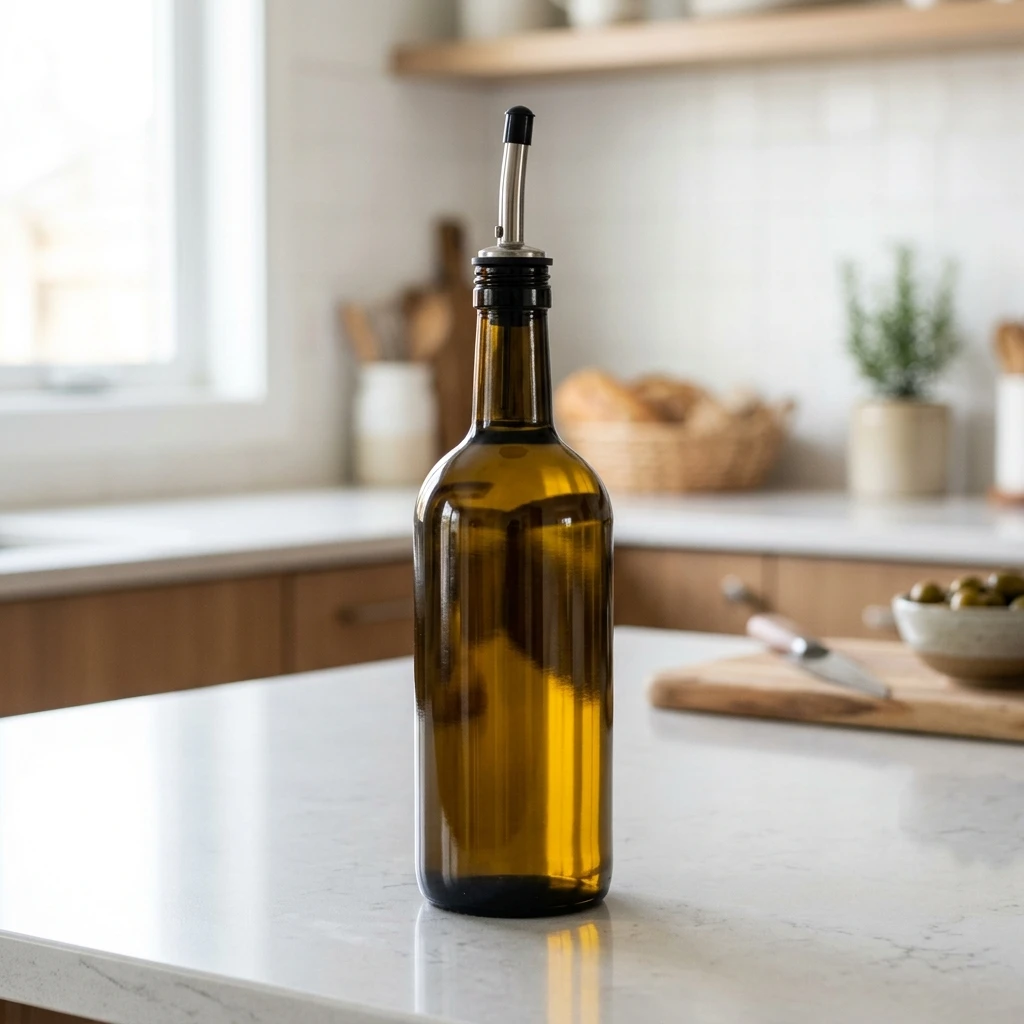
Cap tightly after every use and use amber or light-blocking bottles — Block Air and Light 🍾
Minimizing air contact and stopping photo-oxidation is essential. 💡 Storage Tip: Seal the cap tightly immediately after pouring to prevent oxygen entry. If bought in transparent plastic, transfer the oil to a dark glass or opaque bottle to extend shelf life.
Keep at cool room temperature and do not refrigerate — No Refrigeration 🚫
Refrigerating vegetable oils causes clouding and condensation. 💡 Storage Tip: Storing canola or sunflower oil in the fridge causes fatty acids to crystallize and cloud up. Moisture from condensation when brought back to room temperature induces hydrolytic rancidity, so cool room temperature storage is best.
2. Essential Storage Rules and Cautions
Heat from cooking appliances increases molecular kinetic energy and dramatically accelerates radical auto-oxidation, speeding up rancidity and the formation of toxic aldehydes.
Light—especially UV radiation—triggers photo-oxidation of unsaturated fatty acids, causing rancid odors and destroying beneficial nutrients. Always store in dark, light-blocking containers.
📌 Frequently Asked Questions (FAQ)
My cooking oil smells slightly rancid. Is it still safe to use for cooking? ▼
No, absolutely not! A rancid smell indicates that auto-oxidation has generated toxic aldehyde compounds like hexanal. Consuming oxidized oils can induce oxidative stress and cellular damage in the body, so rancid oil must be discarded immediately.
What is the simplest way to check if my opened oil has gone rancid? ▼
Check the aroma and viscosity. If the oil gives off a sharp, paint-like or stale smell, or if oil residue around the bottle cap has turned thick and sticky, it is oxidized. Also, if the oil smokes earlier than usual when heated in a pan, its smoke point has dropped due to degradation and it should be thrown away.