Have you ever bought a firm, crisp radish only to find it spongy, hollow, or wrinkled inside after a few days? 🧊
Radishes contain up to 94% water. When stored with their leafy tops attached, the greens continuously pull water and sugars from the root, causing the radish to turn spongy and hollow (pithy). Without proper moisture retention, the texture rapidly deteriorates.
In this guide, introduces a scientifically proven 3-step radish storage guide recommended by agriculture and food safety experts to maintain crispness and sweet flavor for up to 2 months. 🛡️
Food Safety & Scientific Evidence
This content is based on RDA & USDA & MFDS.
 FreshSelf
Zero waste! Your smart storage assistant
FreshSelf
Zero waste! Your smart storage assistant








1. Scientifically Proven Storage Guide
Slice off green tops — Prevent Moisture & Nutrient Depletion 🪓
This is the crucial first step to stop dehydration. 💡 Storage Tip: Cut off the green leafy top close to the stem base to eliminate the growing point. You can store and cook the leafy greens separately.
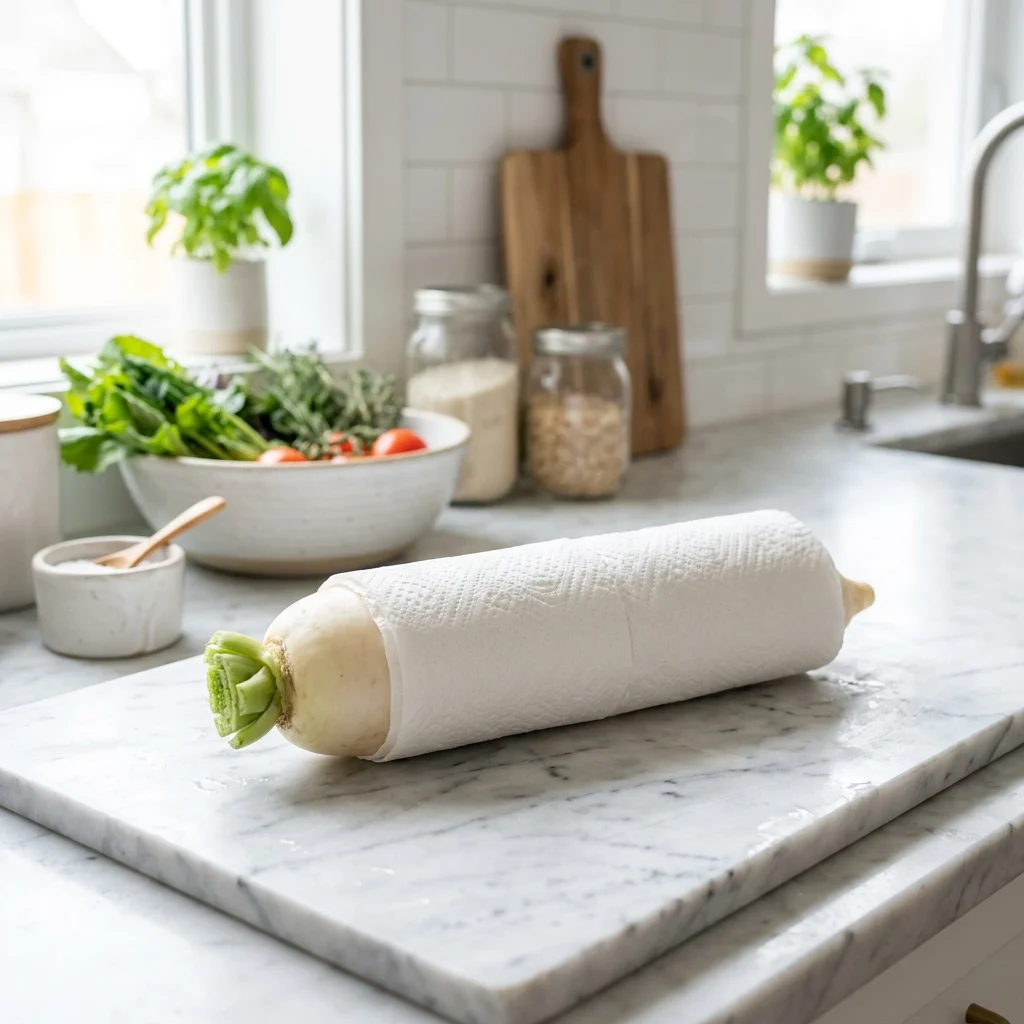
Wrap with paper towels and tightly seal in plastic wrap — Block Moisture Evaporation 🧻
Preventing surface dehydration while protecting against excess condensation is key. 💡 Storage Tip: Wipe dry dirt off the unwashed radish, wrap it in paper towels or newspaper, then seal tightly with food-grade plastic wrap without leaving gaps.
Refrigerate at 0–3°C — Cold Storage (30–60 Days) 📦
Sealed radishes slow down their respiration at low temperatures, locking in crispness. 💡 Storage Tip: Keep wrapped radishes in the refrigerator crisper drawer (0–3°C / 32–37°F) to retain firmness for 1 to 2 months.
2. Essential Storage Rules and Cautions
Radish greens continue to grow after harvest, rapidly siphoning moisture and nutrients from the root. Leaving the tops attached causes the radish to become pithy and spongy within days.
Because radishes consist mostly of water, temperatures below 0°C (32°F) rupture their cell walls, causing them to turn soft and mushy upon thawing. Always maintain cold temperatures at 0–3°C.
📌 Frequently Asked Questions (FAQ)
My radish turned spongy and hollow (pithy) inside. Is it still safe to eat? ▼
Yes, pithy radishes are safe to eat. Pithiness occurs when water loss creates air pockets inside the root tissue. While unsuitable for raw salads or pickles due to texture loss, pithy radishes work well when simmered in soups, stews, or broths.
Can I freeze radishes for long-term storage? ▼
Freezing a whole raw radish ruins its structure. However, slicing or dicing the radish into soup-sized pieces and sealing them in Ziploc bags allows you to freeze them (-18°C or below) for easy addition directly into hot soups and stews.